Posted in Garden Diary on Thursday, October 21st 2021 (10.13 PM).
This might be the last post on the garden blog for a while; it looks as if it will be going onto a hiatus, for various reasons we don’t need to go into, for an indefinite period. Nevertheless, in the last post I promised to give an update on whether or not the strange chimeric bird food plant—a sunflower surrounded by wheat—would flower. And, indeed, it did. To the delight, as you can see, of bumblebees.
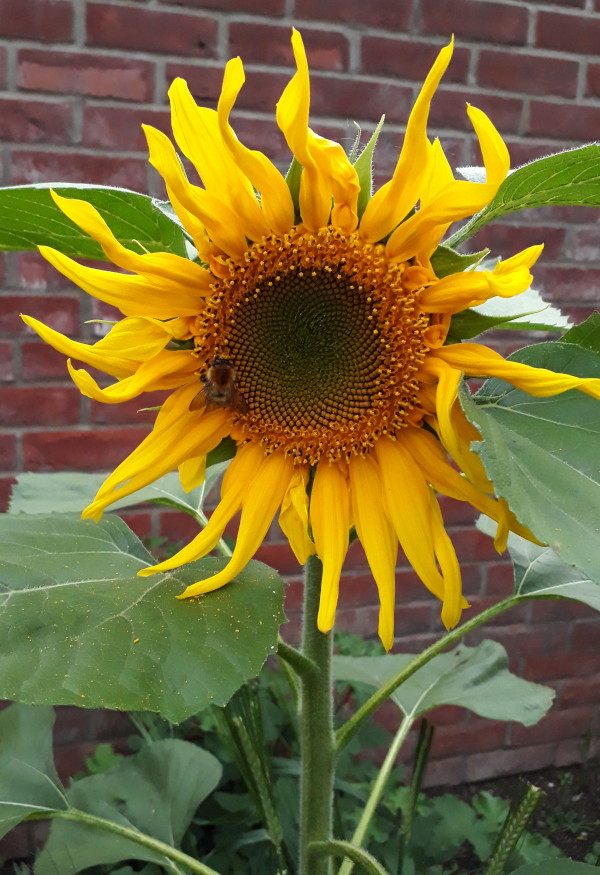
I took this picture about six weeks ago, and it’s been sitting in my to-do pile since. You can see the heads of wheat at the bottom, green still; by now everything has ripened, the wheat has gone yellow and the sunflower has turned into seed for all the local birds. Six weeks ago, as you can see, its yellow was still rich. I’m intrigued by the shape, those tendril-like petals extending like tentacles all the way round. Naturally, I have no idea of finding out what variety it is to try to reproduce it.
sunflower, helianthus, bee, bumblebee
Posted in Garden Diary on Saturday, August 14th 2021 (9.22 PM).
If there were any regular readers of this blog, they would have noticed that since the last post, when the garden was being radically relandscaped, there haven’t been any further updates. Well, the landscaping has finished since then, the garden now has a lawn, an apple tree and a variety of beds which are slowly being populated with plants. So far, of course, the plants all appear to be tiny little things somewhat dwarfed by the amount of empty bare earth between them, but that will slowly change.
This post, though, is something of an aside, before I get around to the Proper Post with a map of the garden and summaries of some of the plants that have been scattered about. Because between a couple of plants which had been properly planted, a strange weed grew up. It started growing and grew up fast; and it seemed to have a strange mixture of leaves, some of them long and thin like a grass and some broad and heart-shaped. In other words almost as if it was a chimera of two completely different types of plant, half-monocotelydon and half-dicotelydon. Outside of science fiction, that’s completely and utterly impossible.
Well, I looked at it more closely today, and I’ve realised what it is. Take a look yourself and see if you can spot it.
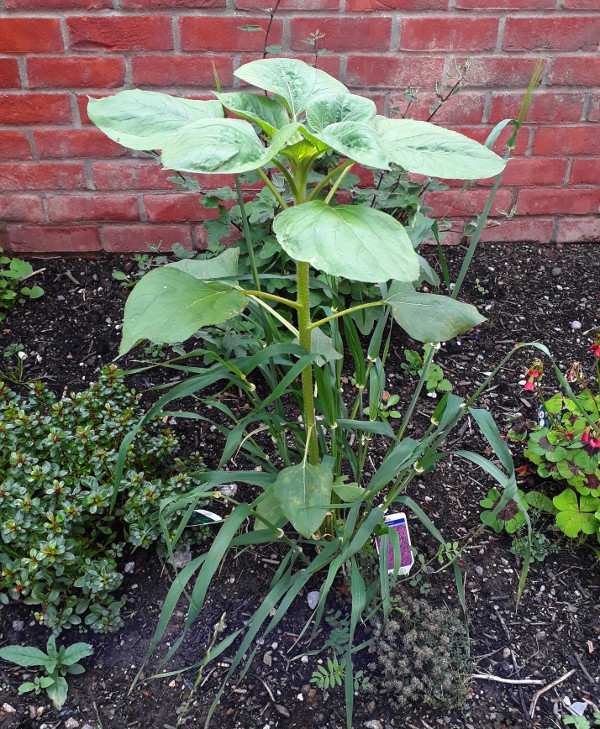
So what sort of plant is it, that I’ve realised I have? It’s a bird food plant, of course!
No, really, look. In the middle, that’s a typical sunflower stem with its flower forming at the centre. Round the outside, some sort of cereal plant, possibly barley. Why on earth would you have a sunflower and a few stems of barley all germinating in exactly the same spot? Because a small lump of bird seed cake was dropped there and has started to grow, of course.
Whether it was accidentally dropped by a passing jackdaw or wood pigeon, or whether it was in the topsoil when it arrived and has germinated now it has light, I don’t know and will never know. The topsoil certainly does have a good number of weed seeds in it, a significant proportion of them nettles, so it possibly was in the soil before it was spread out. The sunflower has probably started a little late in the season for best results, but it will be interesting to see just how high and fast it manages to grow before autumn. If it flowers, I’ll make sure I take a picture.
weeds, weed, sunflower, helianthus
Posted in The New Garden, Planning, Practicalities on Sunday, May 9th 2021 (10.48 AM).
In the last post I mentioned that the new garden is a barren empty space, which was and is true. The previous owners had bought a patch of soggy, waterlogged and undraining grass, and had stripped it and all the topsoil off intending to Do Something With It, but never really did get anything done. Arriving with maybe a little more self-awareness, we realised we were going to have to bring in landscapers, at the very least, to help us come up with an outline layout and do much of the heavier work—the earthmoving, paving-laying, bed-building and so on. So now, a start has been made, and to hopefully make it a little less waterlogged the garden currently resembles the sort of artificial inland beach you find in The Netherlands.
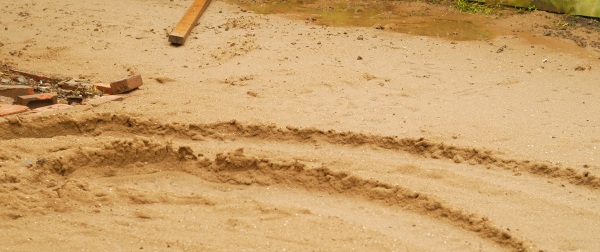
Topsoil is already on order, so hopefully before too long we will have a bare expanse of soil instead of sand. In the meantime, we’ve started buying plants to go into the beds when they are ready. Fingers crossed they won’t have to sit in their pots too long.
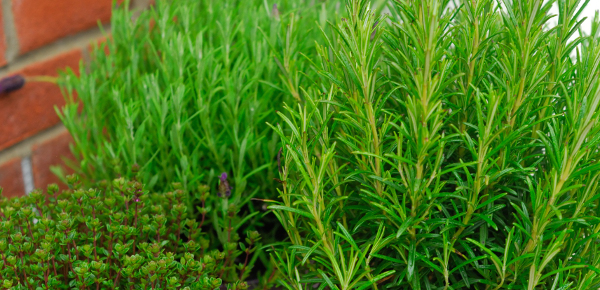
Unsurprisingly, herbs are the first thigng to be bought.
thyme, rosemary, lavender, Lavandula, Salvia rosmarinus, Rosmarinus officinalis, Thymus
Posted in Garden Diary, The New Garden on Wednesday, April 28th 2021 (5.14 PM).
This blog has been quiet since the end of last year. If you’re a regular reader of the main blog you’ll be aware that in February I left the garden behind and made a new start, with a new-to-me house and garden, in South East Wales. Nothing has changed in the garden of the new house since moving in; there hasn’t been anything to post here, and there’s a good reason for that which I’ll come to in a moment.
I’m writing this today, though, because right now it’s the middle of the 10th UK National Gardening Week. This year’s event, understandably, is themed around wellbeing, about the benefits that gardening can bring to both your physical and mental health. It doesn’t, of course, have to be your own garden; you can get the same benefits from community and public gardens too.
The garden here, on the other hand, is something of a barren empty space at the moment.
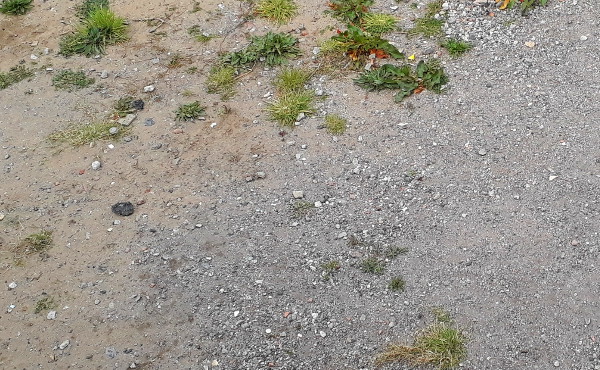
On the upside there are plenty of dandelions for the local bees, and a few patches of clover and Herb Robert, even if the rest is a barren stony, sandy desert.
This garden is much bigger than the tiny scrap we had previously, and I’m sensible enough to realise that making over a garden of this size completely from scratch is probably beyond me: even if I thought I could take it on myself, I’d probably not get it finished this decade. However, even if we have had to reach outside for some help with the basics and the layout, there are plans in hand to transform it and create a space that both evokes the same atmosphere as the previous garden did when it had matured, and that we are able to change and evolve over the coming years. I’ll go more into the thoughts behind that further down the path, when change has started to happen.
National Gardening Week, new garden, dandelions, herb robert
Posted in Garden Diary, Photobloggery, The Old Garden In Bristol on Thursday, December 31st 2020 (10.35 AM).
The last day of the year, and the first proper frost to hit the garden. If you read the main blog, you might have already seen yesterday’s post about a frosty cemetery. The garden, though, is rather more sheltered so wasn’t really touched by yesterday’s frost at all. Today was the first day that the frost was hard enough for the cold air to get properly into the garden and touch everything down to the ground.
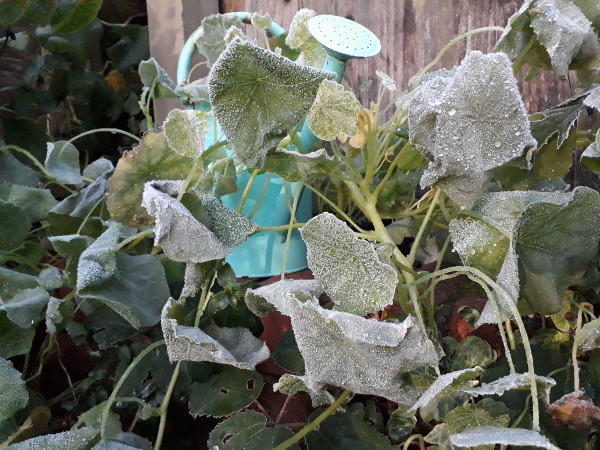
As I’ve said previously the nasturtiums normally have late autumn and early winter mostly to themselves in this garden, and by the time the frost comes the garden often consists mostly of nasturtium. This frost, though, will start to kill them off.
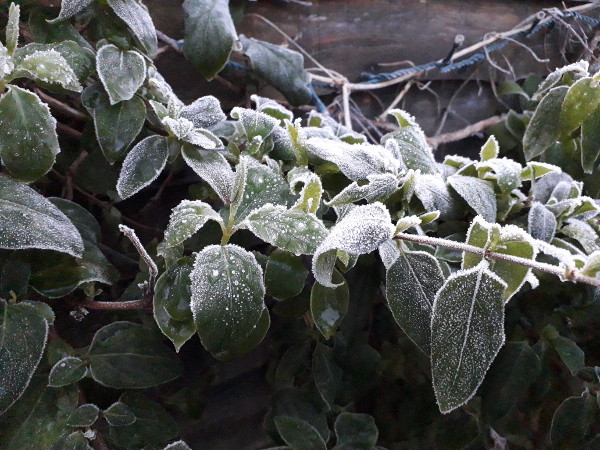
The honeysuckle should be made of somewhat sterner stuff.
The garden has been fairly quiet since I restarted this blog. Hopefully, 2021 will see some interesting new developments. You’ll have to wait and find out exactly what, though.
frost, honeysuckle, Lonicera, nasturtium, Tropaeolum, weather, winter
Posted in Children, Garden Diary, Environmentalism, Experimentation, The Old Garden In Bristol on Wednesday, December 2nd 2020 (5.18 PM).
The previous post was about putting Halloween pumpkins in the garden to decompose. Now they’ve been there for a month, I thought it was about time to post a composite of their gradual decay into the soil.

It makes me a little sad to see this, especially given the goofy grin on The Child Who Likes Animals’ design. Still, I have to remind myself that it is inevitable, and they are just part of the circle of life and death in the garden. They have been broken down by mould, eaten by slugs and snails, and are now feeding the herbs and the honeysuckle.
Halloween, pumpkin, squash, decay, back bed, autumn
Posted in Children, Garden Diary, Environmentalism, Experimentation, The Old Garden In Bristol on Sunday, November 8th 2020 (10.14 AM).
The other day, over on the main blog, I briefly mentioned that the Hallowe’en pumpkins have been put into the darkest corner of the garden, the southern end of the back bed, for the local slugs and snails to eat. As not much grows successfully in that corner of the back bed save for sweet cicely and (once) tree spinach, it tends to be left as something of a wildlife corner; and The Child Who Likes Animals likes to leave things like melon rind there, to see how it attracts invertebrates and to watch it decay. So, a week ago when it was time to put the hollowed-out carved pumpkins in the food waste, we thought it might be a nice idea to leave them in the garden instead.
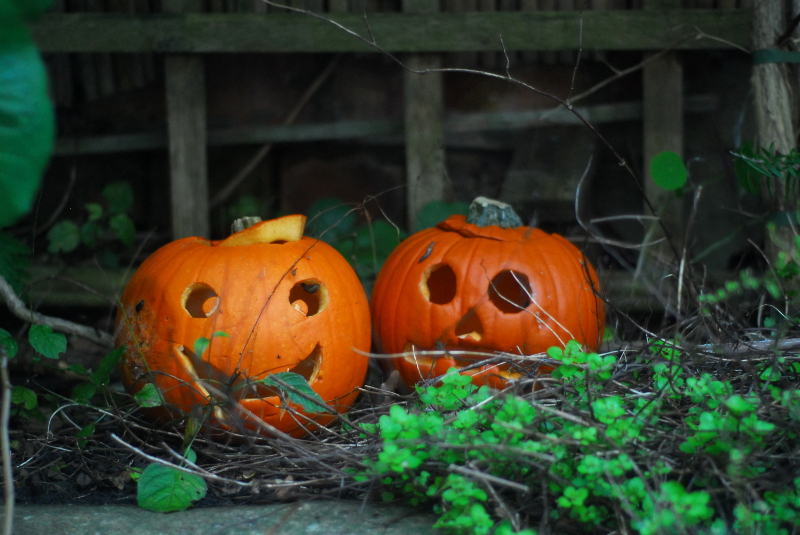
It was getting towards twilight yesterday when I took this photo; but you can see that there are a number of small slugs greatly enjoying them. Mould is spreading, too, and spiders are using them to lurk behind. If they behave like a melon rind does, the flesh will slowly disappear and possibly in a few weeks time only a papery skin will be left.
Halloween, pumpkin, squash, decay, back bed, autumn
Posted in Garden Diary, The Old Garden In Bristol on Sunday, November 1st 2020 (9.47 PM).
A month since the last post on the garden blog, and not much has changed. For a number of reasons I have not done very much at all in the garden, not least the continuous bleak weather: cold, rainy, and blustery. Occasionally there is a clear night and Mars, Saturn and Jupiter sail smoothly across the sky; but more usually the heavens are filled with fast-moving grey scudding clouds.
The plants are still growing, of course; or are settling down for winter. The honeysuckle’s flowers have gone, and it is covered in little dark round berries instead.
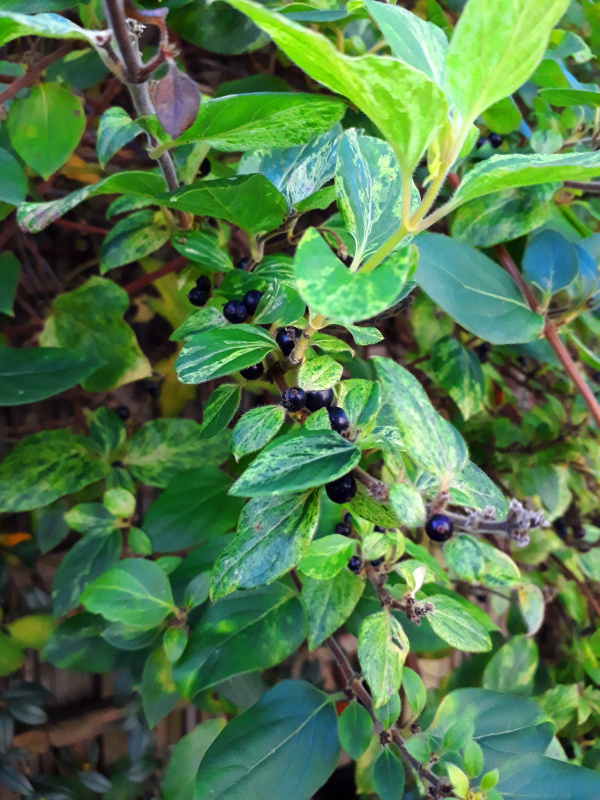
The nasturtiums I mentioned previously are still going strong, though, covering the back bed from top to bottom in yellow flowers and straggling halfway across the decking too. The bumblebees are still feeding from them; next year’s queen bumblebees preparing to hibernate, I presume. In this one, however, I spotted an earwig, its head down and pincers outwards.
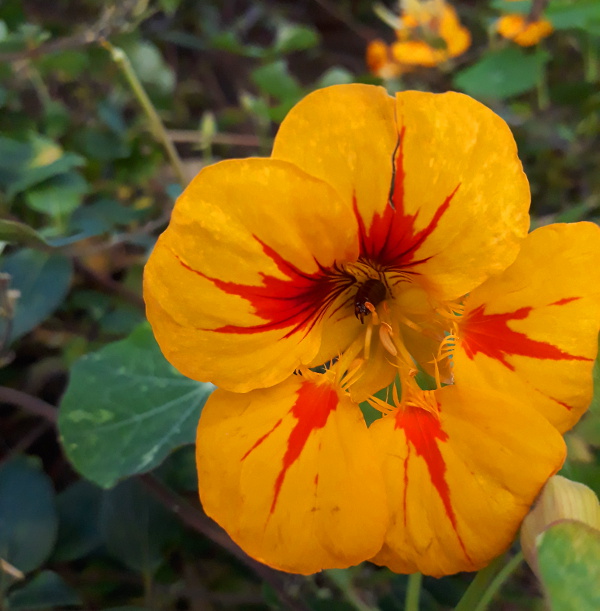
Apparently you can sex earwigs by the size and shape of their pincers. I didn’t try with this one, and left it be inside its flower.
autumn, bumblebee, nasturtium, Tropaeolum, bee, honeysuckle, Lonicera, earwig
Posted in Decorative, The Old Garden In Bristol on Thursday, October 1st 2020 (7.12 PM).
It’s been a few years now since we deliberately planted any nasturtiums, other than occasionally moving seedlings that have been popping up in particularly strange places. Since then, they’ve been left to self-seed. Every year, midway through summer we start thinking “there aren’t many nasturtiums this year,” and then when they come up, “the nasturtiums aren’t flowering much this year”, because we forget how late in the season they really come into their own.
This year was no exception. By the end of August we had plenty of foliage but barely a single flower; in mid-September we noticed they had suddenly leapt up and were climbing all over the back neighbour’s shed roof; and now, at the start of October, they have taken over half the back bed and are covered in flowers.
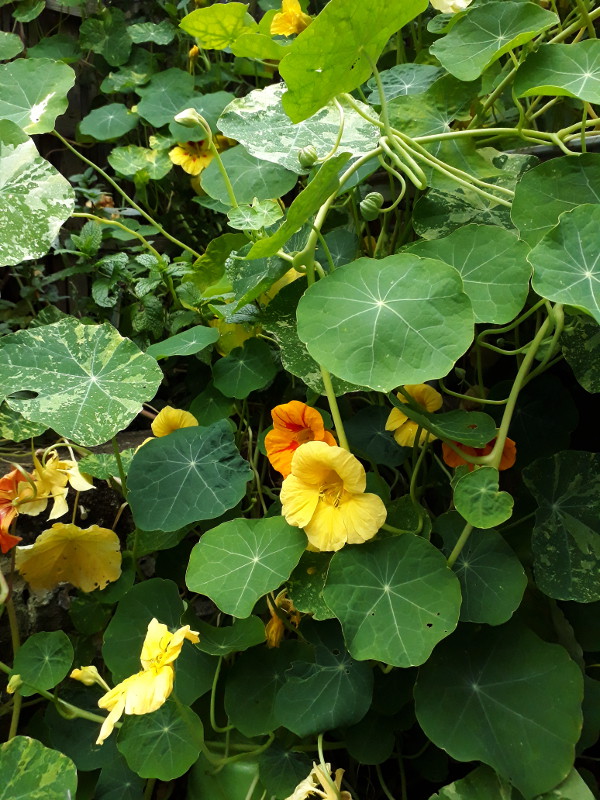
Their long, muscular stems are bursting through the honeysuckle, across the lemon balm and around the rosemary, and wide, round leaves are bursting through all over the place.
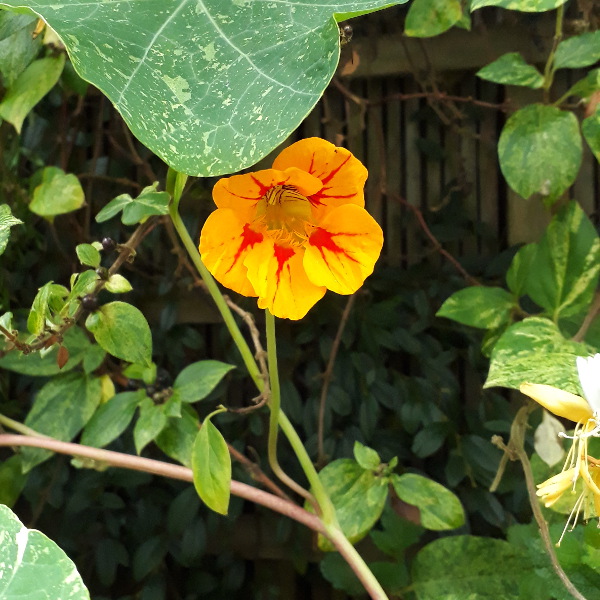
nasturtium, Tropaeolum
Posted in Photobloggery, Environmentalism, The Old Garden In Bristol on Friday, September 11th 2020 (8.36 PM).
Some of the wildlife we have spotted in the garden this summer, not including the fox that passed through, then scaled the neighbours’ kitchen roof and was away up the street along the ridgeline of the terrace.
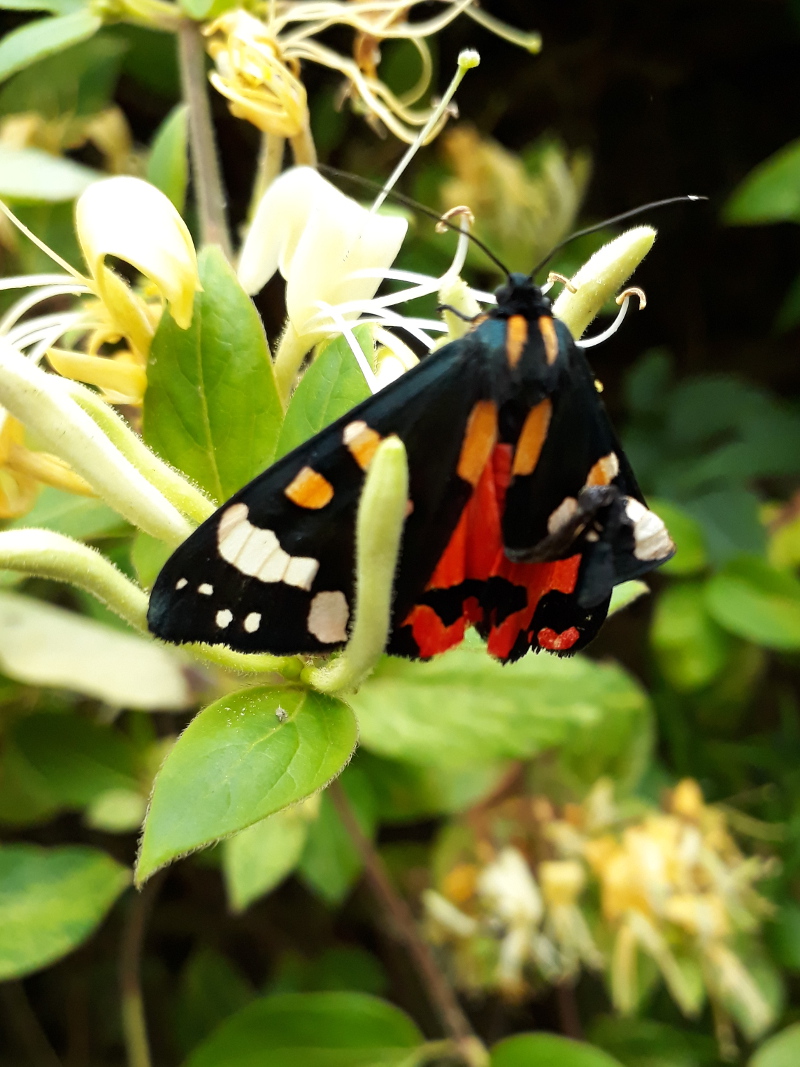
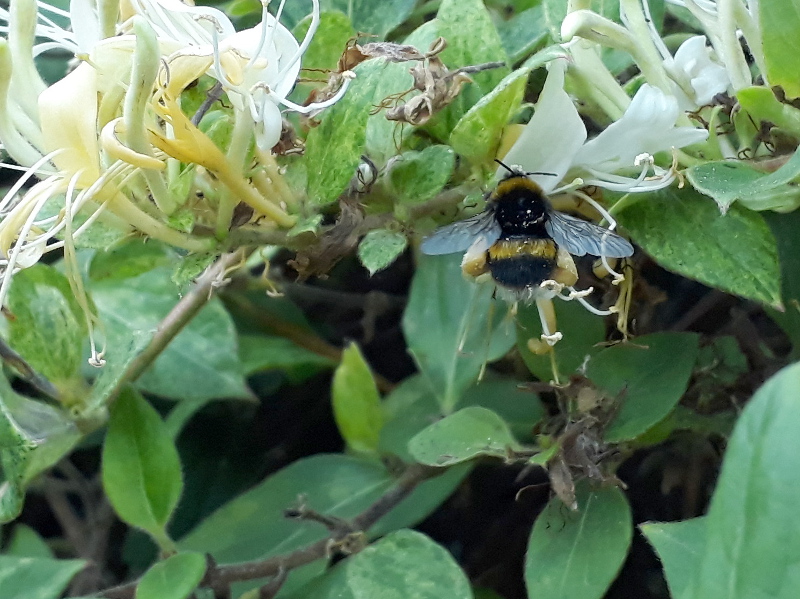
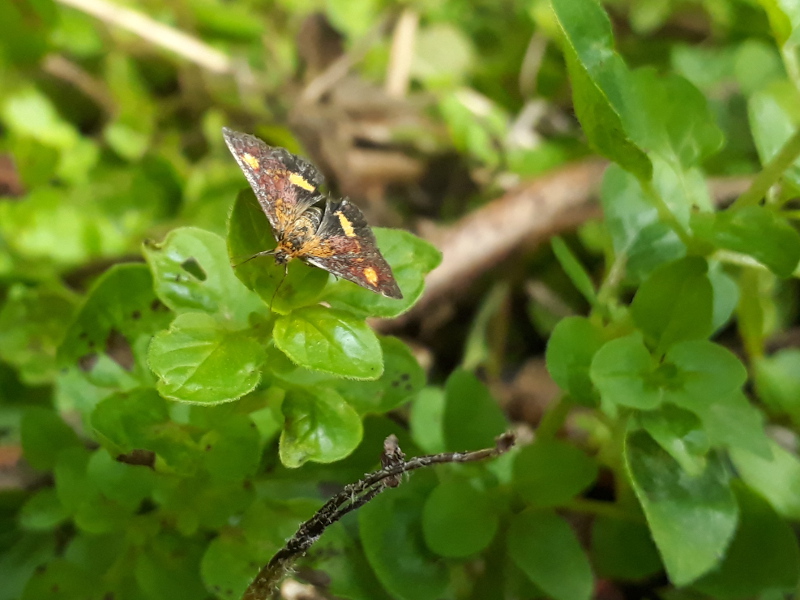
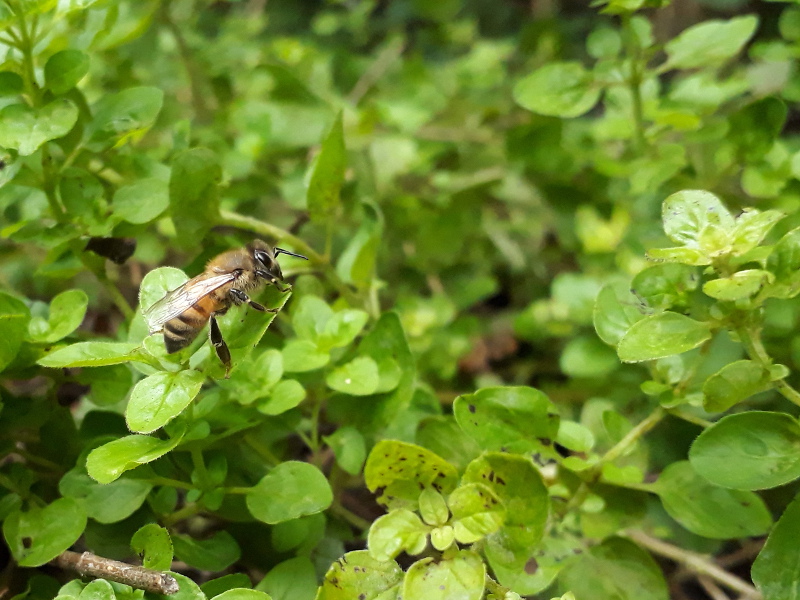
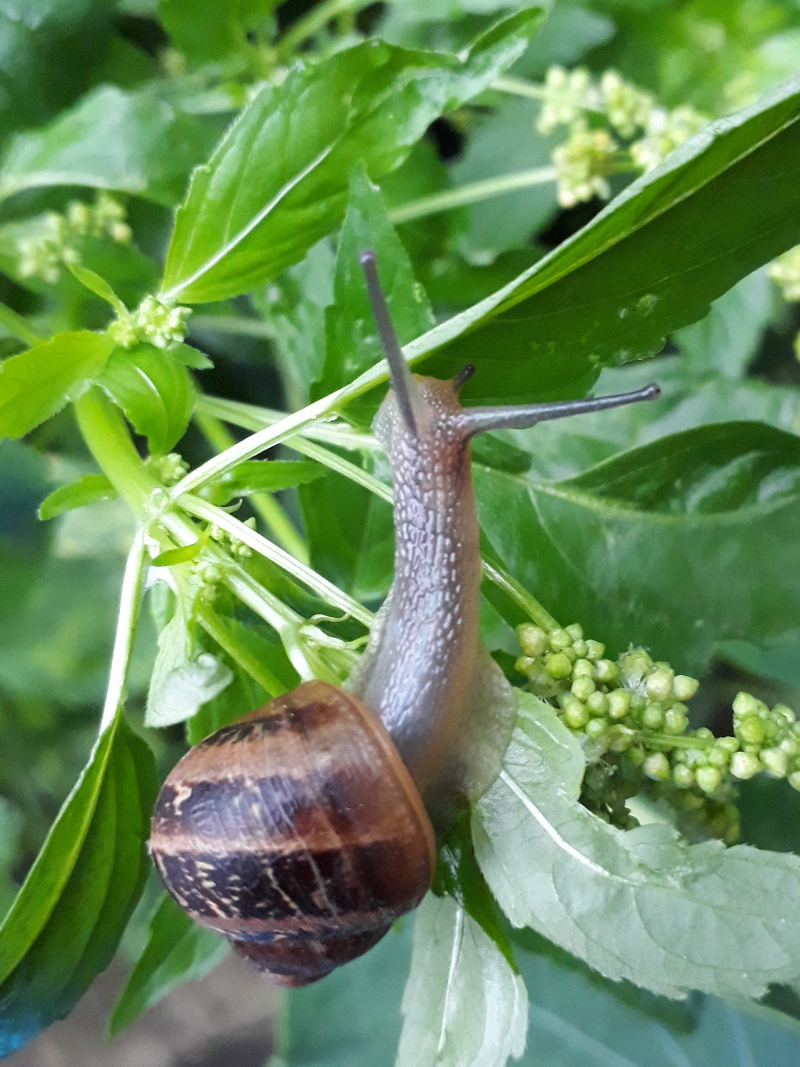
These are all phone pictures, because it’s much easier to whip my phone out when I spot something interesting flying around than to go hunting for a better camera. The biggest pain using the phone for photos like this is the difficulty in focusing on exactly the right thing.
wildlife, bee, bumblebee, honey bee, moth, mint moth, tiger moth, scarlet tiger moth, snail

](/garden/articles/the-process-of-decay/pumpkin-decay-large.jpg)