 Home
HomePhoto post of the week
More photos from around Bristol
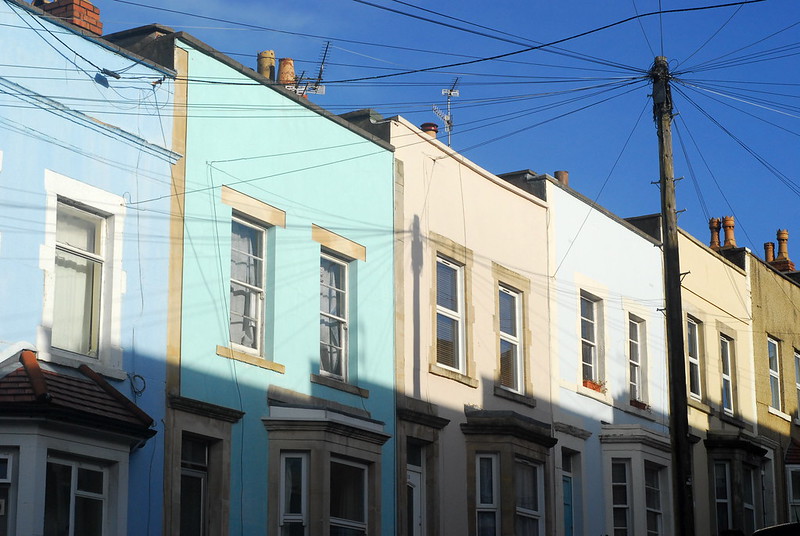
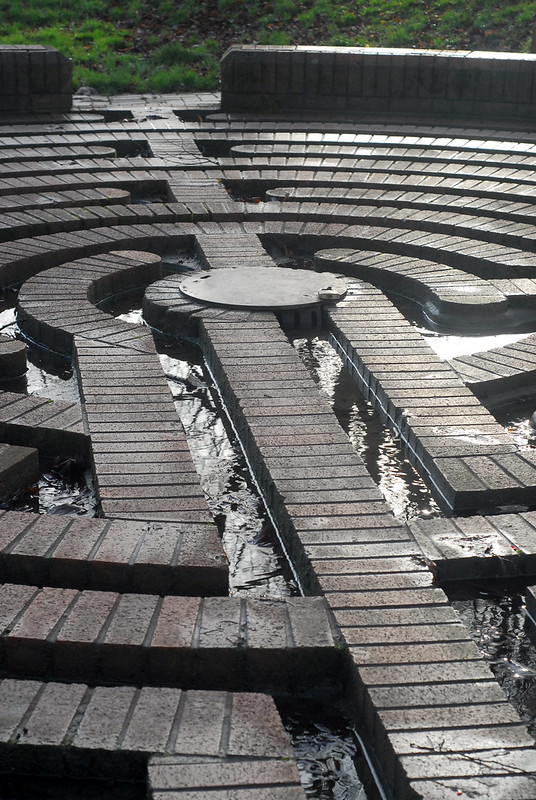

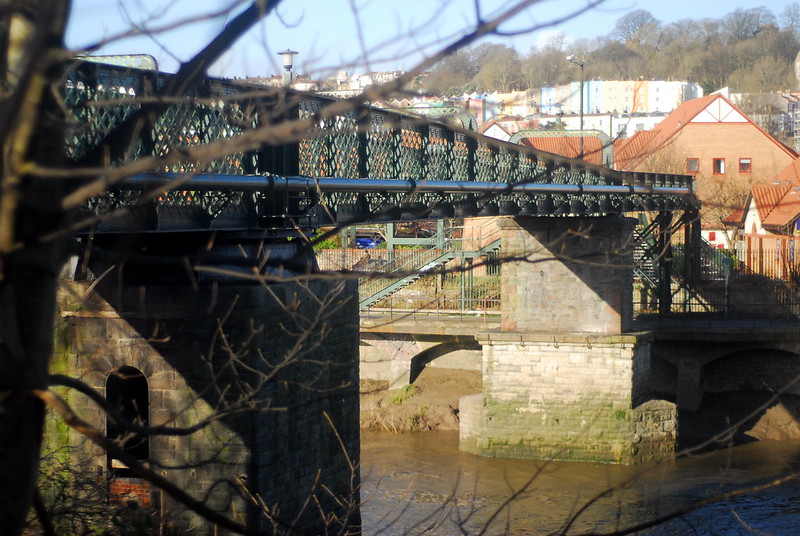

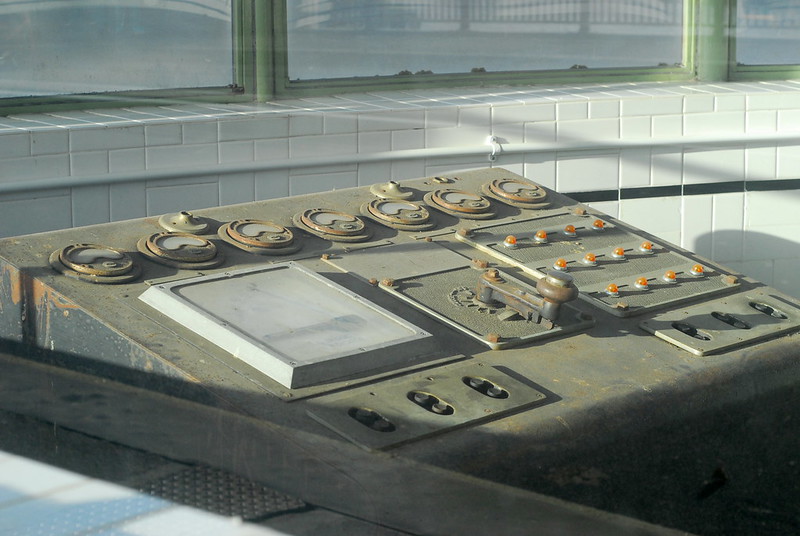

A homage to loading screens.
More photos from around Bristol
In which I get on the telly
No blogpost yesterday, because – well, I was rather busy. Regular readers might remember this post from last week, in which I speculated vaguely about auditioning for a TV quiz show - I didn’t say which one, but it was fairly easy to guess. Those auditions, as it happened, were yesterday.
They were open auditions, so I just turned up. And, really, it was all rather painless. They weren’t busy; I sat down, answered some general knowledge questions, and had a bit of a chat about potential subjects. All very friendly. The interesting bit, though, was after I came out. “Would you mind hanging around for a while,” someone said, “the local news would like to interview people.”
Happy to oblige, I waited around, before going outside, getting miked up, and answering a few questions about what I’d just been doing. And then: “could we have some setup shots of people queuing outside the audition room?” So, the news team commandeered a corridor with a likely-looking door at the end, sat us down, and told us to try to look nervous. I found it hard not to laugh, as the cameraman zoomed in on our anxious faces from somewhere around floor-level. We acted out arriving at the audition, for the cameras, and I suddenly realised how hard acting is: how hard it is to make scripted actions feel natural.
The whole thing seemed far more complicated than the audition itself had been. And even if I don’t end up on any quiz shows, I’ve had my 2 minutes of stardom on the local news now.
In which we measure monitors
The redesign is now almost done, which means that soon you’ll be saved from more posts on the minutiae of my redesign. It’s got me thinking, though: to what extent do I need to think about readers’ technology?
When this blog first started, I didn’t really worry about making it accessible to all,* or about making sure that the display was resolution-independent. It worked for me, which was enough. Over time, screens have become bigger; and, more importantly, more configurable, so I’ve worried less and less about it. When it came to do a redesign, though, I started to wonder. What browsers do my readers actually used.
Just after Christmas, for entirely different reasons, I signed up for Google Analytics, rather than do my own statistics-counting as I had been doing. Because Google Analytics relies on JavaScript to do its dirty work, it gives me rather more information about such things than the old log-based system did. So, last week, I spent an hour or so with my Analytics results and a spreadsheet. Here’s the graph I came up with:

The X-axis there is the horizontal width of everyone’s screens, in order but not to scale; the Y-axis is the cumulative percentage of visits.** In other words, the percentage figure for a given width tells you the proportion of visits from people whose screen was that size, or wider.
Straight away, really, I got the answer I wanted. 93% of visits are to this site are from people whose screens are 1024 pixels wide, or more. It’s 95% if I take out the phone-based browsers at the very low end, because I suspect most of that is accounted for by K reading it on the bus on her way home from work. The next step up, though, the graph plunges to only 2/3 of visits. 1024 pixels is the smallest screen width that my visitors use heavily.
Admittedly there’s a bit of self-selection in there, based on the current design; it looks horrible at 800 pixels, and nearly everyone still using an 800×600 screen has only visited once in the two-month sample period. However, that applies to most of the people who visit this site in any case; just more so for the 800-pixel users. Something like 70% of visits are from people who have probably only visited once in the past couple of months; so it’s fair to assume that my results aren’t too heavily skewed by the usability of the current design. It will be interesting to see how much things change.
I’m testing the new design in the still-popular 1024×768 resolution, to make sure everything will still work. I’ll probably test it out a fair bit on K’s phone, too. But, this is a personal site. If you don’t read it, it’s not vital, to you or to me. If I don’t test it on 800×600 browsers, the world won’t end. The statistics, though, have shown me where exactly a cutoff point might be worthwhile.
* For example, in the code of the old design, all that sidebar stuff over on the right comes in the code before this bit with the content, which does (I assume) make it a bit of a bugger for blind readers. That, at least, will be sorted out in the new design.
** “visits” is of course a bit of a nebulous term, but that is a rant for another day.
In which our ears are flapping
Chap walking down Stokes Croft, chatting away on the phone:
“Are you imagining me inside a giant shoe?”
In which we visit east Bristol, and Clevedon
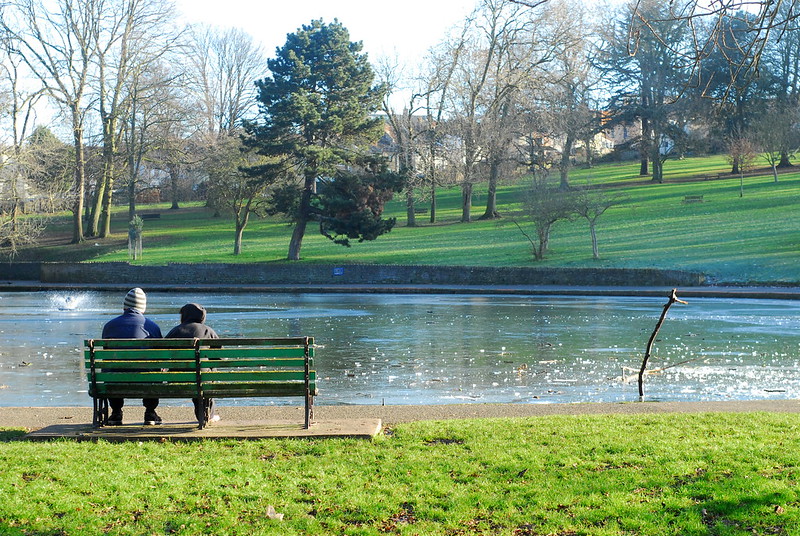
A month or so ago, we took a trip to Clevedon, Somerset. I wrote about it at the time, although, I realise now, didn’t explicitly say which town we’d been to. Here, though, are some of the photographs.
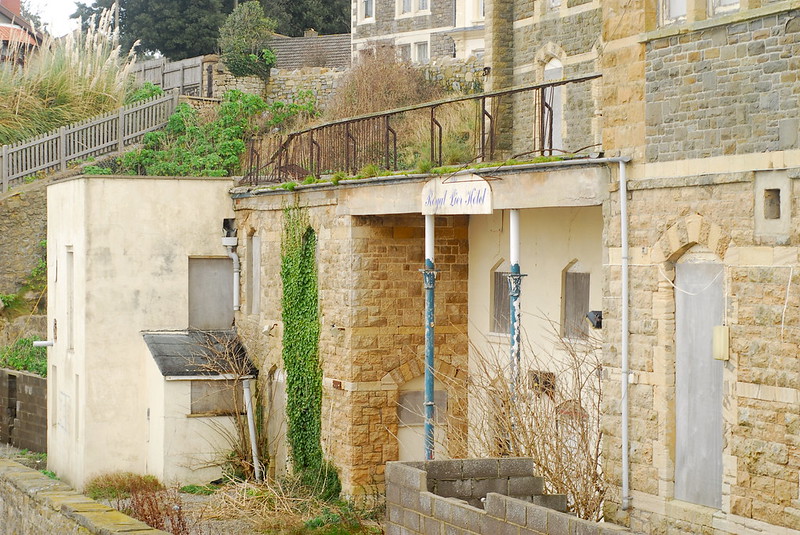
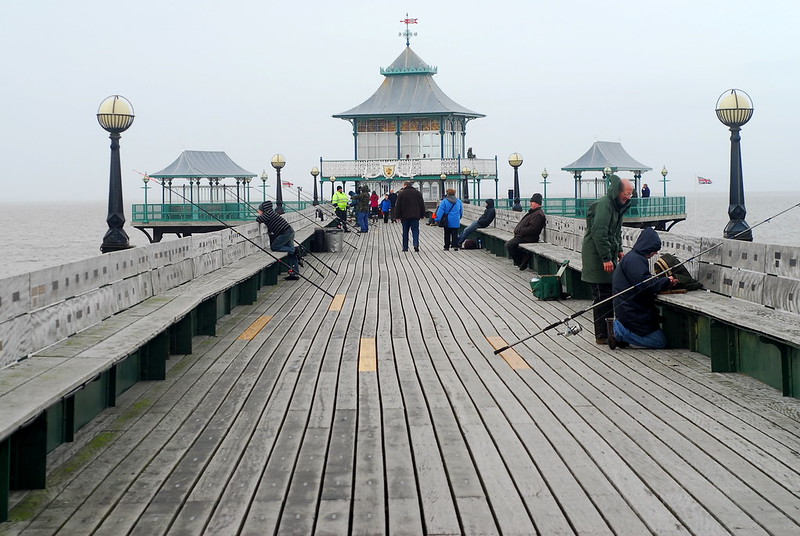
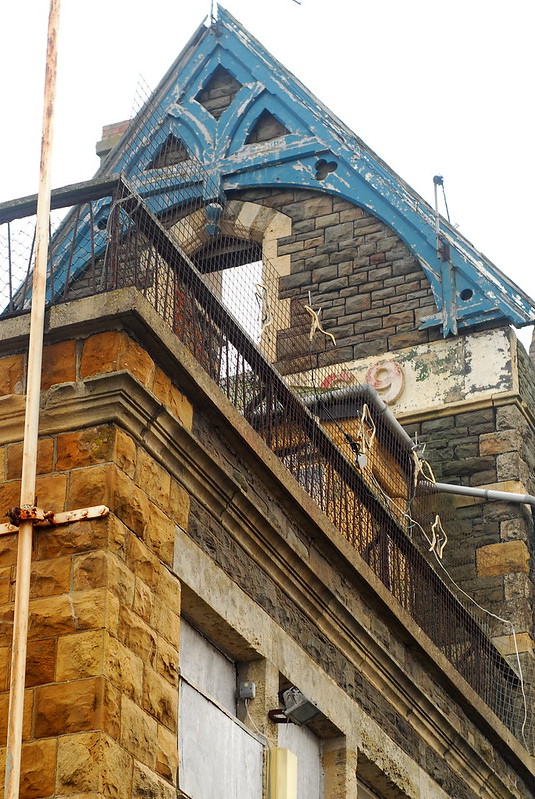
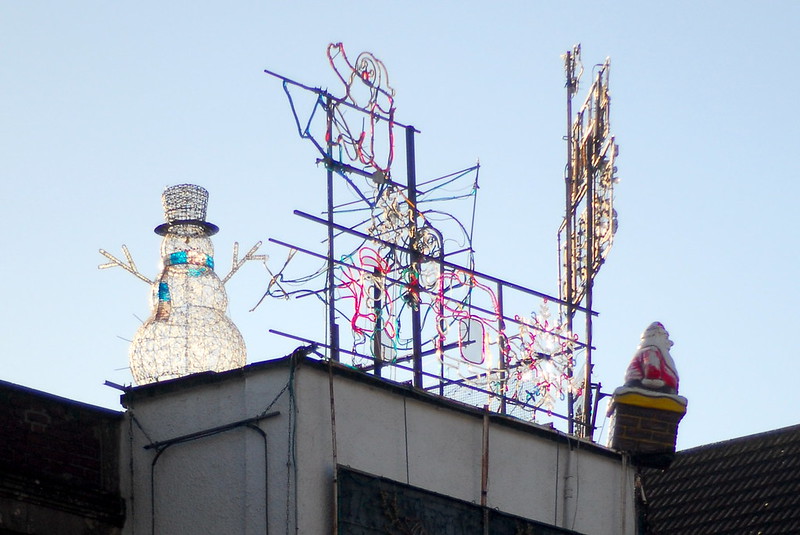
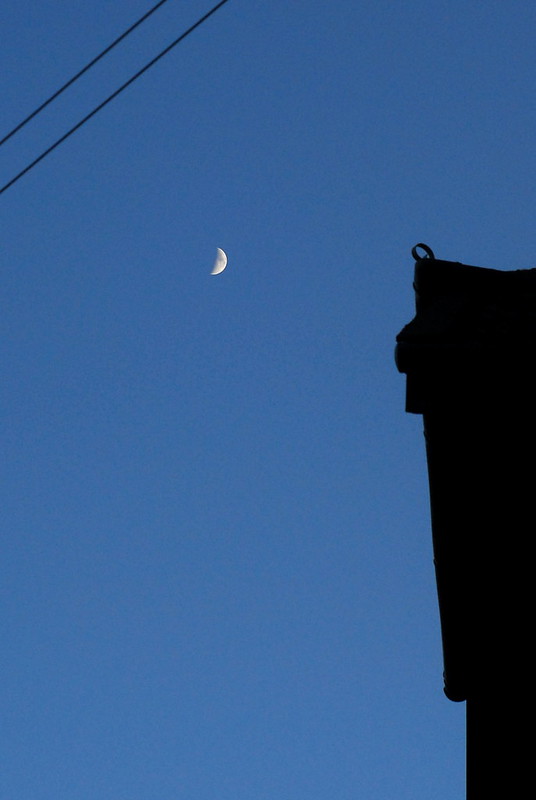
And, as that’s not very many, here’s some of Bristol just after Christmas, too:
In which we discuss local things, and eat pancakes
A few different things on my mind today, none of which are worthy really of a full post.
Firstly, in serious local political news, the city council’s minority Labour administration has collapsed, to be replaced with a minority Lib Dem administration. Whether the change in cabinet will lead to any changes to or abandonment of the destructive and wasteful guided busway scheme, much blogged about here in the past few months, we will have to wait and see. For that matter, there may well be changes to the rather rushed scheme to pedestrianise half of Prince St Bridge, which some people think was part of the guided busway plans; but which I think was more likely to be some sort of council sop to transport charity SusTrans, whose main office overlooks the bridge.
Talking of things round the Harbourside, regular readers might remember me talking about *Folk Tales*, the monthly music-and-storytelling event at the Scout Hut on Phoenix Wharf. February’s Folk Tales was last night; however, me and K didn’t remember this until about half-seven last night, at which point we didn’t really feel like going out. Oh well: roll on the next one. I remembered, when noticing that people have been searching the internet for information about it (and finding me).
Aside from that: we had plenty of pancakes on Tuesday night, as is only right and proper; and enjoyed them so much, we had more yesterday. Which is probably slightly going against the point of Shrove Tuesday, but never mind. More pancakes has to be a good thing.
In which we wonder what we know
Or, the perils of knowing a little on a lot of subjects.
Say, hypothetically, you were considering auditioning for a popular TV quiz show, confident in your general knowledge. However, the hypothetical quiz show in question requires you to also answer questions on a few specific topics – let’s call them, for the sake of argument, “Specialist Subjects”. What sort of things would you pick, and why would you pick them?
In which we describe Portishead
Another lazy weekend this weekend. Wanting to get out of the house, though, we took a trip to Portishead.
It’s a strange town. A strangely-shaped town. Like Clevedon, it’s a seaside town that doesn’t look towards the sea. The harbour is lined tightly with recently-built classically-themed terraces, designed to look like Totterdown or Clifton, but packed in much more densely. Further south is a muddy bay, a headland looking across to Newport; and the remains of an old fortress, little more than lines of concrete in the clifftop grass. There is also, signs said, some Iron Age defensive works; but they are well-hidden by trees and my rusty eye couldn’t make them out.
Clevedon had a pier and an interesting bookshop; Portishead didn’t seem to have any similar attractions. We tried to find the lighthouse marked on our map, before going home, blown back by the wind off the sea.
In which we discuss lost relics once more
Time to return to Tudor Parfitt‘s documentary The Quest For The Lost Ark, which I started to discuss last week. A brief recap: Prof. Parfitt has discovered, in a museum in Harare, a 14th-century southern African war drum whose descent can, arguably, be traced back to the Biblical Ark of the Covenant, as described in Raiders Of The Lost Ark Exodus:
“Have them make a chest of acacia-wood: two and a half cubits long, a cubit and a half wide, and a cubit and a half high. Overlay it with pure gold, both inside and out, and make a gold moulding around it. Cast four gold rings for it and fasten them to its four feet, with two rings on one side and two rings on the other. Then make poles of acacia wood and overlay them with gold. Insert the poles into the rings on the sides of the chest to carry it. The poles are to remain in the rings of this ark; they are not to be removed. Then put in the ark the Testimony, which I will give you.
If you remember the film: the prop-makers on Raiders Of The Lost Ark followed this description pretty much spot-on. Tudor Parfitt, though, has another theory. As the Ark’s descendant is a drum, the original Ark must have been a drum also.
There are, though, a couple of glaring problems with this. Apart from one verse in the Quran which is pretty consistent, the evidence we have for the Ark’s original existence comes from the Bible; from the Old Testament and related books. In all those Biblical references, it’s described in the same way, as a chest. That’s very clear. For Professor Parfitt’s theory to be correct, then we have to assume that although the ark existed according to our sources, all those sources are wrong about what it essentially was. It’s like saying “I believe the Battle of Agincourt happened just like it says in the chronicles – only it wasn’t a battle. And it was somewhere else.”
Furthermore, it makes good archaeological sense that the chest the Israelites built was indeed a chest. If you follow the description of the Ark in the Bible, it’s a chest, about a metre long, designed to be carried on poles. According to the Bible, it was built just after the Israelites had left their Egyptian bondage; and the Egyptians used very similar chests in their own religious rites. They had portable shrines, chests borne on poles just like the Ark, used to carry iconic statues in religious procession – just as the Ark was carried in procession in front of the Israelites. Indeed, Parfitt’s documentary covered all this, and pointed out that the description of the Ark quoted above is pretty close to a description of an Egyptian portable shrine. He didn’t believe in it, though, because it’s a very ornate object to be built by people wandering about in the desert.
In Deuteronomy there’s a different description of the building of the Ark:
At that time YHWH said to me, “Chisel out two stone tablets like the first ones and come up to me on the mountain. Also make a wooden chest. I will write on the tablets the words that were on the first tablets, which you broke. Then you are to put them in the chest.” So I made the ark out of acacia wood and chiseled out two stone tablets like the first ones, and I went up on the mountain with the two tablets in my hands.
None of the ornate decoration, just a wooden box. A box, note. This passage has led some people to believe that there might have been two arks, an ornate one in the Temple and a practical one for use in war; but equally, it could be that the Israelites built a simple chest first and decorated it later.* In any case, it’s still most definitely a box, not a drum.
In order to argue that the Biblical Ark of the Covenant was a war-drum, as Tudor Parfitt thinks, you have to argue that the Biblical Ark of the Covenant didn’t exist at all; and that the Israelites had some other holy object which they carried in front of them, some holy object for which there is no evidence at all. On the other hand, if you’re willing to embrace a more sophisticated model of archaeology and culture than Professor Parfitt apparently is, it’s quite possible that there is a 14th-century AD African war drum which is, in some way, a descendant of a 14th-century BCE** Israelite reliquary. A lot can change in 2,800 years, after all. In the final part of these posts, we’ll talk about cultural change, the archaeology of Yorkshire, and why a holy chest might well become a holy drum over time.
*Part Three of this post follows, here, even though I haven’t got around to the Yorkshire bit yet* »
* Or, this could be a brief summary of the previous chapter which didn’t need to delve into the full specification.
** That date’s based on Moses’ traditional Jewish birth date, in 1391 BCE
In which we make better documentaries
We sat down last night to watch one of the Christmas present DVDs: Arrested Development Season 3. It got me thinking, after yesterday’s post, about pseudo-archaeological documentaries.
I don’t mean Professor Parfitt’s documentary described yesterday, so much as the far wilder theories produced by, say, Graham Hancock, or the many who have followed on from *The Holy Blood and the Holy Grail*. You know the sort: the sort who will tell you, straight-faced, that the Bavarian Illuminati knew the secrets of the Knights Templar, who had found ancient Jewish documents containing the mystical secrets of Egypt and the bloodline of Jesus, whose descendants formed the Priory of Sion, founded the Freemasons, who preserve the secret that Atlantis was in Antartica, and who hope to return to the French throne as predicted by Nostradamus. And that you would already know all this, if it wasn’t being kept secret by a global conspiracy involving the Pope, the British royal family, and the Bilderberg group. That sort of documentary. The sort which is bound, somewhere, to contain the line: “if the documents we had found in the obscure archive were true, it would mean rewriting the history books.”
Anyway, if you didn’t watch Arrested Development – and not many people did – one of its constant features was a narrator’s voiceover, performed by Ron Howard.* A rather sarcastic narrator’s voiceover, pointing out every moment where the characters lie or make a mistake.** And that’s exactly what all those documentaries need.
Presenter: If the documents we had found in the obscure archive were true, it would mean rewriting the history books.
Ron Howard: But they’re not.
A thousandfold improvement, I think you have to agree.
* who has lately been directing a movie based on a Dan Brown book, so will know exactly what I’m talking about
** which is rather frequently.
