+++*

Symbolic Forest

A homage to loading screens.

Blog : Page 39

Sound and music

In which we go to see The Boy Least Likely To

As soon as we get home, we’re out again. To a gig, at the Louisiana, to see The Boy Least Likely To, hard at work promoting their new album that’s just been released. We were slightly confused when we arrived, to see that according to the posters the gig was on Monday, March 24th, and we’d turned up on a Tuesday. After checking our calendars, we went in. Inside, there’s not much room in the Louisiana. It’s quite a cosy place, so cosy that we quickly spotted that a good chunk of the pub was taken up by support band The School tucking into their tea.

The first band that came on were The Fox And The Bramble, an electric/acoustic duo who dashed about the stage swapping instruments, and made slightly-twee twinkly sounds with children’s toys. I spent a while wondering which one was Fox and which Bramble; the internet says the name comes from Aesop, though.

They were followed by The School, as I mentioned. We’ve seen The School before, so we knew what to expect; but we were slightly disappointed. They didn’t seem as good as they did in November. The sound didn’t seem to be mixed quite right, with keyboard and vocals overpowering the rest of the band.

The Boy Least Likely To had sound troubles of their own. “Violin isn’t plugged in,” one of them shouted, after the first song. “Too much violin,” he shouted after the second. They are apparently only a duo normally, but on-stage they mysteriously expand to a full band, like one of those toys for dropping in water. I have to admit to not knowing very much about them; but the gig left me wanting to find out more. Their frontman smiled broadly, and flicked balloons back and forth with the audience in a genial way, never missing a beat.

Brokenness

In which things go wrong in hard-to-diagnose ways

We go away for the weekend. We come back. And the house is cold. Turn on the hot water tap: freezing. The boiler has given up the ghost.

I turn on the PC this morning: and that refuses to come on, too. Which, to be honest, is a recurrence of a problem I was already aware of. Sometimes, on start up, it gets partway and loses contact with the disk drive. Or, sometimes, if you ask it to do too much disk-thrashing just after booting, the same thing happens. On the other hand, if it starts up all its services and is fine for 15 minutes, it will probably stay fine until it’s switched off.

All that points to something like a loose contact somewhere, if you ask me. As I say, it’s been happening for months now; but today I was in the mood to sort it. The computer now has a new hard disk cable. It booted up first time, and it’s still running. Let’s see if it still works in the morning.

The boiler might be suffering from something similar. The gas engineer came out, poked around at it, and fixed it. The chap wasn’t sure what the problem was, or how he fixed it, but fix it he did. Maybe. It’s working now, but we still have to see if that, too, will come on again come tomorrow.

Journalistic accuracy

In which the news needs its facts checking

Long-term readers might remember that, back in the mists of time, I upset some busy bees at the Grimsby Telegraph after describing that newspaper as “rather news-thin”. Which, indeed, it is: they don’t have much news in it, because they don’t have the reporters or the money to research much news. I kept meaning to take a random copy, take it apart, and break down its content into “quality” and “filler” – the latter being things like the letters pages, readers’ photos, TV listings, local sports reports* and so on; but, not living anywhere that I can get hold of a copy easily, it has been put on the back burner.

I was gratified to see, though, that its stablemate the Bristol Evening Post may have similar issues. Certainly, job cuts at both the Grimsby Telegraph and the Evening Post were making the news recently; and I’ve since noticed that the Evening Post no longer seems to pay as much attention to the accuracy of what it prints.

On Monday afternoon, a story appeared on their website, concerning a street fight in Bedminster the night before; your average local news story really. Five people were injured, and police closed the street** to search for evidence. As the Evening Post said:

The street has now reopened

Which it has. Unfortunately for the Evening Post, that story is dated 15:35, Monday. In the real world, at 5pm, everything was still cordoned off, as CSI Bedminster’s finest were still going about their jobs: white suits, facemasks and all. Oops.

Earlier in the day the police had said that they’d probably have tidied everything up by lunch-time. Clearly the Post staffer responsible for that story had heard as much, assumed that “probably” meant “definitely”, and didn’t have chance to check their facts before going to press. Which is understandable, given that it’s a small point, and the Evening Post has to get a paper out every afternoon however few reporters it has left. It makes me wonder though; if they don’t check small details like this, what else gets printed unchecked?

“It’s just like you reviewing things you haven’t seen or read,” said K, when we talked about it later.

“You’ve got a point,” I admitted.

“You should be writing reviews for them, then!” she said. Now there’s an idea. At least I’m honest about it.

* Most of which, especially if they appear without a byline, are essentially press-releases from the teams involved.

** Here’s a factoid for trivia fans: the street in question is part of the longest road entirely in England.

The changing of the seasons

In which we celebrate a milestone

It’s nearly six months, now, since we moved house, and we seem to have made it through the winter. By next week the days will be longer than the nights; and this morning, when we left the house, the sky was blue and the sun shone down on us. Astronomically we might be at the start of spring; outside, it feels as if spring is already verging on summer.

Afterlife

In which we consider how “Being Human” ended

Given the amount of space I’ve used to talk about Totterdown-set* BBC3 series Being Human on here, it’s about time I mentioned the series finale – it was a fortnight ago now, after all. Before the finale had been shown, we already knew that Series Two had been commissioned, which, I have to say, took away some of the suspense. It was possible that the writer would follow through the compulsary penultimate-episode cliffhanger by “killing off” the main characters (who were, of course, technically already dead); but it wasn’t likely. It was also very likely that we’d lose some of the other characters; and, indeed, it happened.

The setup for the next series is already well in place, with at least three storylines there to take up, all fairly well-divorced from the series one plot. How much reference will be made to the first series, I don’t know. From a new-viewers point of view, three new-starting plot strands make sense; but from a writing point of view, it seems unrealistic. Given the end of the finale episode, I’d have thought that there shouldn’t be much of a gap in the series timeline between series; so how realistic will it be for the previous events to be barely mentioned?

Overall, the series was pretty damn entertaining, even though the finale itself wasn’t particularly exciting. This is the problem with the “compulsary cliffhanger” structure mentioned above: if the writer isn’t careful, the penultimate episode can end up much more action-filled and suspenseful than the final episode itself. Recent series of Doctor Who have tended to suffer from the same problem: the finale has trouble living up to the build-up in the previous episode. It left me thinking: “but why didn’t they just do that at the start?” To be honest, we were mostly watching it for the locations; and we’ll probably still watch the next series. Marks out of ten: ooh, I don’t know. Maybe a seven.

* for all those people searching: the shared house’s address is 1, Windsor Terrace; the hospital is Bristol General, by Bathurst Basin; and the undertakers are Up North, in Clifton.

Photo post of the week

In which we spot a derelict hotel

It took me until yesterday to realise that there was another bug with the new theme, that nobody had so far noticed. Which isn’t too surprising: it didn’t affect any functionality, and it was only a problem on some days of the week. It’s fixed now, at least.

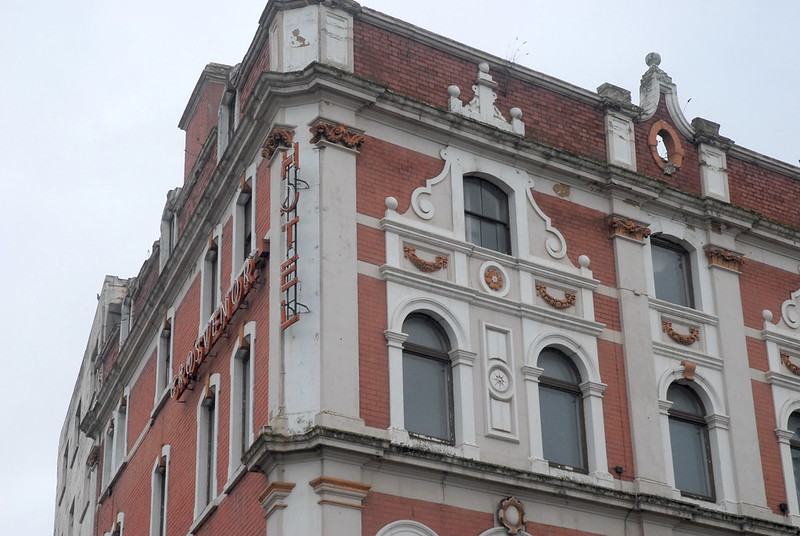
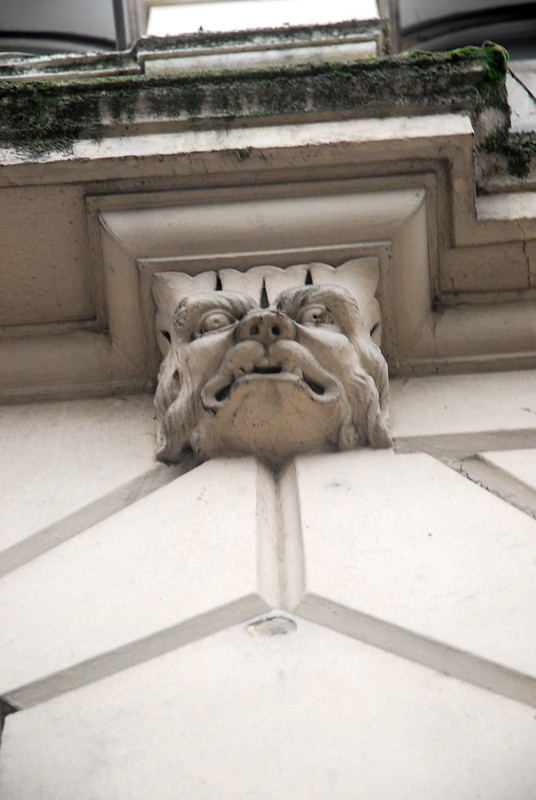
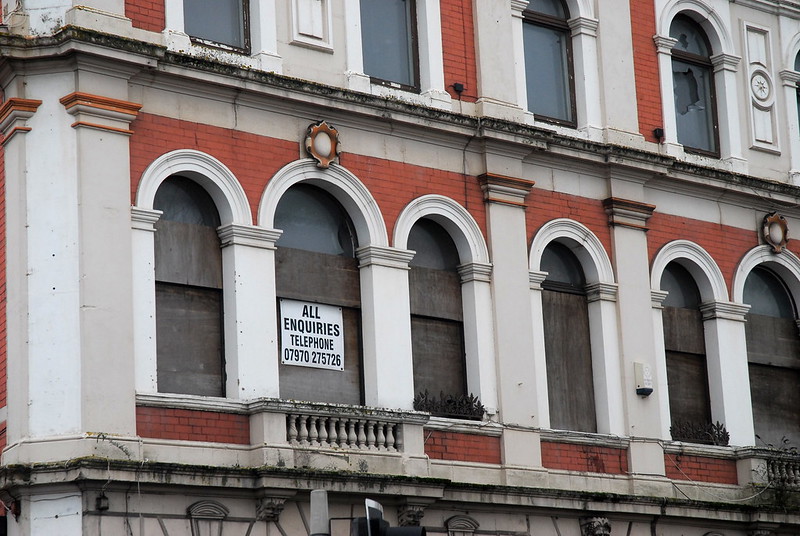
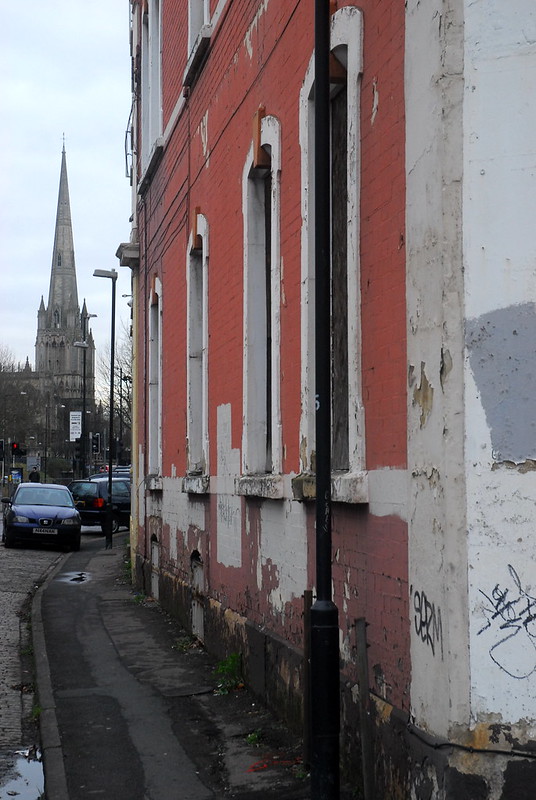
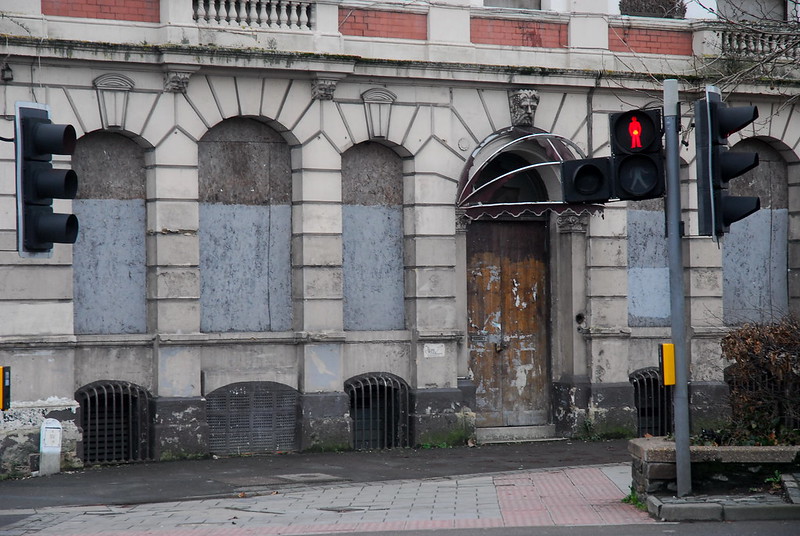
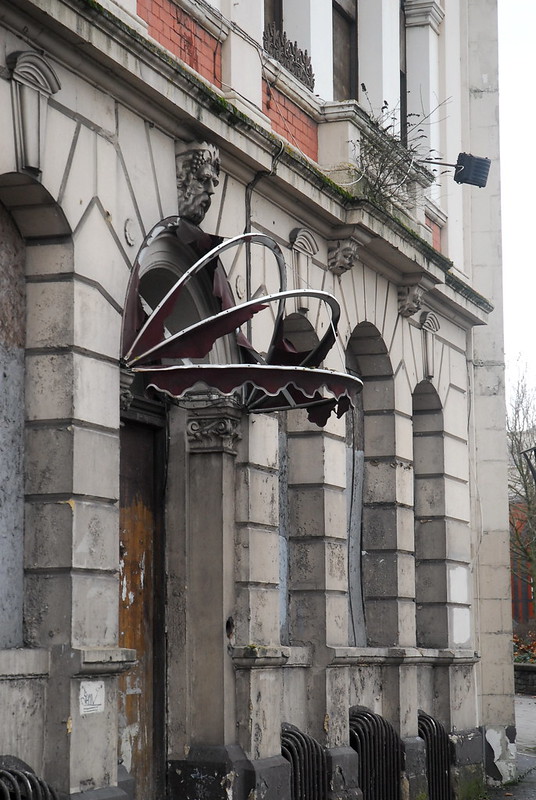
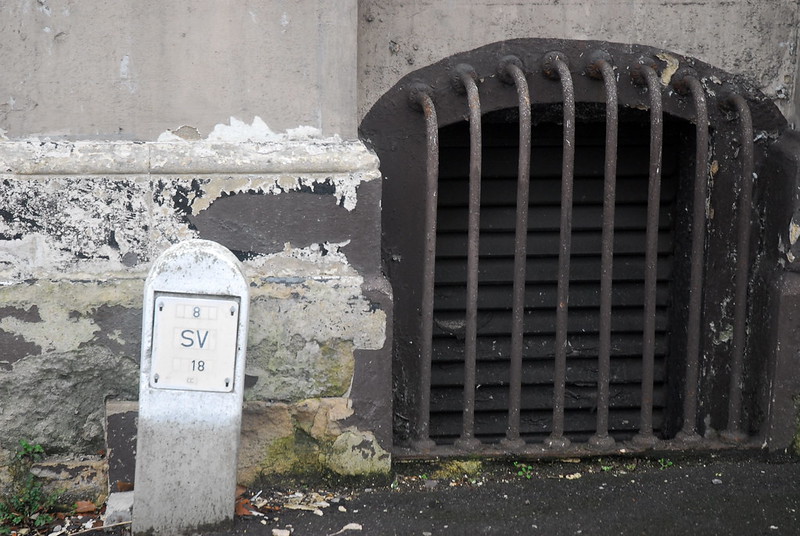
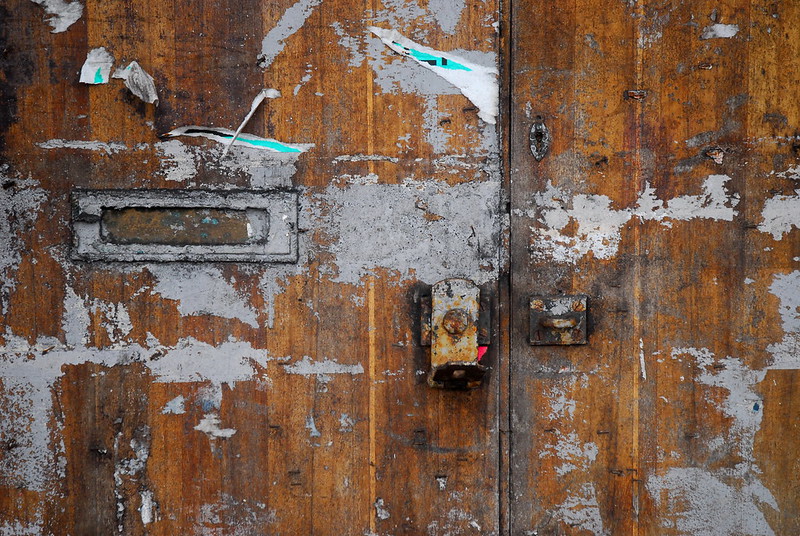
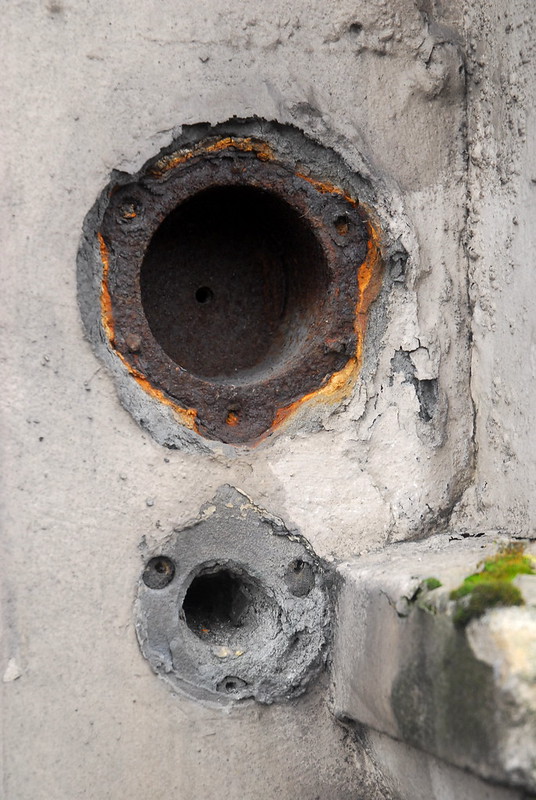
This week, there aren’t many photos; or, at least, not many cheerful ones. It’s all Bristol in dull January weather. Particularly: photos of the Grosvenor Hotel, the disused hotel, alongside a disused railway embankment, on Temple Gate. It’s due to be knocked down; so here are some photos.

The disused Grosvenor Hotel

The disused Grosvenor Hotel

The disused Grosvenor Hotel

The disused Grosvenor Hotel

The disused Grosvenor Hotel

The disused Grosvenor Hotel

The disused Grosvenor Hotel

The disused Grosvenor Hotel

The disused Grosvenor Hotel

Well, it was due to be knocked down, to make way for a road scheme and a bus stop, before the City Council’s cabinet resigned the other week. What will happen to it now, I don’t know.

The Future Of Things

In which we return to Mario Reading and his inability to admit to his mistakes

Flicking through my viewing figures and my search keywords, I spotted one that caught my eye:

Is it true that nostradamus predicts that George W Bush is going to get assassinated?

Well, no. No, I have to say, it isn’t. It has been claimed that he did, though, by a writer called Mario Reading. As I do try hard to maintain this blog’s position as the top source for Mario Reading information on the internet, I thought I’d better mention it. Mr Reading’s prediction is based on this quatrain by Nostradamus:

The successor will avenge his handsome brother
He will take over the realm under cover of vengeance
The obstacle slain, his dead blood seethes
Britain and France will hold together for a long time

This is Reading’s own translation. He interpreted it as: a powerful world leader, whose main international ally is the British government, undergoes an assassination attempt; and this will lead to Britain aligning itself more with the EU. Oh, and, all this will take place in ’06.* He stepped carefully around the issue of naming the leader in print:

One of many possible targets, of course, might be US President George W Bush

but this is after mentioning that “under cover” in the quatrain, souz umbre in the original, probably means something like “under a bush”. Not to mention, Reading was rather less guarded when, as part of the pre-publication publicity, he went on the telly and said specifically that it was George W Bush that he meant.

Needless to say, none of this has come true, as you might have noticed, and the time for Reading’s prophecy to apply is well past. Nevertheless, he’s since declared that his prophecy did indeed come true! He wrote on his blog that:

I’m very sad to say that the predicted assassination did indeed take place, with the murder, on the 27th December 2007, of Benazir Bhutto. … The prophecy was further vindicated by the fact that both of Benazir Bhutto’s brothers had also died under unnatural circumstances, and that their brother-in-law, Benazir Bhutto’s husband, was elected President of Pakistan. … I rest my case.

Hang on a minute there, Mario! Yes, I know, “handsome brother” might be a mistranslation of “brother-in-law” – but in your prophecy there, it’s the brother who’s been attacked. Benazir Bhutto may well have been assassinated, but she definitely was no man’s brother. Having said, back in 2005, that you thought George W Bush was going to get attacked, it’s a bit misleading of you to go back and say “aah, someone else was assassinated, see, I was right all along”. Particularly as that someone else doesn’t at all fit the prediction you wrote.

I’ve been meaning, for a while, to write a full and proper critique of Reading’s book; something which is only going to get easier over the years as fewer of his prophecies come true. I’ve had more important things to write about, but I’m getting round to it. Once I have, I’m tempted to go on to Peter Lemesurier, who, in the mid-90s, predicted, using Nostradamus and astrology,** that an Islamic army would have invaded Europe from North Africa by now.*** He’s still writing books, and his website is actually pretty useful, despite not acknowledging his past predictive failure. But, on the other hand, there is a whole world of future-predictors to debunk out there. All I can ever do is scratch the surface.

Update, September 2nd 2020: Mario Reading died in 2017 and his website disappeared from the internet, so you will just have to take my word for it that the text above is an accurate quote. Sadly, he won’t be around to see the rest of his predictions fail to come true, as indeed they probably will not.

* Reading has his own dating scheme which links the year to the number of the prophecy; according to that, the prophecy applies to a year ending in 06, although he goes on to link it, because of his interpretation, to the vaguer period “2006-2008″.

** which does make sense in a way, as Nostradamus was basically an astrologer himself. Le Mesurier sets the dates of his predictions by looking at repeating astrological cycles.

*** This is why, as I wrote a while back, the work of people like Reading and Le Mesurier really needs a Ron Howard voiceover, to say things like “It hasn’t”.

New World

In which we jumble the letters up

K was digging through her boxes of zines last night, hunting for something, and came across one she thought I’d find interesting. She passed it over. It was The Dvorak Zine – “changing the world, one keyboard at a time”.

I’ve heard of the Dvorak keyboard before. It’s a keyboard layout specifically designed to make typing quicker, and easier to learn. I’d never bothered, though, to investigate it, and find out what the layout actually is. The zine, though, is cunningly designed. The back page is a keyboard map; you prop it up on your desk and start typing away.

I’m not a proper typist. I’ve never learned to touch-type. My typing is pretty fast for someone who can’t type; but really it’s nothing more than very fast two-finger typing. As a result, it’s riddled with mistakes, and I spend more time going back and correcting what I’ve done than it takes to type the words in the first place. The Dvorak keyboard, though, seems specifically designed for touch-typing – and, looking at keys that type different letters to the letters printed on them would just be far too confusing for me. So, I thought: an ideal opportunity. Why don’t I learn?

So, this morning, I set the zine up on my desk, and switched the keyboard mode over. Put my fingers on the home keys, and started typing: one letter at a time.

It was slow, of course it was. But, as promised, it was surprising how quick it was to pick up. Within a couple of hours, it was quicker to type without looking at the keyboard map than to use it. This might actually work.

To be honest: I haven’t used it to type this. I did want to get something productive done today, so after 3 hours or so of Dvorak typing I switched back to the traditional layout. I don’t want to lose my ability to type the old way, after all: we don’t have a Dvorak typewriter and we’re unlikely to find one. I’m very pleased with how quickly I’ve been able to pick Dvorak up, though. What mostly slows me down is: like most people, I think in terms of words rather than letters. I seem to mostly type using my muscle memory of whole words and word fragments. Switching to Dvorak, I can easily remember where all the common letters are and which finger to use for them: but then I have to spell each word out in my head to type it. Training myself to type in words, without thinking about the spelling, will take some time.

Calling Dr Jones (part three)

In which we return to Tudor Parfitt, the Ark of the Covenant, and consider how archaeology has changed

About time I finished off writing about SOAS Modern Jewish Studies professor Tudor Parfitt, and his rather dodgy theory, shown on TV in his documentary The Quest For The Lost Ark, that the Biblical Ark Of The Covenant was not the ark that is biblically described, but was in fact a drum; that it was taken to Africa, survived in the possession of a Jewish tribe there, and that its final version is now in storage in an Harare museum. Which might make more sense if you read the previous posts I’ve written about it: part one, and part two.

Previously we’ve discussed the theory itself, and its basic flaw: in order for it to be true, every piece of evidence for the original ark’s existence has to mis-describe it in a fundamental way. Now, I want to discuss why Professor Parfitt might have come up with his rather misguided theory. He has trouble with a concept which archaeology itself had trouble with, in general, for many many years. The Parfitt theory states that there is a medieval African war drum which was constructed to replace an earlier Ark of the Covenant, so those earlier Arks, all the way back to the Mosaic period, must have been drums also. This is because Parfitt is unwilling to consider any degree of cultural change.

Cultural change is, as I said, a concept which archaeology has always had trouble with. In traditional archaeology, it was one of several concepts which was not so much discarded as never considered. Change in material cultures was almost always explained by means of migration, often mass-migration: wave on wave of homogeneous and distinct peoples moving about the map, rather like a game of Risk, never themselves changing. There are probably a few reasons for this. For a start, archaeology as a discipline arose after the formulation of the classic “nation state”, and during the period that the Western countries were dividing up the third world with lines across the map in just the same way that archaeologists then divided up prehistoric maps. For another thing, there was a rather patronising attitude that invention was rather too hard for “prehistoric barbarians” to do. If your stereotypical woad-covered Ancient Briton wasn’t up to inventing new stuff, then any archaeological change must come from outside. Small changes in style could be explained by trade; large changes by immigration.* This theory was known as “diffusion”, and was finally put to bed in the late 60s and early 70s.**

Cultural change took a long time to accept, partly because it complicates things. It’s not, itself, an easy explanation, compared to diffusion and migration. Moreover, archaeological theories of change were first adopted by “processual archaeologists”, who explained change in terms of biological and ecological analogies like the spread of muskrat populations. They were followed up by “post-processualists”, the postmodernists of the archaeological world, who liked to use words like “hermeneutics“. They introduced some important concepts into archaeological interpretation, but not in a very accessible way. Nevertheless, whilst processualists had given archaeologists tools and techniques for analysing technological change, the post-processualists’ concepts were the best means archaeologists had to discuss cultural change. I am, of course, wildly overgeneralising in everything I say here.

Looking at historical evidence, though, it’s hard to see why the supposed correlation between migration and cultural change was accepted for so long. Take British history, for example. In the first millennium AD there were three major migrations that we know about from British history prior to the arrival of the “Vikings”. The first, the Roman invasion, probably involved the fewest people of the three, but is extremely well-represented in both history and archaeology. The second, the invasion of the English-to-be, is represented in archaeology quite well, but there is huge debate as to the actual number of people involved. Particularly, genetic research has shown that the old 19th-century theory, that the Angles and Saxons completely replaced the previous Welsh-speaking inhabitants, is almost certainly wrong. The language changed, the rulers changed, but most of the people probably did not. The third, the migration of the Scots from Ireland into western Scotland, is well-known from history; it changed the language of western and highland Scotland, and the government of the whole country,*** but is impossible to find in the archaeological record. There are plenty of buildings and sites from the period in Scottish archaeology, but none of them give any indication that the culture of western Scotland was changing in the way that history tells us it did.

I had intended that this was going to be the final post about Tudor Parfitt’s Ark theory; but this post is growing to be rather larger than I’d thought it would end up. Additionally, my dinner’s ready. The final final part of these posts will talk more about cultural change, and show how it could, potentially, correct Professor Parfitt’s ideas.

*The fourth and final part of this post follows, here* »

* Moreover, changes in metalwork were seen as indicating trade or war, because metalwork must have been a man’s job, distributed either by traders (men) or raiding warriors (also men). Changes in pottery were seen as indicating mass migration, because pottery must have been “domestic”, made near the home, used by women, and so must have indicated homes, families, and therefore population movement. For a long time I’ve wanted to write a history of archaeology, largely because theories like that are so easy to take the piss out of.

** The final big nail in the coffin of diffusionism was when Colin Renfrew – now Lord Renfrew – used radiocarbon dating with tree-ring calibration to show that metalworking was probably first invented in south-eastern Europe. However, it’s a shame that people didn’t just look at it before that and go “actually, this is a stupid idea”.

*** and gave it its name, of course.