+++*

Symbolic Forest

A homage to loading screens.

Blog : Page 68

Bones

In which we know where the bodies aren’t buried

Archaeology news story of the week: British pagans have decided that archaeologist should hand prehistoric skeletons over to them for reburial. Which is, of course, a silly idea, and one that a lot of archaeologists have a problem with.

Archaeologists naturally tend towards conservation. It’s something that’s drummed into them all through their training: you can only dig something up the once, so once you have it in your hands you have to look after it. You store it away carefully, because you never know when you’ve managed to extract all possible information from it. That’s why throwing something away – and that’s what reburial amounts to in many ways – is anathema to an archaeologist. To most practical archaeologists, artefacts like skeletons are a bit of a nuisance. If you’re in the field, they lead to lots and lots of paperwork.* If you’re back at the lab, you have to look after them – artefact aftercare ends up costing about ten times as much as your average dig does, at the least.** But you still have to look after them, because otherwise you’re not really an archaeologist.

A pagan quoted in that article says:

Any story that is reconstructed from [prehistoric skeletons] will be an imagined past, which usually turns out to be a blueprint of the present imposed upon the past

Which is, indeed, true. But it’s also true of modern pagan religions, to be fair. Modern paganism is an entirely modern religion. It draws influences from prehistoric religions, but so do other modern-day religions such as Mormonism. There’s very little direct link between any religion today and any European religion of three thousand years ago, so any claim of continuity is rather suspect. For one thing, there’s a huge variety of religious practise in British prehistory, which suggests that religions changed in nature over time then just as they do now. At some times people were buried in graves as they are now; at some times they were buried, or exposed, and then their skeletons were taken apart and stacked up somewhere.*** At some times, they were cremated. Sometimes they were buried in a “partially articulated” state – which means the body was still meaty enough for some of the major joints to hold together, but rotten enough for some big bits to have dropped off. In East Yorkshire, rich people were buried in chariots; which just goes to show that people from East Yorkshire have always been slightly strange.****

Which of those different types of burial represents different religions? It’s hard to say, because religion doesn’t always determine burial type. Which of them represents any of the various strands of modern paganism? None of the above. There’s no reason why remains shouldn’t be treated with respect; but equally there’s no reason why any modern religion should claim to have responsibility over them.

* especially for skeletons, because there’s all sorts of legal paperwork to fill in to prove you didn’t just bury the body the other week.

** and digs are bloody expensive

*** this, with burial, is more or less what happened from medieval times through to the 18th century; it was only after that that people started to see the grave as “eternal rest”.

**** no, really, the Iron Age archaeology of East Yorkshire really is rather distinct, and different to anywhere else in the whole of Britain.
Misty

Or, a winter dawn

I wish I carried my camera around with me everywhere. I don’t, because it’s too large and heavy and valuable to take it everywhere with me. There are so many pictures I wish I could have caught, which I’ve missed. I used to keep a sketchbook with very rough sketches of some of them, all far better photos than any of the ones I’ve taken.

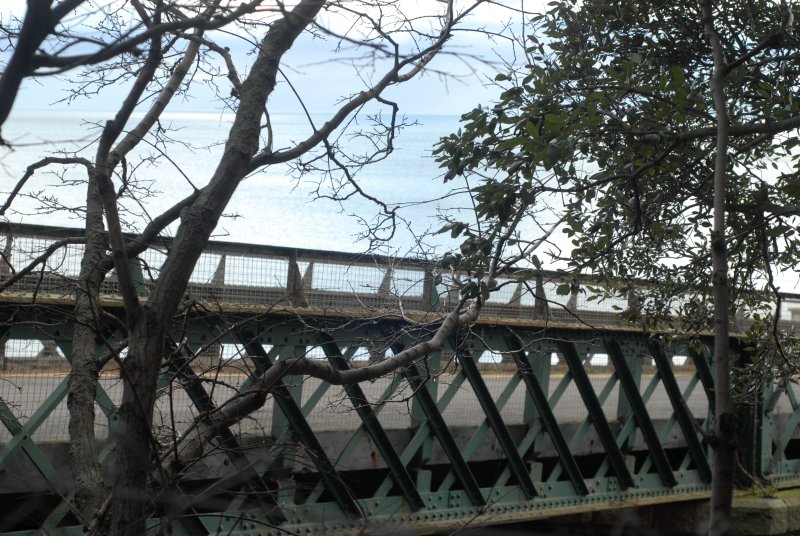
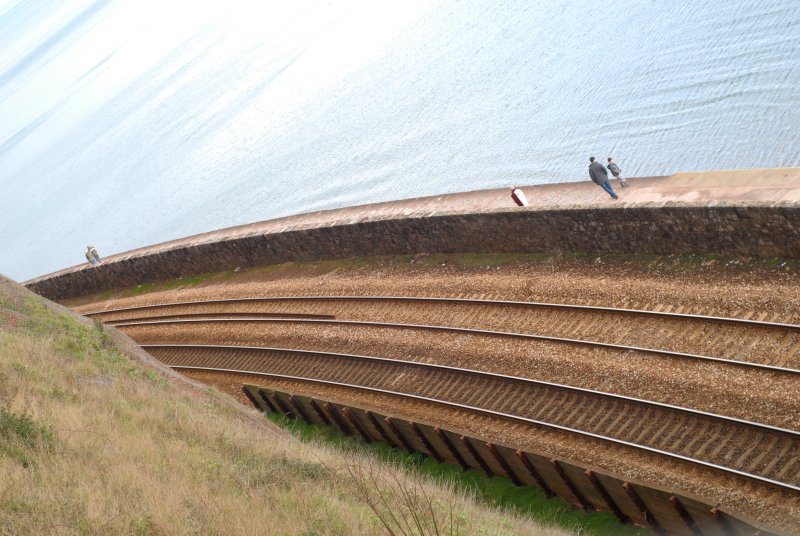
This morning, driving to work, through the Western Fields. Mist and fog were hugging the ground, up to about five feet. Above it trees and bushes were breaking through, black silhouettes, and above that dawn through the clouds. It’s rare for the morning to look so beautiful.

Flooding

In which Exchange causes problems

Microsoft, everyone’s favourite evil behemoth, have been getting as much press as they can in the past few days to push their new operating system. At the same time, though, their software has been making my life a drag. And there’s nothing at all I can do about it.

The problem is their email server “messaging solution”, the horrible and nightmarish Microsoft Exchange. I know it’s a horrid system to babysit, but fortunately I don’t have to do any of that. Worse, though, it can make life bad for people like me who shouldn’t have to have anything to do with it.

Like most things Microsoft produces, it has a showstopper of a bug. It’s triggered by an innocent salesman* who decides to send an email to a long, long list of people at once. His (or her) own system has nothing to do with this; the problem is when one of the people in the recipient list uses a buggy Exchange. Their server will read the email, and send it out again. To all of the recipients. Thousands and thousands and thousands of times. Each copy looking like it’s coming from the original sender.

Moreover, some of those people will then reply, saying things like “why are you sending me thousands of emails, you fuckwit?” They don’t really help, though, because inevitably they push the “reply to all” button. Meaning they then generate a second email which triggers the same bug, so that email, too, gets duplicated thousands and thousands and thousands of times, until the administrator of the buggy server wakes up and takes their server offline to recover for a while.

Bugs in software are unavoidable. Most of them, though, don’t cause problems for more than one person at once. Bugs like that, though, that can block up internet connections and mail servers for hours at a time, should never have been released. Releasing software that disrupts the rest of the world, in that way, is verging on unforgivable.

* Well, it’s not salesman-specific. But for some reason, it seems to be salesmen that set it off most of the time

Departure

In which we leave for home

Leaving is always hard. Leaving somewhere you want to stay is a difficult thing to do.

What’s worse, though, is being left behind. It’s a feeling I’ve always hated, whenever I’ve had guests. The emptiness of the house, of the room, after people you’ve wanted to spend time with have gone away. If you’re the person leaving, you have travelling to do, things to take your mind off the departure. If you’re the person being left, you have nothing to help you.

Because of that, I can always sympathise, with anyone in that situation.

The reading pile

In which we start reading something

Never mind about all the Books I Haven’t Read that I’ve been posting about here; since Christmas I’ve turned over a new leaf and started to cut the to-read pile down a bit. The way I’ve found time: spending half of my lunch hour every day with a book. Currently I’m in the middle of At Swim-Two-Birds by Flann O’Brien, who…

The Plain People Of The Internet: Huzzah!

Me: Oh, god, I should have known you lot would turn up if I mentioned O’Brien.

The Plain People Of The Internet: Why, it’s kind of expected.

Anyway, At Swim-Two-Birds is one of those books that I probably should have mentioned in Books I Haven’t Read, because it’s a classic of Irish literature. Flann O’Brien is one of those writers I’ve been meaning to write about here, but haven’t. His first novel is about a student writing a book, about a man writing a book, whose characters escape from his control.

The Plain People Of The Internet: Like this, you mean?

Me: Well, sort of. But ruder.

Hopefully, I’m going to manage to finish it this time; and then get on with the rest of the to-read pile. There’s plenty to go at, after all.

Answers

In which I did get something right

Back in December, I briefly mentioned the King William’s College General Knowledge Paper, and ever since I’ve received hits from people searching for the answers. I had, indeed, posted three of the answers, but hadn’t mentioned which questions they were the answers too. The full answers have now been published, though,* and I’m pleased to find that all the answers I posted here were indeed correct. One of them (“In 1906, who benefited, through his far-eastern mediation, from a Nordic inventor’s bequest?”) needed a bit of research into Nobel Peace Prize winners; but the other two I spotted (“Which man in holy orders had a first edition of his own revolutionary theory of the heavens presented to him on his deathbed?” and “What is the Drain?”) I thought were really rather obvious “everyone will know those” questions, so I wasn’t really bothered about posting the answers to them here.

Still. Three right out of a hundred – it’s a bit rubbish, really!

* you can still get the questions from The Guardian or the school itself, at time of writing.

Things I have accomplished

In which things are listed

This week, I have managed to:

  • be completely baffled about the nature of relationships (and other people in general)
  • Make someone happy, just by putting a website online for them
  • (I didn’t even design the website myself)
  • Explain the meaning of the term “shaggy dog story”
  • Annoy The Mother, as per usual
  • Annoy The Cat, by ignoring him when he tries to wake me up at 5am
  • Let other people get me down (see point 1)
  • (yes, I know they’re not numbered)
  • Let me get myself down
  • And thus piss off most of the other people I know, by moping constantly.

On the other hand, I can always cheer myself up by reading what people have been searching for on the net, that has led them on a misguided goose-chase to this place:

drunken squirrel – sorry, no clue
carpenter furniture joke – start here and be prepared to groan
birthday presents for goths – black things? Possibly?
things you do automatically – I’m not sure. They’re automatic. I don’t really notice them.
how to snog a colleague – use your tongue
gerbils show around west midlands – I really have no clue now
“i hate grimsby” – don’t we all, dear
extreme kidnapping fantasies – Oh-kay…
sex in forest – …that’s enough of that, I think.

By ‘eck

Or, sometimes the past seems obvious

Within a month, another slightly silly news story about paleogenetics. This one isn’t quite as daft as tracing the descendants of Edgar Aetheling, though. Scientists in Leicester have discovered that loosely-related members of a Yorkshire family share an African ancestor, from at least 250 years ago* and probably further back than that.

Unlike the previous story, the research in this piece is all very sensible. What’s silly is the idea that it should be surprising, or that it’s a news story that we have African ancestors. Everyone in Europe probably has black ancestry somewhere in their family tree, if you go back five hundred years or so; and definitely if you go back a thousand.** What’s depressing, I suppose, is that there are people who don’t realise this: people who think that their family is white, has always been white, always will be white. They’re wrong, of course.

* because that’s the most recently their latest common ancestor can have lived.

** I am haunted by a vague memory from university, that the skull of an African monkey, a couple of thousand years old, was found somewhere in Ireland, thus proving contact with Africa back then. I can’t find any references for this at all, though.