+++*

Symbolic Forest

A homage to loading screens.

Blog : Post Category : Trains : Page 6

Photo post of the week

In which I spot a train

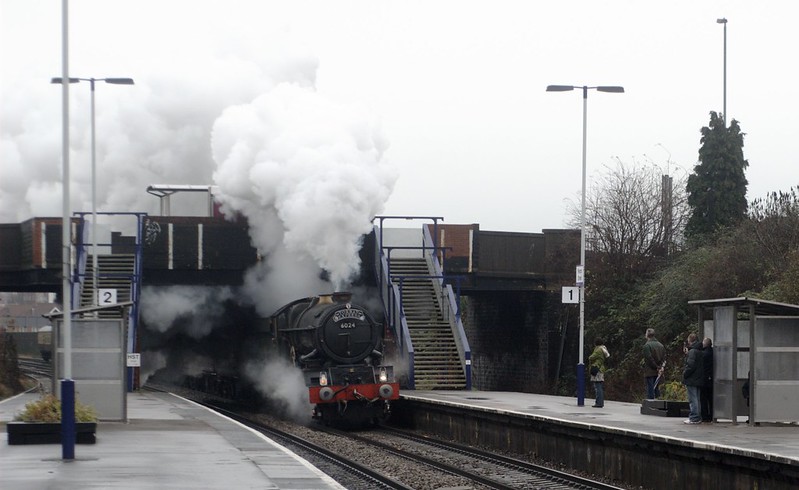
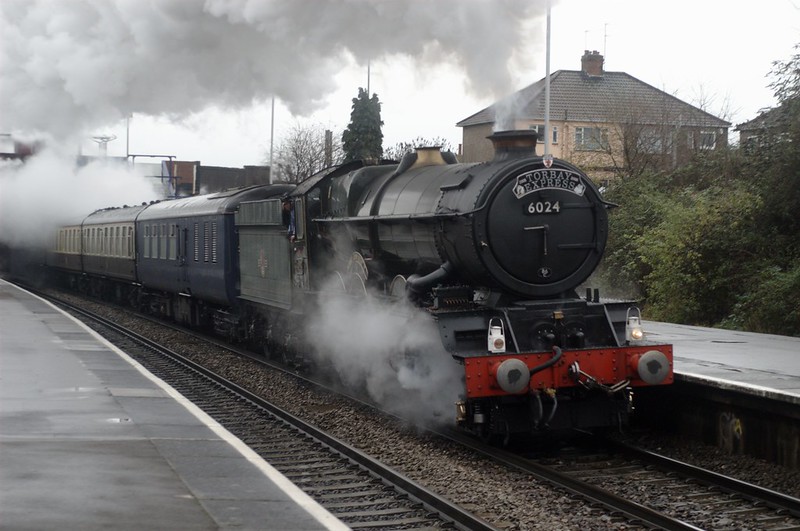
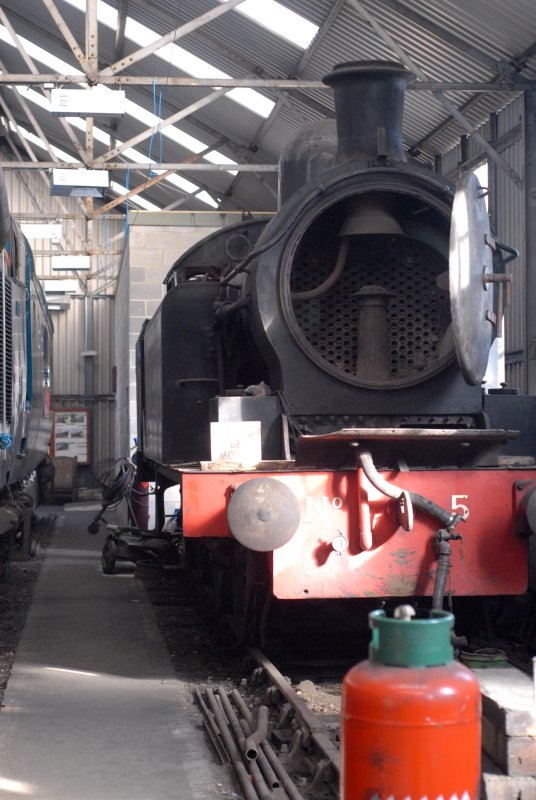
We discovered, the other week, that occasionally, just sometimes, if you drag yourself out of bed early on a Saturday morning and get down to our local railway station (1 train an hour if you’re lucky, to Weston-super-Mare), you can see something a bit more interesting than normal…

The Torbay Express passing Parson St station

The Torbay Express passing Parson St station

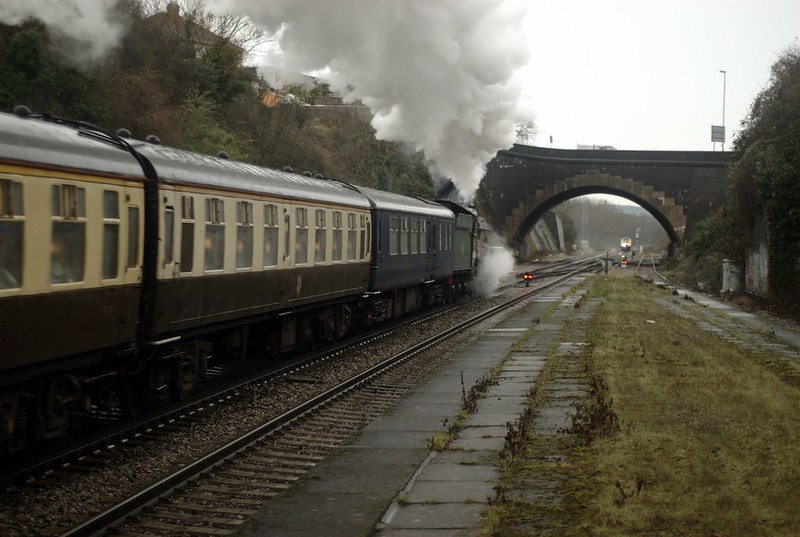
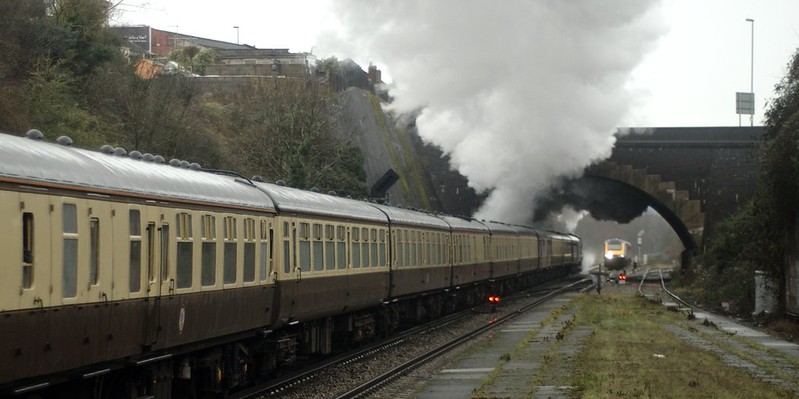
Two Torbay Expresses passing Parson St station

Two Torbay Expresses passing Parson St station

If one of the trains had been travelling a few seconds later or earlier, I’d have got a great photo of the equivalent 1930s and 1970s express engines passing each other.* As it was, the modern train is a blob in the distance. Ah well. Maybe I’ll get up early tomorrow too.

* With the added, slightly confusing detail, that both of the trains involved (not the engines) have the same name.

Guided Bus

In which we discuss the West Of England Partnership’s misguided bus proposals

Through my door the other day: a leaflet from the West Of England Partnership, the organisation made up of local councils* that replaced the dead and unlamented Avon County Council. It’s about their proposals for a guided busway scheme in this part of the city. A new road, in other words, limited to buses only. Some of the buses on it would be expensive new buses cunningly disguised to look like trams, and running on “sustainable fuel”;** the rest would be the boring ordinary diesel ones that already serve this area. It would replace the current park-and-ride buses in this area, which are already the nicest and most modern buses in this part of the city. So, frankly, I don’t see why that’s the bus route that most urgently needs replacing.*** You can see their proposals for yourself, on the Partnership’s website – they very carefully avoid using the term “guided busway”, and instead call it “rapid transit”, using the word “bus” as little as possible.

The route isn’t really any more useful than the current park-and-ride scheme, either. It’s going to be built along the old railway line that served Bristol Harbour. A small part of this is disused; some is still used by trains to the docks that are still open, but most is used by the Bristol Harbour Railway, a council-owned steam railway that chugs up and down the Avon and the Harbourside, and does a pretty good trade. Here’s an extract from the map on the website:
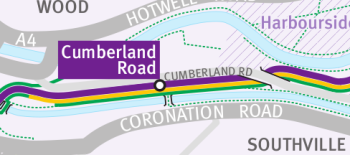
Proposed bus rapid transit scheme

The purple line there is the new bus route, and the yellow line is the railway. The black blob there, looking like a station, is a proposed Cumberland Road bus stop – handy for Southville, because there’s a footbridge across the river there. The green line is a cycle path.

Now, so far, this is just a line on a map. Not much detail design work seems to have been done – one of the councillors responsible, Mark Bradshaw, said as much to the local paper with the words: “Residents, businesses and other stakeholders are invited to engage in this work and help shape the detail of the proposals.” However, the Partnership have gone as far as producing a mockup of the proposed Cumberland Road bus stop. Here’s their design. On the right: the new bus stop. On the left: a photo I took a few days ago from almost the same location, although I didn’t quite get the angle right.
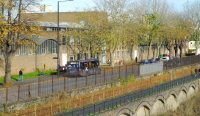
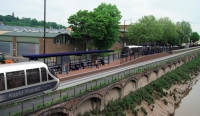
Cumberland Road

Guided busway proposals

You can see, on my “present day” photo, the railway line – it’s behind the yellow fence and in front of the road, and you can make out the rails if you look carefully. More interestingly, you can see that on the Partnership’s artist’s impression, the railway isn’t there any more. The cycle path along the riverbank is still there; but the railway line on the other side of it has been paved over and turned into busway. So, in fact, has half of the road on the other side – you can see, the busway near the platform comes out almost as far as the centre-line of the road.

Mark Bradshaw is, as it happens, one of the councillors for my ward. I wrote to him, and my other councillor, before I’d realised that he was on the relevant West Of England Partnership committee that has put these proposals forward. Based on that artist’s impression, I wrote:

The project will be hugely expensive in infrastructure costs, [and] will apparently destroy the popular tourist attraction that is the Harbour Railway and replace it with a buses-only road

I must have been writing in Pompous Mode that day. You can see, based on the above, why I’d think that. Councillor Bradshaw replied:

The Harbour train service will continue and the BRT services will not prevent this (see yellow line on map in consultation leaflet)

Which is fair enough – you’ve already seen that yellow line on the map. The problem I have, though, is that building a busway isn’t quite as simple as drawing a line on a map, as the artist’s impression shows. If the Harbour Railway is still going to be there, why did the Partnership put out proposals for consultation that show it paved over? And how is the busway going to fit between the railway and the road? Something will have to be moved, for sure.

If this scheme does go ahead, I strongly suspect that the guided busway along that section of the route will have to be dropped, purely because there isn’t room to build it. In the meantime, I’ve replied to Councillor Bradshaw and asked why that artist’s impression shows the buses running over the site of the railway when the railway is, according to the map, still going to be there; when he replies, I’ll update this post. Tomorrow, I’ll show you – with the aid of Google Maps and existing guided busways – just how much room the proposals would need on the ground, and how much land it might take up.

UPDATE: local blogger SteveL has, in the comments, pointed me to the Partnership’s video of the scheme. Which apparently shows the railway being turned into a tramway along the southbound busway, something that wasn’t apparent on the still images. So, the busway won’t prevent trains from being run, so long as trains only want to run when there aren’t any buses about. I see.

* and “a range of social, economic and environmental partners”, they say. Personally, I think it’s a bit of a grand name for what is, in land area, only a small part of the West of England, but it’s hard to think what else they could have called it – anything with Avon in it was and is taboo, and “Greater Bristol”, although that’s essentially what it is, would no doubt irritate everyone out in the hinterlands.

** They haven’t decided what fuel, only that it will definitely be Sustainable. Buzzwordtastic!

*** except the political reason. This is going to be built in Bristol, but funded partly by the local councils in the surrounding area. Hence, it serves commuters from North Somerset who might want to park-and-ride more than it serves Bristolians.

Scenes from the weekend

In which we describe the wintry countryside

Struggling, out of breath, up steep steps up a hillside; turning back and looking down to snap a quick photo. Reaching the top, and turning again to adore the view; gasping for breath in the cold January air. Wandering along the clifftop, past all the other Sunday walkers, and watching gliders taking off: the growl of the winch cutting out, then the whistle of the towline falling to ground, and the glider passing quietly overhead. A random dog jumping up my leg, as I stop to take a photograph of the glider.

A railway station in the depths of the countryside, with no trains, no trains at all today. The only village nearby is the single line of houses built because there’s a station here. It used to be a busy junction, but now it’s a quiet branch, most of the platforms decaying to grass, and rust on the rails. We wander along the platform, wondering if the people who live here now have spotted us. The signal at the platform end is red, and villagers are walking their dogs.

There are photos of all this, to come, but for now the ink polaroids will have to suffice.

Recent search requests

In which we wonder what people are searching for

More things, around the interwebs, that people have been looking for…

the deirdres are a rather good band from Derby – see here.
photo enlargement 99p – it does sound like a bit of a bargain rate. Unless, of course, you want to enlarge a photo of 99p, which is possible too.
unexplained black moods aren’t very nice, but if they’re that unexplained I’m not sure there’s very much you can do.
emo kids handcuffs – I have a lovely picture in my head, now, of emo kids handcuffed to street furniture in all their hang-outs – outside the art gallery in Exchange Square in Glasgow; outside the Corn Exchange* in Leeds, and so on. I wholeheartedly endorse this idea. Come on, people, together we can make it a reality.
triangle sidings are the London Underground sidings in South Kensington, in the basement of the Cromwell Road Sainsburys, where the air terminal used to be. More information, and photos, here.
chocolate coins left at doorstep – I don’t remember ever mentioning this, or anything of the sort. But if anyone does want to leave some chocolate coins on my doorstep, then, please, feel free to!
cara page journalist. Cara Page was, the last I heard, writing for the Daily Record. She’s infamous – at least in certain circles – for writing “exposés” about the sex lives of fairly boring and ordinary people, such as a charity shop worker from Peebles. None of it is “newsworthy” in any conventional sense of the word, but tabloid editors still strongly believe that a bit of Carry On-style tame dirtiness sells papers. Sadly, that’s all I know about her. And that, I think, is probably enough search requests for now.

* Now there’s a name that’s always puzzled me a little. “Hello, my dear sir, I’d like to swap this corn, if you may. For … erm … some different corn?”

Steam trains

In which we visit Levisham

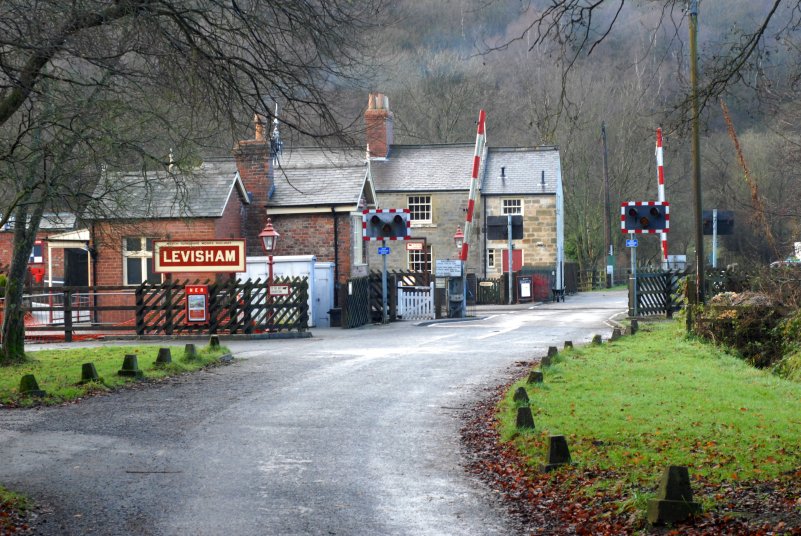
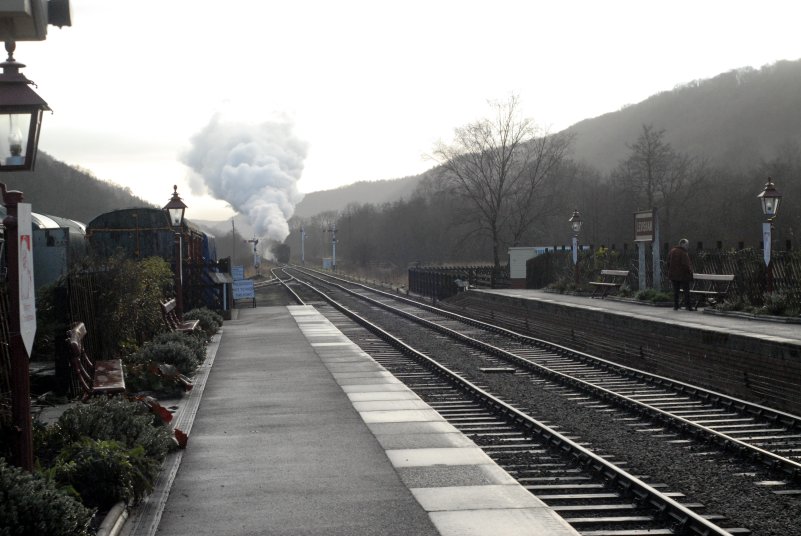
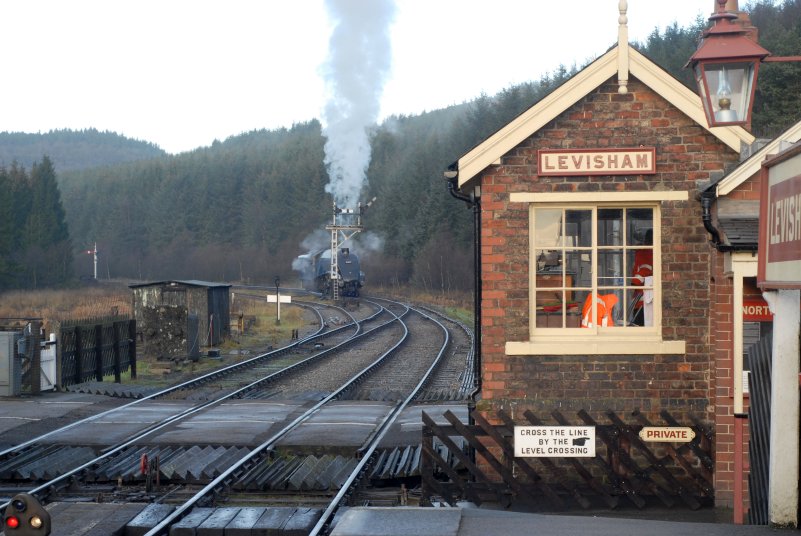
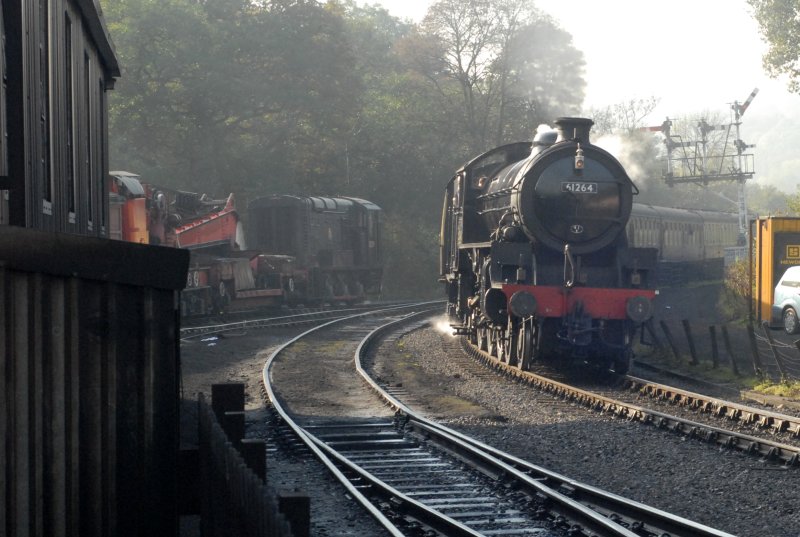
A spare weekend: we went wandering, in the car, and on foot. We drifted through the moorland village of Levisham, as untouched a village as you’ll find in Yorkshire, with one road wandering through it across a broad green. Ambling downhill, we reached the railway station. We watched a train pull in, and shunt about, great clouds of steam rising in the December cold.

Prowling around the station, we discovered its Artist In Residence, Christopher Ware, in his studio. We chatted a little while, and studied his prints of bucolic trains. He can’t have many visitors on a day like that; hopefully we were a welcome distraction for a few minutes.

Levisham station

Levisham station

Running round at Levisham

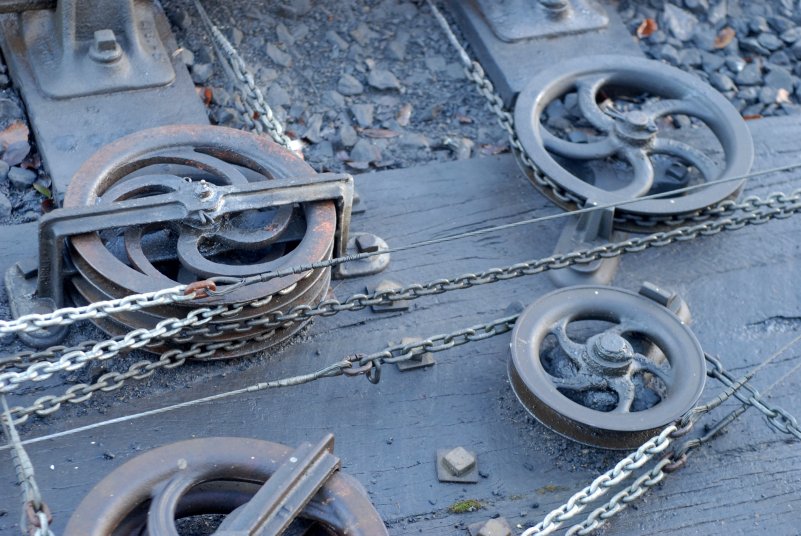
Signal wire pulley wheels

Cemetery Gates

In which we find Bouch’s grave

From the recent search hits: “sir thomas bouch blog”. Somehow, I doubt Sir Thomas Bouch is likely to have a blog. For one thing, he’s dead.* Secondly, he was always more interested in building railways than writing about them, or about anything.

If you’ve never heard of him: Thomas Bouch was an English railway engineer, and some of the time he was a rather good engineer. Some of the time. He built the highest railway in England, the South Durham & Lancashire Union,** and with it the highest railway viaducts in England. He also invented the first modern train ferry, on the Edinburgh, Perth and Dundee railway, which would otherwise have been in two separate parts.*** Unfortunately, he was also rather fond of cost-cutting, building routes on the cheap, and that led to his downfall and infamy. He’s now best known for building the Tay Bridge – the one that fell down. There’s even an urban myth that the word “botch” is derived from his name. It isn’t, of course, but the rumour is hardly good for his reputation.

One day, a few years ago, I was ambling around the west end of Edinburgh. Away from all the expensive tenements,**** there’s a picturesque gorge, with a river running through the bottom, wooded sides, and grand buildings poking out from behind the trees: the back of Donaldson’s College, and the National Gallery of Modern Art. If you go up through the art gallery grounds, as I did, and through past the Dean Gallery, you can wander through the Dean Cemetery. Doing so, I randomly found: Bouch’s grave.

It’s a very bare, imposing grave. A bust of the man; the name “BOUCH”, nothing more, and the dates. It’s a very nice spot to be buried in.

* although this isn’t necessarily a bar – Sam Pepys manages it. Geoffrey Chaucer used to have one, but is now largely on Twitter.

** It closed in the early 1960s. The A66 road roughly follows its route, and runs closely parallel to it at Stainmore.

*** It was originally two separate railways, one in Edinburgh, one in Fife, which merged.

**** think Shallow Grave

Readers' Letters

In which the readers speak up and demand photos

Here at Symbolic Towers, we pay attention to our readers. If they send in tips, we pass them on. Mr E Shrdlu of Clacton writes…

The Plain People of the Internet: You say what? You had a letter? From a reader? Whose name is E Shrdlu? Honestly?

Me: Shush there. Be quiet and listen.

The Plain People of the Internet: If you say so. But don’t expect us to believe it.

… E Shrdlu of Clacton, who writes:

People who liked Friday’s post may be interested in…

The Plain People of the Internet: You mean, people who like long posts about the history of the London Underground? When posts like yesterday’s get a much better reader reaction? What are you thinking about?

Me: Come on there, stop interrupting. And since when have I been bothered about reader reaction, in any case?

The Plain People of the Internet: We’re only saying. Offering a tidbit ourselves, you could say.

… may be interested in the book London’s Secret Tubes by Emmerson and Beard, which goes into all that stuff. At book length.

The Plain People of the Internet: Now, we wouldn’t mind seeing photos of that beautiful Yorkshire scenery you were wittering on about. That “unutterable beauty” stuff.

Me: It was “unassuming beauty”. And I don’t have any – the car would have rolled down the hill. Carnage.

The Plain People of the Internet: My god, that’s terrible. The joke, we mean.

Me: If you’re so plural, shouldn’t that be “our god?”. The best I can do is photos of trains down in the mist-filled dale. And why shouldn’t there be real people called E Shrdlu, from Clacton?

The Plain People of the Internet: Flann O’Brien would sue, were he still alive.

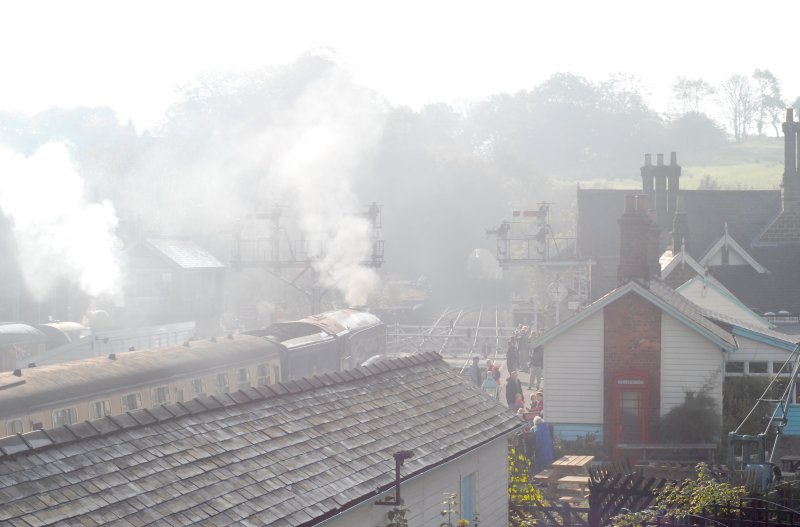
Grosmont station

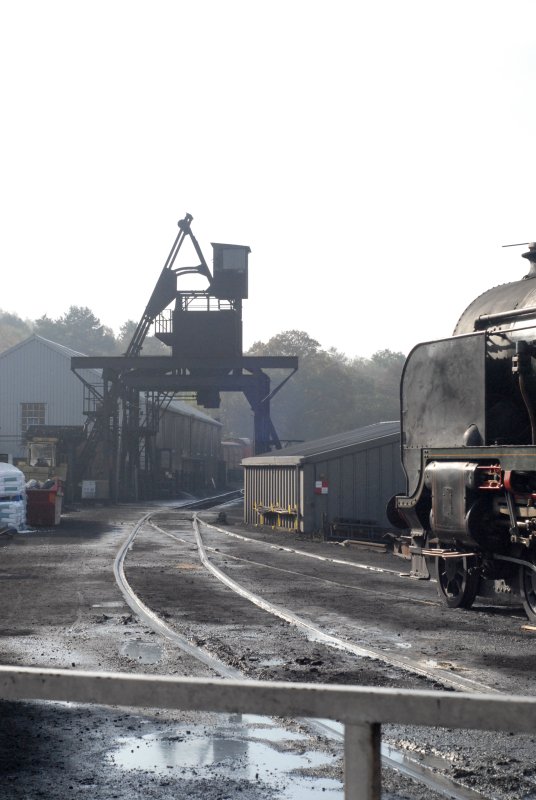
Grosmont yard

Inside Deviation Shed, Grosmont

Train passing Grosmont yard

Express

In which we look at some underground history

Talking of search hits: recently, quite a few people have been searching for “secret tunnels under london” and finding this place. I’m not completely sure why, to be honest. I don’t know of any truly secret tunnels under London. I do know of a few lesser-known ones, though – the Tower Subway, for example, near City Hall; or the nearby remains of King William Street station.

It got me thinking, though, about Crossrail. It was in the news a lot a few weeks back, because the government finally decided to commit to building it; after fifteen years or so of back-and-forth dithering between several different governments, differing plans, and a very small part of it already built (a ventilation shaft near Moorgate). Just don’t mention the Chelsea-Hackney tube line, which has been on the planning books for even longer.

Crossrail is, essentially, to be an east-west express metro for London. It’s not the first express metro plan London’s had, though, and it’s not even the closest to completion. For that, you have to look at some more of the lesser-known tunnels under the city.

Back in the 1930s, the newly-created London Underground was in an expansionist mood, helped by government job-generation grants. It unified two separate routes to create the Northern Line; extended the Central Line westwards with help from the Great Western Railway; got the LMS Railway to give the District Line’s Southend trains separate tracks as far as Upminster; and planned to take over the LNER’s lines from Finsbury Park to High Barnet, Alexandra Palace and Edgware, and from Leytonstone to Hainault and Ongar, and extend the Central line eastwards from Liverpool Street to connect up with the latter. Those plans were well under construction in 1939, when, of course, building stopped.

Before the war started, it was well known that “air war” would be a major tactic. People had seen the effects of the Gernika raid* a couple of years before, and there were widespread worries that the country was unprepared for air attack.** So, in 1940, the government started to build mass air-raid shelters underneath existing Underground stations, with the plan being that they would be dual-use: after the war ended, they would become part of a new Express Northern Line beneath the existing one.

Several of the shelters were never used for their original purpose at all; those that did open, were not used until the V-weapon attacks towards the end of the war. Others were used to billet British troops, and for British government and American army offices. As for the express line that London Underground had been promised, it never did appear, and there was never even any serious attempt to build it. It seems more to have been a sweetener for London Underground, who at the start of the war were very reluctant to allow people to shelter in their stations rather than in the official ARP public shelters. Some of their worries were justified – in 1943, 104 adults and 69 children died in a crush accident at Bethnal Green; it remains the worst accident in London Underground’s history.*** It’s interesting to wonder what might have happened, though, if it had been built. London’s own RER, in the 1950s.

The tunnels are all still there, of course, underneath the active stations. The most visible is Stockwell – the brightly-painted structure north of the station, on the other side of the road, was the deep shelter’s entrance. Most are more anonymous, but all are still there, lying quiet underneath you. Secretly.

More on these shelters can be found at Subterranea Brittannica

* Spelling pedants: that’s its official modern spelling.

** See: Nevil Shute’s 1938 novel What Happened To The Corbetts. Shute was still a professional aircraft designer at the time, and his company had been asked to supply aircraft to the Abyssinians following the Italian invasion, so he was probably more aware than most of the threat that aerial bombing presented.

*** It’s a slight irony that the worst accident on London Underground was at an unopened station, on a line under construction – Bethnal Green is on the Central Line extension mentioned above.