+++*

Symbolic Forest

A homage to loading screens.

Blog : Post Category : Trains : Page 5

Steamy

In which we dream of speed and vampires

August is, as you can see, another quiet month.

A strange dream awoke me last night, so strange I was tempted to turn it into some kind of ghost story. It involved a pair of fu dogs, possessed by a pair of non-human, vampiric, shapeshifting creatures. The dogs themselves would move, when nobody was watching them; and bringing them into your house brought untold dread along with them, because the vampire-type creatures needed them and would do anything to get them back.

In other news: I rather liked the news story, the other day, about the team who broke the world steam car speed record. I like slightly quixotic challenges like that one. 139mph, with all the team’s modern technology, is only 12mph above the previous, hundred-year-old record. For that matter, it’s only 13mph above the 1938 steam train record, set by Joe Duddington of the London & North Eastern Railway on a special test run with the A4 class Mallard. The train had a slight advantage: nobody, when computing train speed records, has ever bothered about the effect of hills or slopes, so Mallard was going hell-for-leather downhill. It did have rather more work to do than the Inspiration, though, weighing 167 tons itself and pulling a six-coach train behind.

Photo Post Of The Week

In which we look at an old diesel train and a newer steam train

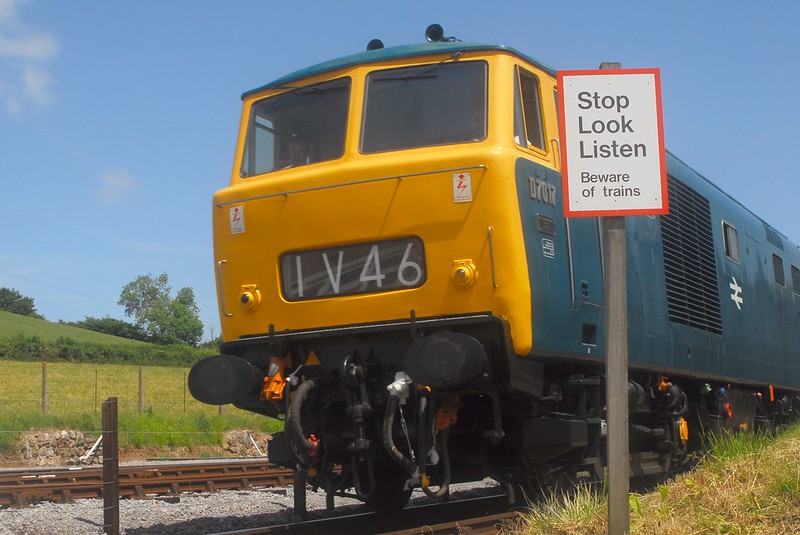
Another thing I mentioned that I hadn’t posted really: some pictures of old trains. Which, I know, isn’t something unusual for this site. But I did rather like this one:

Hymek passing Washford, Somerset & Dorset Railway Trust

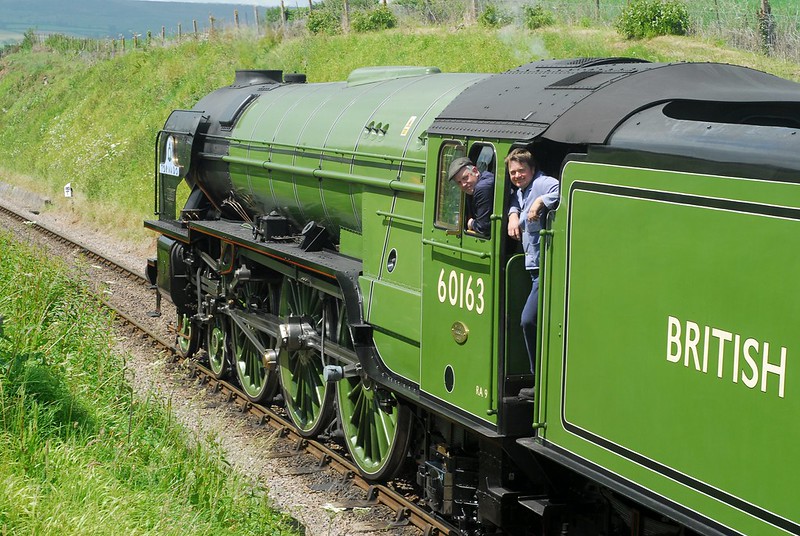
Which, I like to think, could almost be a Western Region publicity poster – or rail safety poster, maybe – from around 1964. The impressive new Hymek diesel-hydraulic, made in Britain with the latest German mechanical technology, sweeping past Washford with a non-stop express to Minehead. Here’s some more, and a rather newer steam engine.

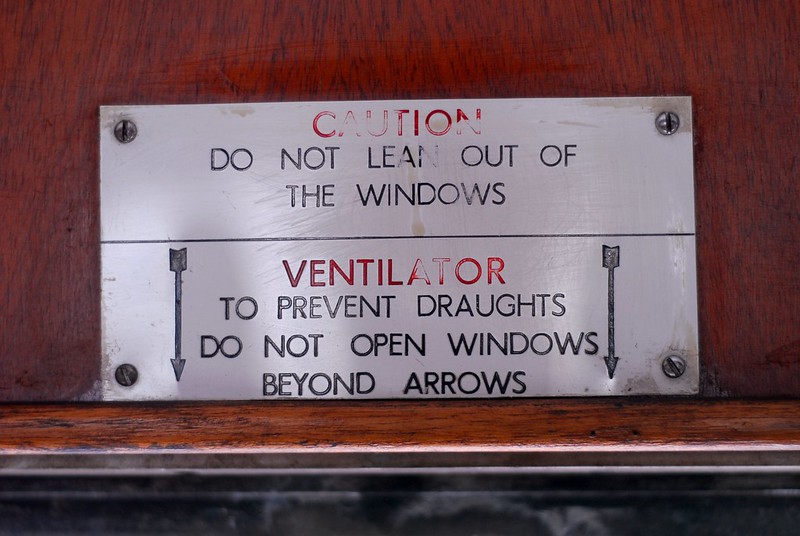
Carriage window

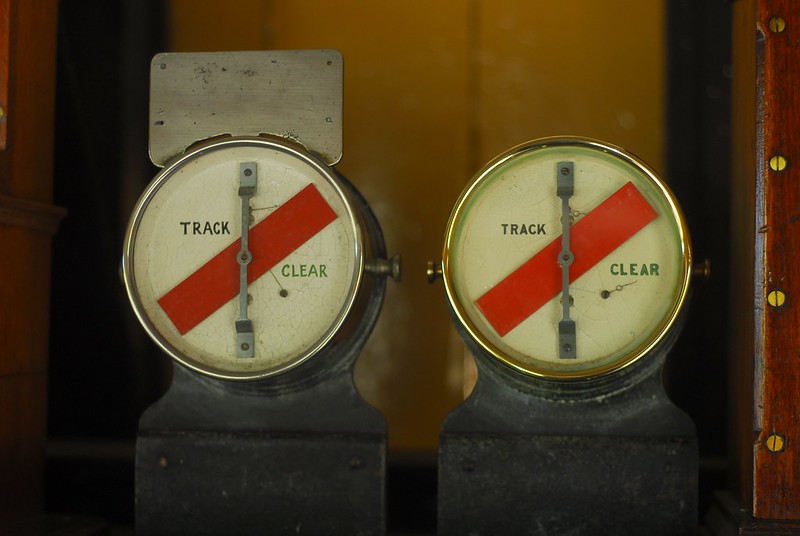
Track circuit indicators, SDJRT, Washford

60163 Tornado at the Somerset & Dorset Railway Trust, Washford

High Speed News

In which we look at trains and the money behind them

Today’s big news story: the East Coast rail franchise is to be temporarily taken into state hands, because the company running it, National Express, has decided that they can’t make the huge wodge of cash that they have promised to pay. Which, to be honest, many many people could have told you was a little unlikely.

The East Coast route has always been seen as a bit of a cash cow, ever since it has been operated by a single company. Back in the 1930s the LNER, the aforesaid first company to own the route from end to end, was struggling somewhat, as most of its profits came from servicing the declining heavy industries of the North-East. So, it negotiated itself away from the non-compete restrictions which hampered its London-Scotland timetable,* and started to introduce faster, record-breaking, headline-grabbing expresses. They introduced the longest regular non-stop train service in the world, and the fastest type of steam engine in the world; and introduced innovations such as at-seat radio services, and the “in-flight movie”. The route has stayed at the forefront of speed, technology and publicity ever since, and at several times has featured the fastest trains in the country.**

By the time privatisation came along, the East Coast route was one of the few profitable rail services in the country. It was quickly grabbed, by Sea Containers, the shipping company which had already bought British Rail’s Sealink shipping line. And everything went smoothly, for some time, because the route did indeed make plenty of money.

In this decade, though, there were problems. As the line was seen as a cash cow, other companies started running competing services over what was already a very crowded and busy route; and their franchise payment went up to £130million per year. Sea Containers tried to bring a court case arguing that there wasn’t enough room for anybody else’s trains on their line, but the case failed. The company started hinting that it was having trouble making money on the route, and that its position was financially unsustainable. In October 2006 the company filed for bankruptcy protection in the USA, and told the British government that they would walk away from the East Coast route if not allowed to renegotiate their contract. A month later, the government told Sea Containers that their franchise was being withdrawn.

In the auction for the rights to run the route from 2007 onwards, Sea Containers played little part, holding a 10% stake in a joint bid made in the names of Virgin and Stagecoach. The winner, though, was National Express. They promised to pay £1.4 billion in total, to operate the route from 2007 through to 2015. Rather more, in other words, than the £130 million per year that Sea Containers had had trouble meeting. You have to wonder what was going on in their decision-making. It must have been obvious to them that the line would have trouble generating that much money. Did they really think they had enough spare cash elsewhere to prop it up with?

It’s not surprising at all, then, that they haven’t managed to keep the line running. It’s more surprising, though, that it apparently took National Express 18 months to realise that their sums were a bit off. Never mind the recession: passenger figures were already falling well before National Express took over, which was partly why Sea Containers had trouble. Maybe they thought they could get things to turn around faster. Evidently, though, they made a mistake somewhere. That still leaves this, though, as one of the more predictable news stories of this part of the decade.

* ever since the mid-1890s, the East Coast and West Coast companies had had a minimum-time agreement restricting the point-to-point average speed of their trains to around 50mph, following the dangerous “Race To The North” competitions of 1895.

** For the past 20 years almost it has had its own specially-designed trains which are capable of 140mph, until recently beating every other domestic train in Britain – but for the whole time, it’s been in the slightly silly position of having a top speed limit of 125mph, leaving that speed advantage unusable.

Local Transport

In which we consider the Wensleydale Railway

Sometimes, when we’re idly sitting on the sofa after work, we put the telly on and can’t even summon the energy to change the channel. Instead, we leave it showing things we’d never normally bother watching; but sometimes that throws up an interesting gem. Like tonight’s One Show for example. We wouldn’t normally watch The One Show, but occasionally it does have some interesting inserts. Tonight: an item on the Wensleydale Railway.

Coming from Oop North, I’ve been on the Wensleydale Railway a couple of times. It’s pretty long, for a private railway, pushing the length of busy, popular private railways such as the Ffestiniog or the North Yorks Moors.* Unlike those railways, though, it’s something of a quiet backwater, slightly ramshackle, with a sparse service operated mostly by 1950s diesel trains which main-line companies retired in the 90s. Being a bit of a backwater, appearing on the telly will hopefully be a big boost for it: not many people tend to know it’s there. It may be in the Yorkshire Dales but it stops just short of the National Park; it may be on the A1, but it’s damn hard to notice from the road.

One of the Wensleydale’s directors appeared on The One Show, and told the world what a unique railway it is; and how it performs a vital link in the community, and in Wensleydale’s regeneration, providing services to commuters and enabling them to get to major regional centres. Neither of those claims, really, are true. The director carefully skirted around the issue of whether the Wensleydale provides those services right now. Certainly, they’re hoping that it will do: that the company will be able to connect to the main line at Northallerton, and thence provide a connection to Newcastle, York, Teesside and Manchester. Right now, though, it stops short, and completing the connection seems to be on a distant horizon. When it does, the company will need a fuller timetable to be a reliable link: at present it operates three trains a day, on about 185 days of the year. The first one starts moving just after 9 o’clock; the last has stopped by 5.

Running a community rail service is hardly a unique aspiration to have, too. In fact, almost every private, preserved, or steam railway in the country has aspired to run a commuter and/or community service at some point. Very few have even got as far as trying it; the Worth Valley Railway did, in the late 1960s, and rapidly found it to be unviable. One private railway has done it successfully: the Romney, Hythe and Dymchurch, operating services for schoolchildren. They do not, unlike most private railways, rely on volunteer workers to operate. The Ffestiniog also provides a genuine service for local residents; but it is strongly subsidised by their tourist revenues, which the Wensleydale doesn’t have.

There are two big problems with trying to operate a community service; well, make that three big problems. Firstly, there are two connected problems: price, and workforce. Railways are workforce-intensive, and private railways have to either pay staff, or get volunteers to turn out every day. Moreover, if they want to run a commuter service, they have to persuade those volunteers to start very early in the morning. Paying the staff, and the running costs, is very expensive; when you’re operating a railway which was considered too expensive to run at a profit, you end up charging fares which are too expensive for commuters. A return ticket on the Wensleydale already costs over £10, for the full line.** Moreover, there’s a third problem: speed. Nearly all private railways have to operate with a blanket speed limit of 20 or 25mph. Over the sort of distance the Wensleydale operates, that means a long journey. Fine for a summer jaunt; not good for serious travel. It’s the speed, more than anything else, that makes the Wensleydale’s long-term aims rather impractical.

There’s nothing wrong with the Wensleydale aspiring to their aims, of being a community railway operating a non-tourist service. I would be very surprised, though, if they do manage to complete them, purely because so many have gone before and so many have failed. If the Wensleydale think they are unique, and if they don’t realise that they are treading down a well-trodden path once more, they are very unlikely to reach that path’s end.

* The Ffestiniog will shortly have the largest steam railway network in the country. At the time of writing it operates two routes, the original Ffestiniog Railway (Rheilffordd Ffestiniog) out of Porthmadog and the new Welsh Highland Railway (Rheilffordd Eryri) out of Caernarfon; the project to complete the link to join the two lines together via Beddgelert is already under way.

** The Ffestiniog gets around the price issue by having local residents’ discount cards.

Chauvinism

In which we are shocked by vintage sexism

If you get involved in some hobbies, some fields of interest, you have to get used to the fact that you’ll end up finding yourself alongside older men with unpalatable views. If you like trains, for example, you will sometimes find yourself alongside elderly trainspotters who haven’t yet worked out that there might be a link between “being single” and “not washing”. You get used to hearing them espousing rather reactionary viewpoints, such as “we should send them all back to their own countries”, and so on.

Nevertheless, occasionally, something comes along which makes you think: I can’t believe they said that. Or, in this case: I can’t believe they printed that. I was reading a book I picked up recently in a charity shop: Victorian and Edwardian Railway Travel From Old Photographs by Jeoffry Spence, a 1980s reprint of a 1970s book, and came across this delightful passage in the introduction. It starts off with saying how Edwardian railway timetables were far too complicated for women to understand, and goes on:

But even today, with so many regular-interval services and absence of complexities, there is something rather irritating to us chauvinistic males about the sight of a woman standing haughtily in the circulating area of a big station, telling us firmly what time the train goes, which platform, where to change, and even the time of arrival at the destination; it makes a bad impression on our younger children.

I’m sorry? It “makes a bad impression” for children to be allowed to see a woman advising a man? To see a woman having responsibility? To see a woman speaking firmly? Or, indeed, all of the above? Even for something written in the late 70s, that’s a bit much to see in print.

A bit of research suggests that Spence was born in 1915, so was probably in his early 60s when he wrote that. He died* in ’92, at 77 or so. Getting a bit elderly when he wrote those words, then, you could argue. But I don’t think that’s an excuse, given that feminism was already alive and well when he was growing up; and that there are plenty of people of his generation who weren’t such terrible bigots. Thirty years later, it comes across as a shockingly sexist piece of writing. The worrying thing is: I’m sure there are still men today, lurking in the backwoods and writing down the numbers of trains, who would probably still agree with him.

* Assuming I’ve found the right man, but the unusual spelling helps

Photo Post Of The Week

In which we go out in the snow

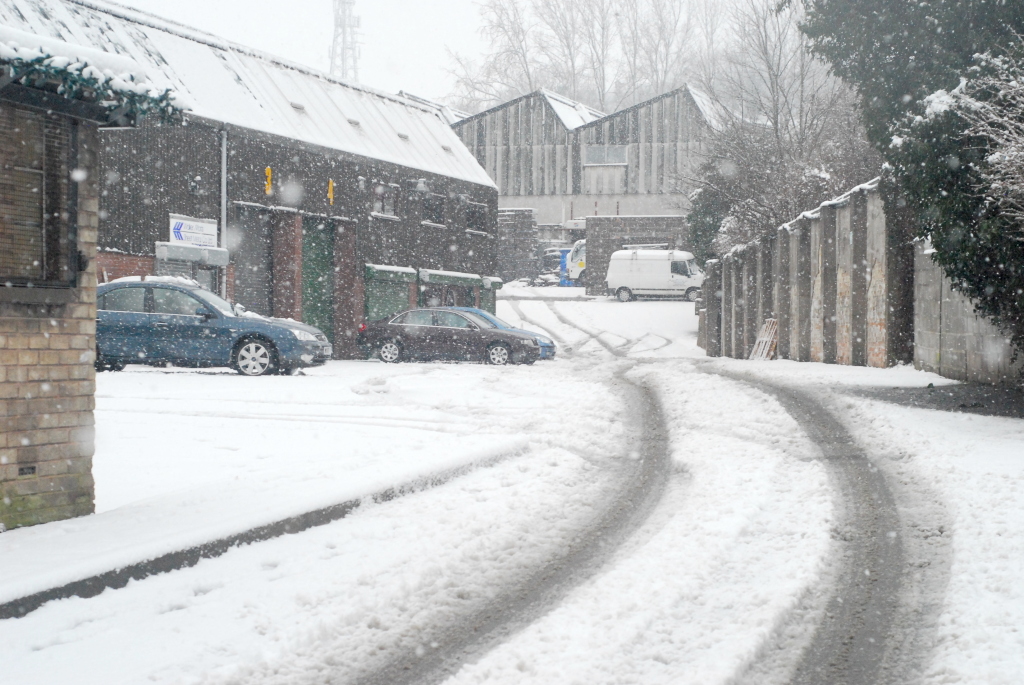
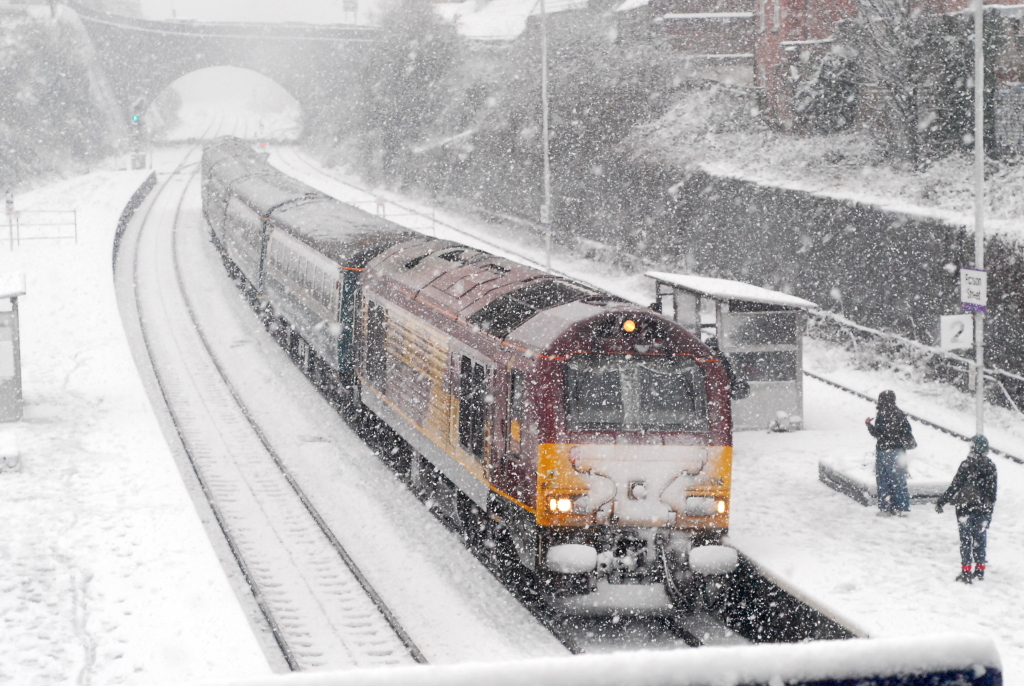
Another day with no morning bus services, and the roads gridlocked. I walked K to work, taking the camera with me, and watched a lorry get stuck on the hilly part of Bedminster Road. Trying to get towards Ashton, it stopped in a queue of traffic, then realised it couldn’t get started again without risking sliding back down the hill. It sat there, impotent, with its hazard lights flashing, as everyone else tried to drive round either side of it.

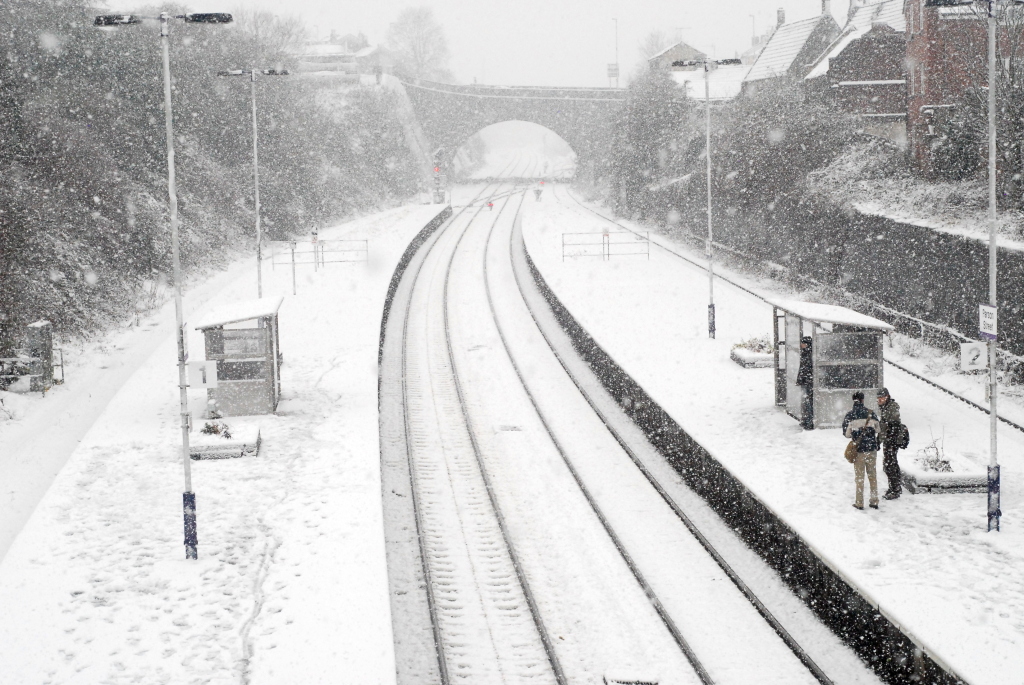
And then, I nearly broke a leg trying to take photos of the local station. Slipping at the top of the stairs, I grabbed the handrail frantically as my feet disappeared from underneath me. Best to stick to taking photos from the bridge, I thought.

Snowy industrial estate, Bedminster

Parson St station

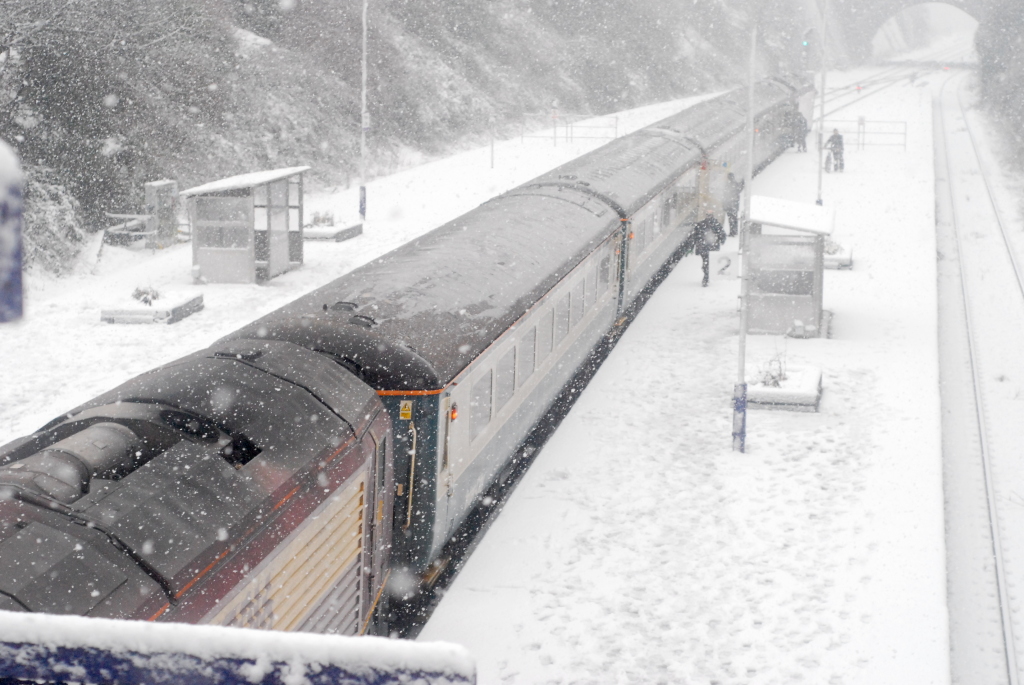
At least the train that came was – to a train geek – quite an interesting one. 2D04, from Taunton to Bristol, one of the services on the Taunton-Bristol-Cardiff route that runs with retro 1970s carriages restored to their original condition, although the engines are rather newer.

67016 hauling Mk3 carriages, Parson St

67016 hauling Mk3 carriages, Parson St

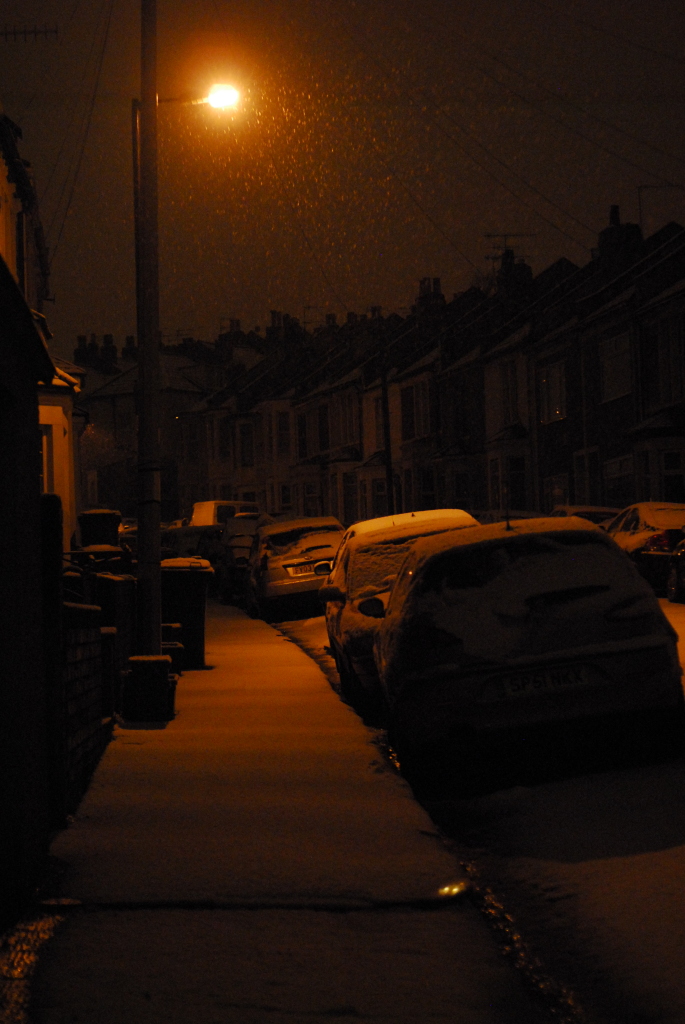
And finally: I’m sure it says in the Bible that the last shall be first and the first shall be last. Before we went to bed last night, we looked out of the window to see it snowing again, the street covered in a fresh pristine carpet. We couldn’t resist getting dressed again, and going out for another walk with the camera.

Night snow scene, Bedminster