+++*

Symbolic Forest

A homage to loading screens.

Blog : Post Category : Trains : Page 4

Trains and levers

Or, a brief pause for relaxation

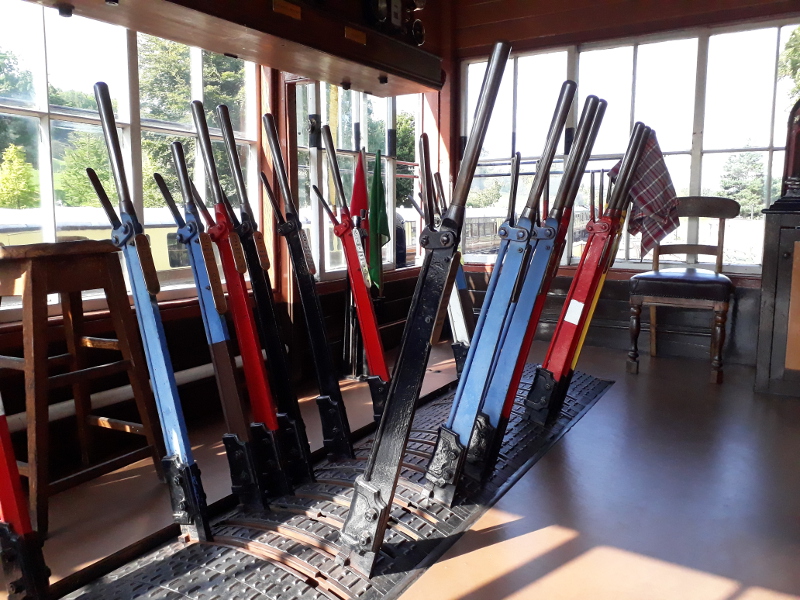
To the Severn Valley yesterday to play with trains, possibly for the last time in a while. I’m not on the roster for next month, and as the pandemic appears to be getting worse again, who knows what will happen after that point. The pandemic timetable makes it a quiet day, just four trains in each direction, and only one crossing move. Here it is, with one train waiting in the station and all the signals pulled off for the other to have a clear run through.

Signals off

In-between trains I sat and read a book of Victorian history, Mid-Victorian Britain 1851-75 by Geoffrey Body, and almost melted in the heat. It was windy outside, but hardly any of it came through the signalbox door. I watched a buzzard (I think) circling overhead, soaring slowly and sending the crows into a panic; heard pheasants and partridges squawking in the undergrowth, and listened to the frequent sound of semi-distant shotgun fire. It has been much in the news this week that shooting parties are allowed to be larger than other groups of people,* and all of the Very Online naturally have been joking about getting the guns in for their family parties; but yesterday in Shropshire and Worcestershire it felt as if people were genuinely doing just that, so frequent were the hunters’ gun-blasts.

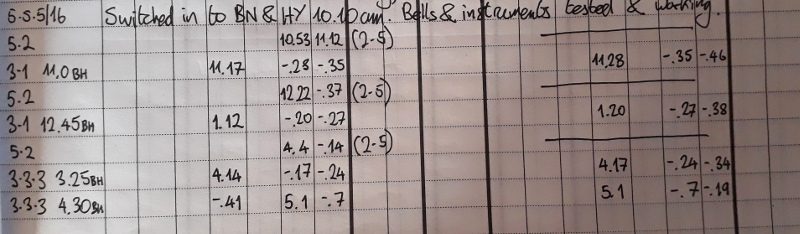
And in small victories, at the end of the day I was proud. For I had filled in the Train Register for the day and not needed to cross any bits out. It may have been a quiet day with few trains and no unusual incidents to record; but, as I said, small victories.

Train register

When I was going through and reviewing all of the previous posts on here as part of the big rewrite, I realised the utter pointlessness of writing about some rubbish that’s on TV purely to say that I’m not going to watch it because it’s probably going to be rubbish. So, I’m not going to do that even though “some rubbish will be on TV in a few months” is all over the internet today. If you like watching rubbish then go and watch it, I’m not going to stop you. Me telling you I’m not is really just exclusionary boasting. So that’s that.

* Obviously, if you’re reading this now, just after I wrote it, you know this already. If it’s now five years in the future, you’ll have completely forgotten.

Photo post of the (insert arbitrary time period here)

Or, back to the railway

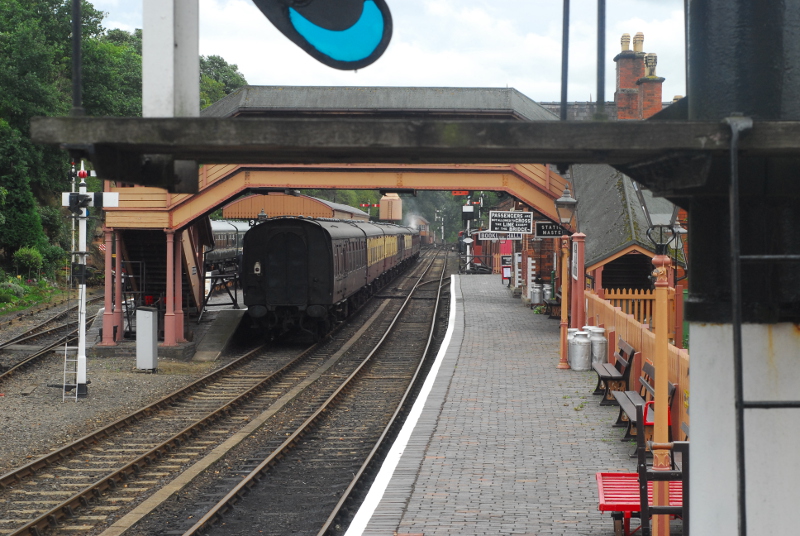
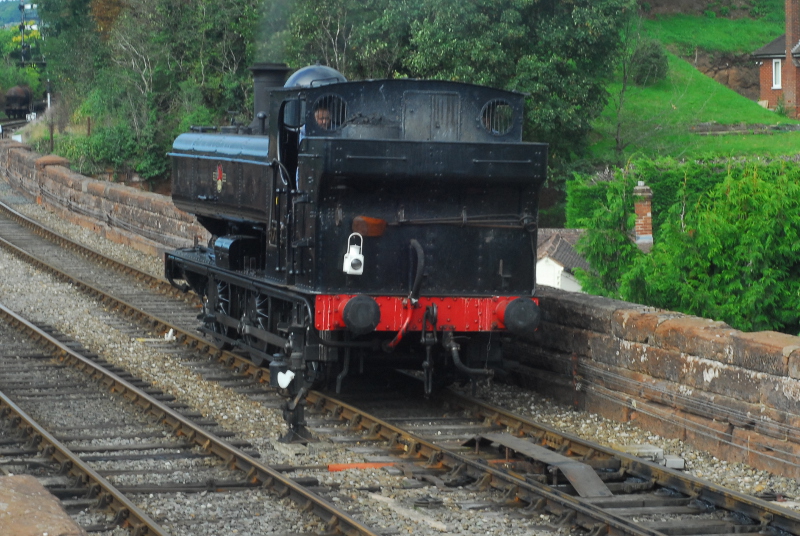
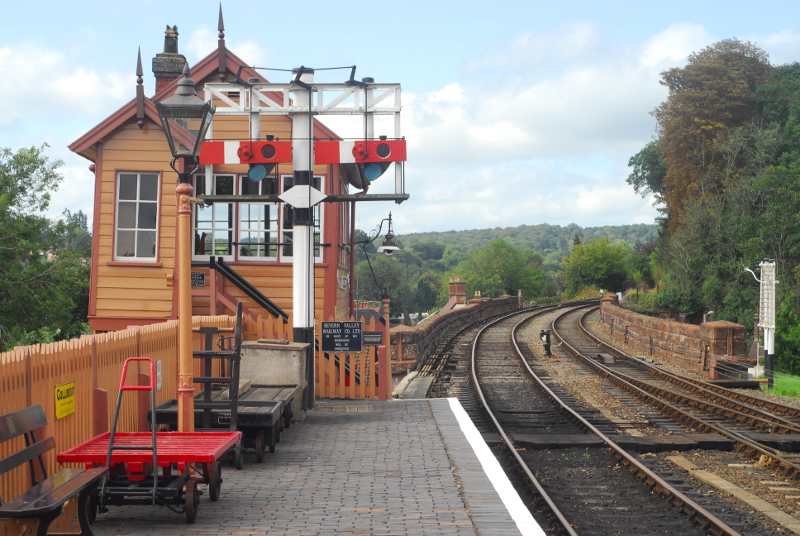
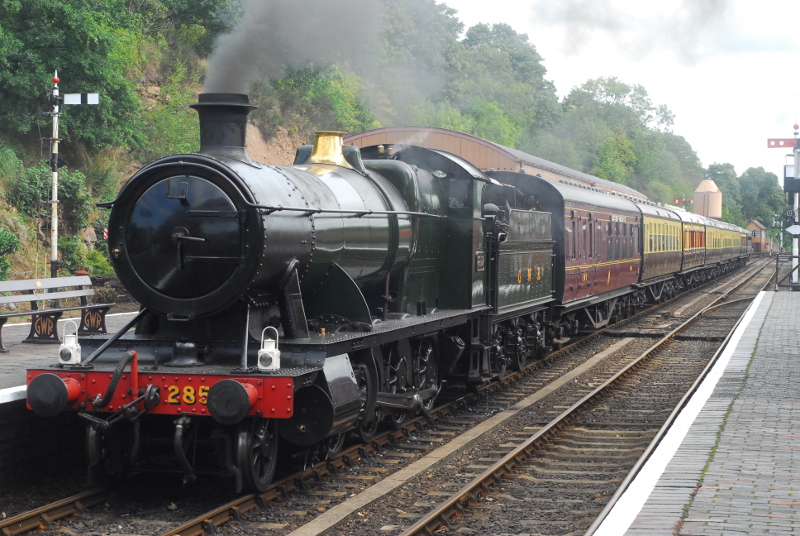
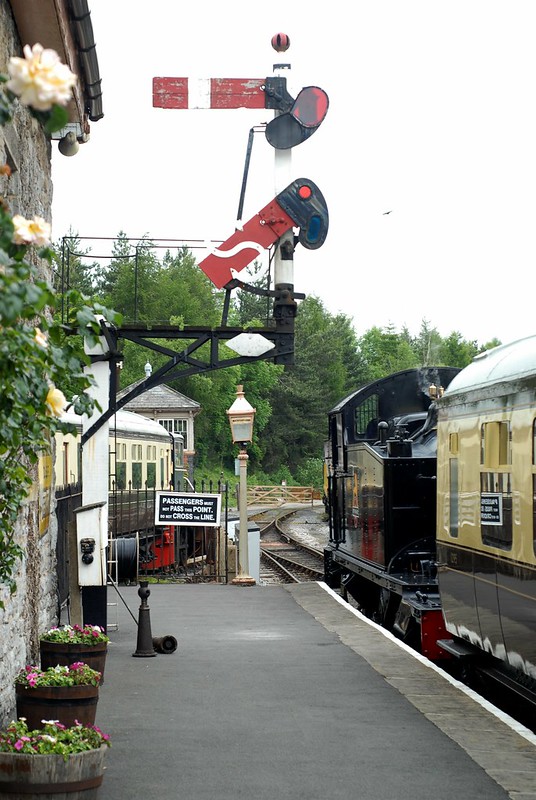
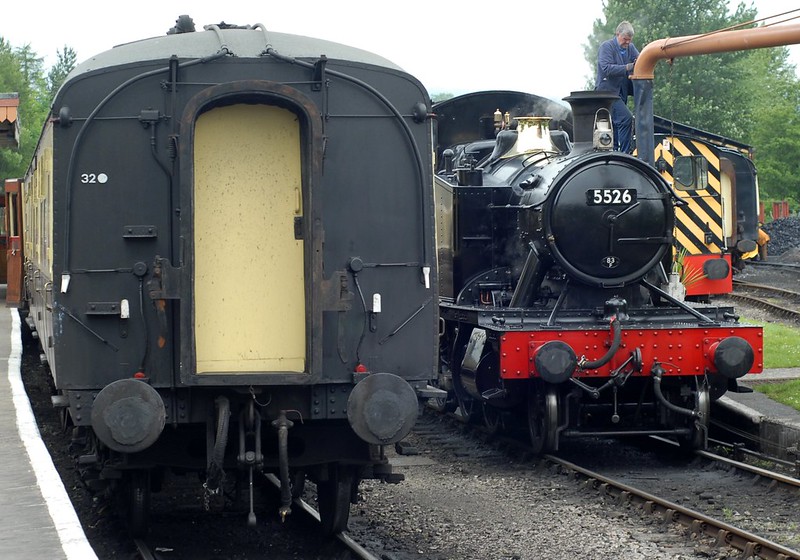
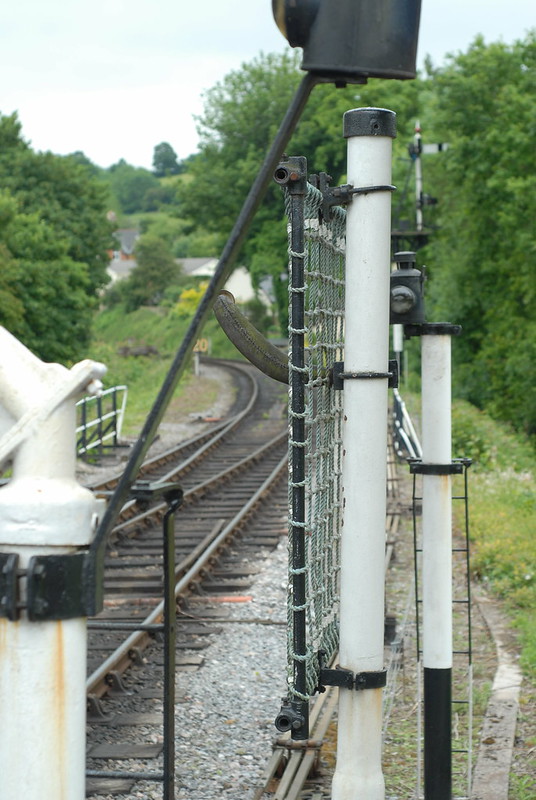
Back to the railway and the quiet post-viral timetable it is running at the moment. One nice thing about this timetable is that it gives me the opportunity to take my camera along and photograph the trains when they’re stood still, and the station when there’s no trains about. Normally you’re too busy to have chance for that sort of thing.

Bewdley station

Pannier tank

Bewdley North signalbox

2857 at Bewdley

Photo post of the week

Dw i wedi mynd i weld Sion Corn

Up to North Wales for the weekend, to help out with the trenau Sion Corn. My Welsh isn’t good enough yet to actually speak it, but good enough to understand when I hear one of the drivers trying to persuade a small boy that the loco is actually powered by a dragon inside the firebox, a la Ivor The Engine. The boy wasn’t having any of it.

The weather was grey, steely and windy. At times you could see across the Traeth; at times visibility was down to a hundred yards or so. Naturally, the time it decided to rain sideways was about five minutes after we’d decided we’d have time to walk over to Harbour Station before the rain started.

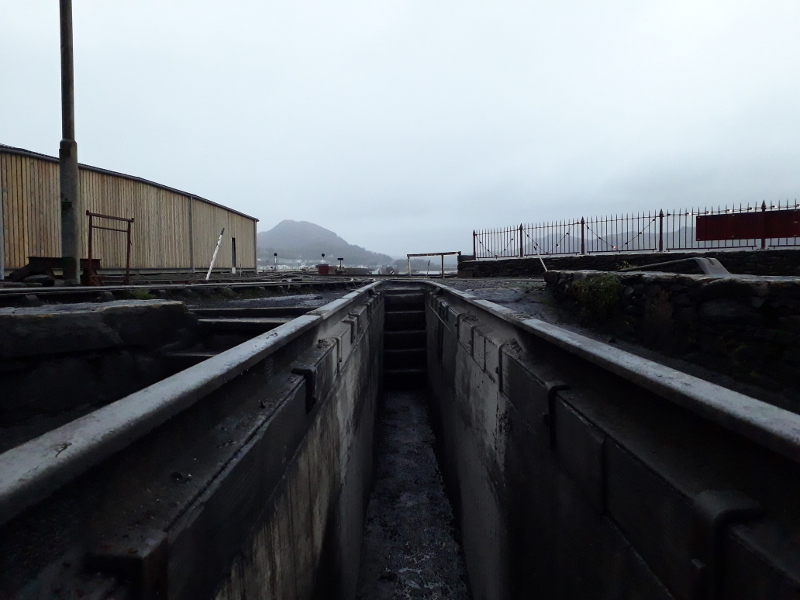
Cleaning out the ashpit

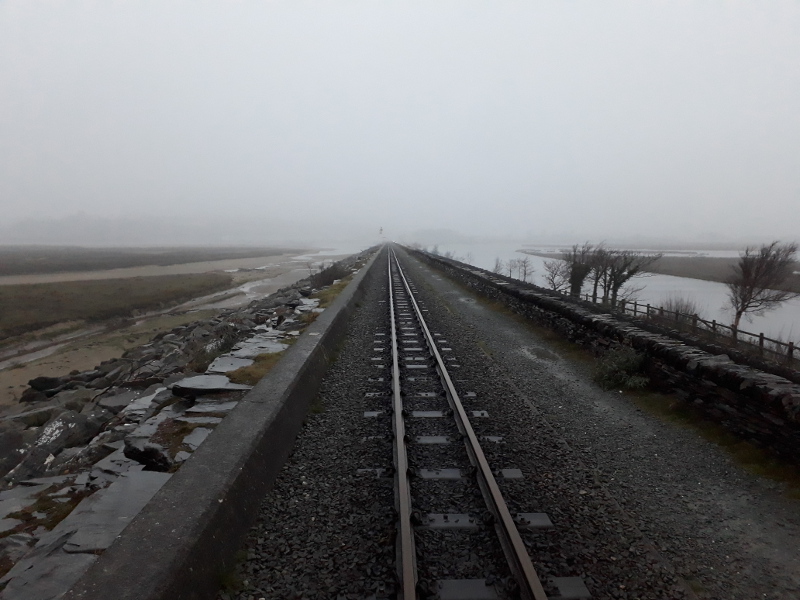
In the middle of The Cob

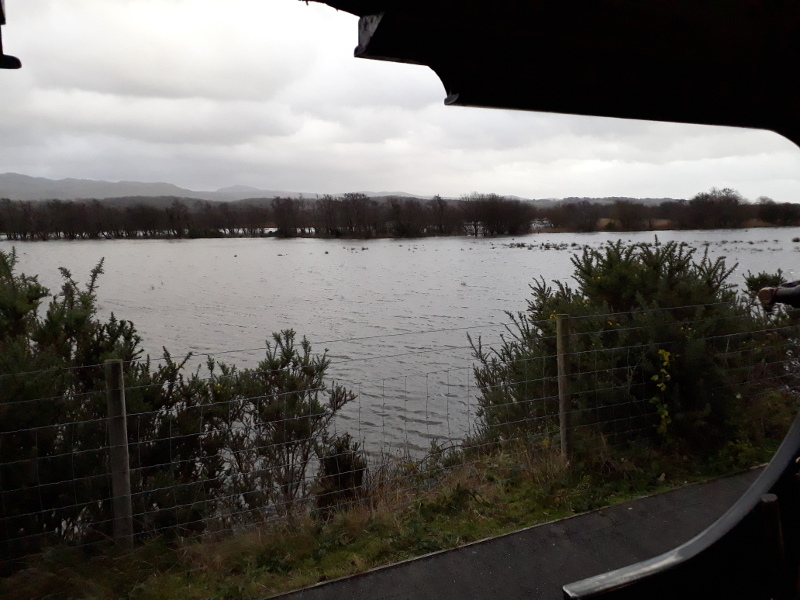
Overnight the storm grew worse, and in my bunk I could hear the wind outside and the rain hammering on the window. The next morning I was up early, so we could do a short-notice early-morning shunt to get a loco out of the Old Shed; as we shunted, it was pitch-black and cold but at least the wind had died down a little. As the locos started to warm up and come to life the dawn broke to show that there seemed to be just as much water, or more, on the landward side of the embankment as on the open-sea side. The salt marshes between the Cob and the Cambrian line’s embankment were a choppy, whitecapped sea, and inland the flooding went up the Traeth almost as far as if the Cob had never been built.

Flooded fields at Pont Croesor

Late arrival

Or, missing the train

I keep meaning to tell the tale of one of the most optimistic heritage railway passengers I’ve ever seen.

I took the kids to Totnes Rare Breeds Farm last week. If you don’t know Totnes: the town is on the west bank of the River Dart. The railway running past the town, coming from Plymouth, crosses the river, and on the east bank of the river forks in two. The right-hand fork is the main line, running eastwards to the head of the Teign estuary and thence along the coast to Exeter. The left-hand fork is a steam railway which runs up the valley of the Dart as far as Buckfastleigh, famous for its abbey and its tonic wine very popular in Scotland. Just to confuse you, both railway lines were originally built by the South Devon Railway, but nowadays the steam railway is reusing that name and the main line is just, well, the main line into Cornwall. Anyway, in the V where the railway forks, just on the east bank of the river, is Totnes Rare Breeds Farm, and it has no road access, indeed, no public access at all other than via the railway. If you want to arrive on foot, you must walk to the steam railway station (they have a footbridge over the river), through the station, across a little level crossing and into the farm. The level crossing has gates, just like a full-sized one, which the railway’s signalling staff lock shut when trains are arriving and departing.

We were sat feeding boiled eggs to a 93-year-old tortoise,* even older than The Mother Grandma, with another family, when I heard a sound from the station: the sound of the vacuum ejector on the train waiting to depart. In other words, the driver had just started to release the brakes ready to go. I checked the time: just coming up to Right Time for the next train. Looks like it will be a perfect-time departure.

“We’d better get going,” said the dad of the other family, “we need to catch that train.” And they got up and left. I thought it might be a bit cruel to tell them they’d almost certainly already missed it. The gates would already be locked, and even by the time they reached them, the train would probably be moving.

* one volunteer told us it was 94 and another 92 so I’m splitting the difference

End of the year

Or, another year starts

The last blue skies of 2017 are outside my window; dusk will come shortly.

In line with the idea of starting 2018 off right, I’m volunteering on the railway tomorrow. Hurrah!

Sitting by the fire

In which we regress

So it didn’t snow. I was back on the railway yesterday, and everything went rather well. None of the equipment failed, I didn’t do anything stupid, and I didn’t drop any tokens, which is always my biggest worry. It was a relatively quiet shift; I sat in the big armchair with the coal stove roaring away next to me, handwriting a diary piece about how sitting in the big armchair with the coal stove roaring away next to me and the clock ticking on the wall reminded me of visiting my grandmother’s house on winter Saturday afternoons when I was small. I was the first person to arrive at the station; and by the time I left all the station staff had already locked up and left too, it was getting dark, and all the lights were on. Although it didn’t snow, it felt all day as if snow was potentially on the menu.

I do wish the children could come with me to the railway, but I doubt that getting them in the same room as a cast-iron coal fired stove is a good idea: it would result in severe burns and trips to casualty, if not a full-scale conflagration. It is a shame, though, that I spend all day working on the line and then am not home until after they’re in bed.

Today, well, we have a strict no-romance-on-the-14th rule in this house; so instead of doing anything special we went into town and did the usual mundane weekend shopping: new gloves for the children, some stuff from the craft shop; a new USB cable. The Child Who Likes Fairies has learned the word “gouache”.

Vampire-Spotting

In which we suspect that some TV cameras might be taking the train

Regular readers over the past couple of years might have noticed that I quite enjoy spotting the filming locations of the paranormal TV drama* Being Human, filmed in a variety of easily-recognisable Bristol locations: Totterdown, Bedminster, Clifton, St George, College Green, and so on. Not for much longer, though, we thought: although the first two series were Bristol-based, the third series is apparently being moved over to Cardiff. Whether it will be the recognisable Cardiff Cardiff of Torchwood, or the generic anycity of Doctor Who, remains to be seen; but this was all clearly set up when, at the end of Series Two, the protagonists were forced to flee the house on the corner of Henry St and Windsor Terrace for an anonymous rural hideout. No more Bristol locations for us to spot, we thought.

Over the past week, we’ve been doing a lot of driving about moving house; we now know every intimate corner of every sensible route from south Bristol to east Bristol, or at least it feels like we do. So we were slightly surprised to see that, about a week ago, some more of these pink signs have popped up. “BH LOC” and “BH BASE”, as before.

We spotted them on Albert Road, near the Black Castle. “BH BASE” points along Bath Road, towards the Paintworks and the ITV studios. “BH LOC”, though, is intriguing. It points down the very last turning off Albert Road before the Black Castle end. That entrance only goes to two places: a KFC branch, and St Philips Marsh railway depot.

If you watched the second series of Being Human, you might remember that there was, indeed, a rather brutal train-based scene in a First Great Western carriage.** So, expect the third series to include, at the very least, an extension of that scene, if not a spin-off plotline. Or, alternatively, those signs aren’t really anything to do with Being Human at all, and it’s just coincidence that they pop up around Bristol a few months before each series appears on the telly.*** My money’s on that train from Series Two being the root of part of the Series Three plot; but, I guess, we’ll just have to wait, watch and see.

* Well, it started off as a comedy, and got more serious as it went along.

** I was impressed that the programme’s fidelity-to-location included shooting that scene in a genuine local train, rather than just finding any railway prepared to get a carriage soaked with fake blood. Of course, it was probably a convenient location too.

*** The third possibility, of course, is that someone in Series Three tries to cure vampires and werewolves of their respective curses by getting them to eat large amounts of fried chicken.

Summer railway

In which we have a trip out by train

Never mind “Spring Bank Holiday”: it’s June, and it feels like it’s summer already: last weekend, we had a day at the beach, and both ended up horribly sunburned. As shorts aren’t an option for work, I winced every time I moved my legs. Yesterday: a bank holiday weekend, and beautiful sunshine again, so we went off for a cream tea and a steam train ride.

The footplate of a steam locomotive on a summer’s day is a horribly hot and airless place to be. Nevertheless, riding behind a steam engine seems like such a naturally summery thing to do. So we travelled down to the South Devon Railway,* for a day’s relaxation sitting in railway carriages and watching trains go past.

The South Devon Railway is, as steam railways go, an unusually scenic one. Being in Devon it’s surrounded by lush, verdant countryside; it follows the River Dart down from Buckfastleigh, past rough, rocky rapids; weirs and once-busy mill-races; finally alongside the more placid deeper, lower stretches of the river, down to its tidal weir just by Totnes station. It doesn’t take much effort for a train to trundle downriver; as we sat in the front carriage with the windows open, we could hear the locomotive clanking its way down the valley with barely any steam on, the vacuum pump making a light chiff noise for each revolution of the wheels. Every so often, a gentle touch of speed was needed, and we heard the deeper huffhuffhuffhuff of the cylinders, four huffs to each vacuum pump chiff. We passed sleepy red cattle, wading fishermen, and groups of wading photographers standing on mid-river rocks to take photos of the passing train.

Country trains often ramble a little, and pause unexpectedly. Midway along the line, we halted in a loop, and waited quietly for another train to pass. Other passengers, not used to this sort of thing, looked around and wondered what the problem was. We were too far away from the signalbox to hear the block bells chiming; but we could hear the rattle of the signal wires as the signals for the down train were pulled off, then we watched it slowly chuff past us before we started on our way again.

This is not Photo Post Of The Week, incidentally. That’s because the photos below aren’t ones I took yesterday; as usual, my photo uploads are far too backlogged for that. These, though, are from the last time I visited the South Devon Railway, about three years ago. The fixed stop signal has been repainted since, but not much else has changed.

Buckfastleigh station

Watering an engine whilst rounding the train

GWR tablet catcher, Buckfastleigh

* Things it is important not to confuse pt. 373: the South Devon Railway, the line from Exeter to Plymouth designed by Brunel, opened in the 1840s, and bought out by the Great Western Railway in the 1870s; with the South Devon Railway, the heritage railway formed in the early 1990s to take over the Dart Valley Railway’s tourist line from Totnes to Buckfastleigh and turn it from a business-oriented tourist attraction into a more charitably-run steam railway. You may spot a problem of similarity with the names there.

Secret Passage

In which we look for some Parisian history

Every so often, search requests come in for things like “disused stations on the Paris Metro”. I’m not entirely sure why, because this site doesn’t have very much content at all on that topic. All there is, in fact, is this post from a few years ago, which wasn’t really about disused Paris metro stations at all: it was more about all the various interconnection lines and mysterious secret underground depots that you can see from a passing train.

When I was in Paris the other week, though, I kept an eye out. Because there are the odd one or two disused stations on the Metro, even if there are fewer than on the London Underground. I kept my eyes open, and I spotted a couple.

Firstly, if you head north along Line 5, across the Seine and through Quai de la Rapée station, you will find that the line quickly disappears underground on its way to Bastille station.* Once in the tunnel, well-lit and easily spotted, there is a stretch of broad station tunnel, heavily graffitied like almost everything on the Paris metro. This is the remains of Arsenal station: off the top of my head, the only Paris Metro station to share a name with one on the London Underground.

Secondly, turn around back to Gare d’Austerlitz, then head westward on Line 10. Past Odéon, there’s a complex network of underground tunnels linking Line 10 to various other routes; the modern line has a complex history. And somewhere in-between all the various connections, past Mabillon station, there is another secret. Croix Rouge station, originally the terminus of the line. It’s harder to spot than Arsenal, but it is there.

Hopefully, then, if people come here looking to spot disused Parisian underground stations, here are a couple of hints. If you want to see what they look like inside, there are photos on the web, of course: where doesn’t have photos on the web nowadays? Alternatively, you might prefer it the other way: sit on the Metro, ignore the buskers and the beggars, and look out the window for a flash of abandoned platforms.

* incidentally, foundations of the original Bastille fortress are visible on the Line 5 platforms at that station.

Twenty percent of evil

In which we discuss The Turn Of The Screw Coupling

It being Yuletide, there’s nothing quite like a ghost story. Was it Dickens who started the Christmas ghost story tradition, or is it more down to BBC schedulers of the 1970s? Never mind. It being Yuletide, we sat down in front of the telly to watch the latest BBC version of The Turn Of The Screw, by Henry James. It seems like only the other day that it was last made for the TV; but here it is again.

I should admit, I’m not particularly a fan of The Turn Of The Screw, the book, thinking it rather dense and over-written, too wordy to be frightening or atmospheric. Partly this might be because I first read it in a less-than-ideal place: while working in a call centre, between calls. Being interrupted every few minutes by the phone chiming puts a slightly different perspective on your comprehension of mysterious horror and pernicious evil. The book itself begins with a properly seasonal framing story, which the new version ignored entirely, ripping the meat of the story out and sandwiching it within an entirely different framing story set some decades later. It’s now a 1920s tale told to some kind of doctor or detective by some sort of inmate – the narrator of the story proper.

I’m not going to delve into the whole thing; a summary is that the governess of two children becomes convinced that two evil ghosts are trying to attract her wards into their own world. These ghosts were evil when they were alive, we are told, are trying to cast the children into their moulds, and seem to be succeeding: one of the children has just been expelled from school for being unspeakably naughty. But while the governess starts to see the ghosts more and more frequently, and is convinced the children can see them too, noone else in the household thinks that anything at all is amiss. Thousands upon thousands of essays, papers and texts have been devoted to the question of: are we meant to think the ghosts are real, or meant to think they are in the narrator’s imagination. Whole critical careers have been staked on one side or the other of this argument.

For TV, though, subtlety is abandoned. The camera shows us: the children, possibly more of the household staff, know that the ghosts are there and have some idea what they are up to. The nature of Ghost One, Peter Quint’s evil, too, is much more explicit: he’s a Bad Man who has his wicked way with all the ladies. Because that’s often not thought so much of a Bad Thing these days, he’s violent to them too. The nature of the boy Miles’s evil is still left vague and mysterious. Peter Quint is trying to bring him up in Peter Quint’s image, so presumably he’s turning violent and misogynistic; but why would that get him expelled from a 1920s public school?* There’s not really a clear answer to that one, which is presumably why the film-makers left it still unexplained. It’s about the only thing that was.

Now, book and film/TV are different media, and it’s unfair to gripe purely about the fact that they are different media. Adaptations can’t be made unchanged, otherwise we’d hardly need the term “adaptation”. Anachronism, though, gets on my nerves a little bit. There were a couple of scenes in which the governess arrived or departed at their local railway station; I’m fairly sure it was filmed at the very scenic Cranmore station, on the East Somerset Railway, not too far from here.** This is the 1920s, so we should have a 1920s train turn up; at Cranmore, of course, that would be a GWR country branch train in the appropriate GWR dark maroon carriage livery.**** What train does the governess step out of? A 1950s British Rail carriage in 1950s chocolate-and-cream. It’s hardly very suitable; it’s just as anachronistic as a big diesel like this would have been. Or, indeed, as if Peter Quint had worn a James Dean jacket and shades. What’s the point of period drama if you don’t bother with a period set?

* we can presume, from his angelic tousled face, that he’s as yet too young to impregnate his house’s maid, which would be a very Peter-Quintish thing to do.

** At the Shepton Mallet end of Cranmore’s platform there’s an incomplete GWR “cash-register” signal, being slowly-but-carefully restored by the East Somerset Railway’s small signal-restoring team. You can see a picture of part of it here; it’s called a cash-register signal because, at the pull of a lever, a choice of signs will pop up from the black box. I’m fairly sure I noticed it pop up*** in the background of the station platform shots in The Turn Of The Screw, along with some platform buildings that looked rather Cranmoreish.

*** The signal itself, not the signs. Like I said, it’s not finished.

**** I forget the term for the colour; but then, most GWR fans tend to forget about it too.