+++*

Symbolic Forest

A homage to loading screens.

Blog : Post Category : Trains : Page 7

The labyrinthine depths

In which we think about secret tunnels and the literature surrounding them

There are plenty of stories in literature about the nameless horrors that lurk deep within the bowels of the London Underground. It’s popped up in TV, too – on both Quatermass and Doctor Who in the 1960s – and in film. In books, the first example that comes to the top of my head is a short story by Jeremy Dyson, but there are certainly many more. There are stories of secret tunnels and secret trains, lines disappearing into disused stations and abandoned passages.

Indeed, there are plenty of abandoned stations underneath London. There’s Down Street, for example, which was used as a set in Neverwhere.* There’s an entire disused railway, the Post Office Railway, running from Paddington to Whitechapel.** Not much is visible, though. The Post Office Railway was never open to the public, and disused parts of the Underground are generally very hard to see from passing trains. The occasional void, or brick wall, but that’s all.***

Paris, though. Paris is different. The Paris metro is full of secret passages. Every few hundred metres, there will be a mysterious junction. Lines will branch off into side tunnels, or delve between the other tracks, or disappear behind mysterious roller shutters in the tunnel walls. There are walkways and passageways, tracks that your train will never use, sidings deep under the city centre. In London the only place you’ll see trains parked underground is Triangle Sidings, between Earls Court and Gloucester Road; and that started out as an above-ground depot which disappeared under buildings in the 1960s. In Paris, there are trains parked all over the network, in single sidings, between stations. There’s so much to see if you look out of the window.

But does the Paris Metro have similar literature to the London Underground? Are there stories of monsters hiding in the Metro’s depths, or ghost trains rattling off down secret tracks, or secret government laboratories behind the roller-shuttered sidings? London has the literature, but Paris has the labyrinth visible from the train window.

* The “Down Street” in Neverwhere isn’t the real Down Street – but the real Down Street was also used for filming. If you’ve seen it: the dinner with Serpentine was shot on the remains of its station platforms, during normal service, with trains passing in the background.

** Which was also used as a filming location for Neverwhere, and also crops up in the love-it-hate-it Bruce Willis comedy Hudson Hawk pretending to be in Rome.

*** During the war most of the disused stations were converted into government offices – including the platforms, several of which had the platforms removed and brick walls built to partition the usable space off from the running lines. So if you’re deep under London and suddenly see a brick wall by your carriage window for a few seconds, it’s probably a disused station.
The Diagram

In which we study some design history

I’ve recently been reading a book about design history, about the design of an icon. Mr Beck’s Underground Map, by Ken Garland. It is, as you might imagine, about the London Underground Map, concentrating on the period from the 1930s to the 1950s when it was designed by Harry Beck. In many ways it’s a sad story – Beck, throughout his life, felt that he had paternalistic rights over his map;* London Transport disagreed, treating the map as its own property. Which, of course, it was. In the 1960s, when London Transport turned to alternative designers, he became obsessed with producing his own versions, in the hope that London Transport would take his design up again.

Nowadays, Beck is always remembered as the map’s creator; his map was the first in Britain to abstract the network and present it topologically. The modern map, though, isn’t really based on his. It’s based on one of its 1960s successors, by Paul Garbutt; it was Garbutt’s first design that settled on black-and-white interchange symbols, and the modern proportions of the lines.

Design archaeology is hard, sometimes. There aren’t any old underground maps on display at stations, because they’re all outdated. Sometimes, though, you can spot things still lurking from days past. Some of the Phase One Victoria Line stations still have signs unchanged since they opened, in the days of the first Garbutt map. The northbound platform at Green Park, for example, has what looks like an original line diagram on the wall: it has a dotted-circle for National Rail interchanges, a characteristic of that time;** and Highbury and Islington is shown as a Northern Line interchange. It’s interesting to see. There aren’t any Beck-era signs anywhere on the underground, as far as I know, which is something of a shame; but it’s good that there are still examples of old designs surviving. It’s good to have history around us.

* or “The Diagram” as the book calls it throughout. Which, technically, is right.

** The modern double-arrow “main line railway” symbol was introduced in 1964, off the top of my head, but didn’t become widespread for a few years

Facing points (part two)

In which we go over some railway history

More notes on the Lambrigg and/or Grayrigg train crash from a couple of weeks ago. Continued from here.

As I said in the first part, it was known for many years that junctions are a dangerous thing. Any place where a train has a choice of routes to take is a danger point, and the railways, for a hundred years or so, got around this by avoiding them as much as possible. A freight train, going into a siding, would have to run past it, stop, and back up slowly into the siding.

This is a very safe and careful thing to do, but it is very, very slow. Trains take a long time to slow down, and a long time to stop. Backing up has to be done very slowly, too, and the whole operation blocks the main line for rather a long time. If the train could run directly into the siding, things would be a lot faster.

Similarly, if one line of a pair has to be closed for engineering works, trains have to run in both directions over the remaining line. The old way of doing this was very slow indeed – the train would have to stop, reverse backwards onto the other track, then reverse again so it was going forwards. All very fiddly and slow,* and it would have been easier if there was a faster way to do things.**

So, in the 1960s and 1970s, an awful lot of the rail network got simplified and redesigned. In particular, “emergency crossovers,” like the ones involved in the Lambrigg crash, were installed every few miles on the main lines. Essentially, all they were there to do was let trains switch across to the other track if one line had to be closed for maintenance. This, though, meant greatly increasing the numbers of relatively dangerous, maintenance-heavy facing points on high-speed main lines. Cost was no longer so much of an issue – greater automation and mechanisation of the railways meant that all points were fitted with exactly the same locking equipment, so the legally-required and previously expensive locks on facing points were now provided for free. Maintenance still mattered, though.

Note that I said “relatively dangerous”. Facing points are maintenance-heavy, purely because they are intrinsically more dangerous than trailing points. This isn’t an issue, though, so long as the maintenance gets done. And, over the years, all points started to be given the same level of maintenance – there is in many ways no longer a distinction between facing and trailing points, maintenance-wise, because as I said above they nearly all have the same fittings.

So long as the maintenance gets done. That is the key. Railways just aren’t maintained in the same way that they used to be. There’s no longer a man walking every stretch of track, every day of the year, looking out for faults, like there used to be. If facing points aren’t maintained properly, they become dangerous, and they’re likely to cause accidents, such as Lambrigg and Potters Bar. The problem is, they’re vital to being able to run the railway smoothly and flexibly. If you want to run a flexible railway, it’s going to cost you more. You have to be willing to pay the price, however you want to pay it.

* there are lots of other rules involving people waving flags and people whose job is just to be unique, but I won’t bore you with them.

** This has nothing to do with the closing of alternative routes, incidentally, which people sometimes go on about as being a Bad Thing in connection with the rail network. Alternative routes are often a lot less useful than people think.

Facing points

In which we delve into railway history following a recent accident

Some notes on the Lambrigg rail accident (also known as the Grayrigg crash in the media).

Facing points are a bad thing. Facing points have always been known to be a bad thing. This has been known ever since the railways were first created.

A facing point is, essentially, a junction, where one line of rails splits in to two. The opposite is a trailing point: a junction where two lines come together to become one. You will quickly realise that a facing point becomes a trailing point if you stop your train and reverse it, and vice-versa.

Facing points are dangerous; trailing points are safe. You can drive through a faulty trailing point, or a trailing point set the wrong way, and you’re unlikely to have your train come off the track. You’ll probably wreck the point, unless it’s designed for you to do that to it,* but your train will be unharmed. Do that with a faulty facing point and your train is going to end up all over the place.

Now, this was never a problem, because for years main-line railways only ever had tracks in pairs, one track for each direction. Going the Wrong Way was strictly against the rules. The main reason for this was to stop trains meeting head-on, but it had a secondary benefit: it meant that engineers could get rid of as many facing points as was possible. This was partly an expense issue. Anyone who’s ever had a train set will know that if you switch a facing point whilst a train is on it, Bad Things will happen as different parts of the train try to go in different directions. This isn’t what happened at Lambrigg/Grayrigg, but it has the same result; and when the government realised, they quickly insisted that all facing points be fitted with a complex arrangement of locks and train-detectors to make sure you can’t do that. Back then, that involved mechanical locks which needed a lot of careful and regular maintenance and adjustment. Now, most of it is done electrically, but there is still a mechanical lock somewhere in the point’s machine that holds the various moving parts of a point fast when a train is nearby. Of course, that’s only any use when the rest of the point is mechanically sound too.

So, anyway, as I said, if all lines are one-way only you don’t need facing points. Not until you get to big junctions, at any rate, where you have to live with them. Freight lines didn’t need the expensive facing point locks, so freight trains always backed into sidings. And the railways happily ran like that for a hundred years or so, and facing points rarely caused accidents. In modern times, though, it didn’t really work.

The second part of this article continues here

* Lots of points on rural lines, nowadays, are what’s called “sprung points”. They’re not controlled, they just sit there. Use them as a facing point, and they’ll always send you the same way.** Use them as a trailing point, and you can approach them from either route without problems.

** Left, usually, on British main line railways at any rate.

Photo Special (part one)

In which we go by train

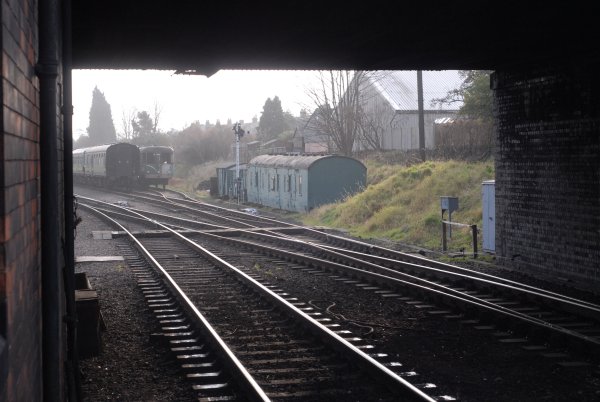
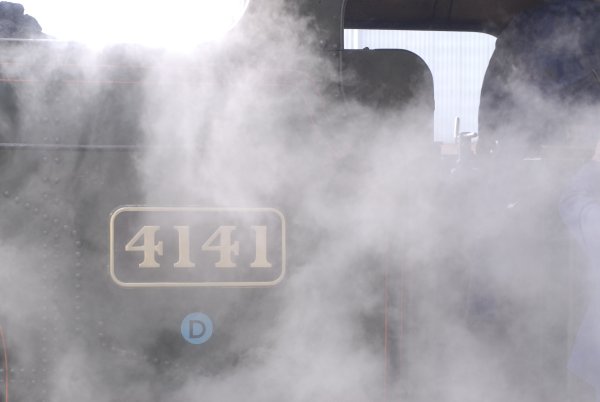
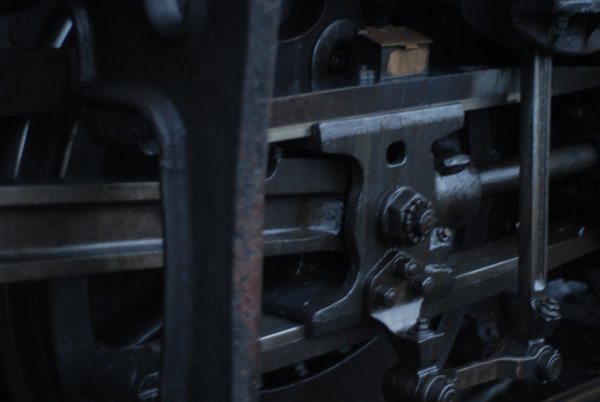
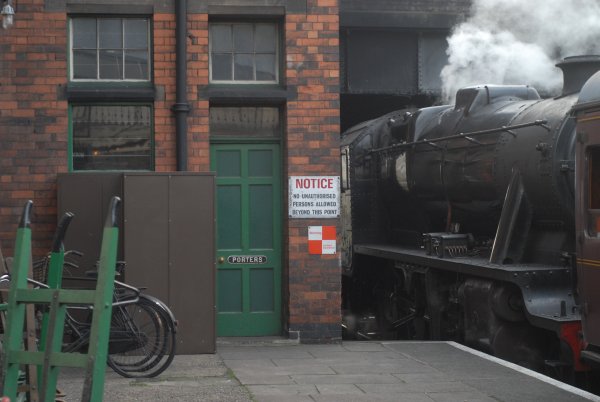
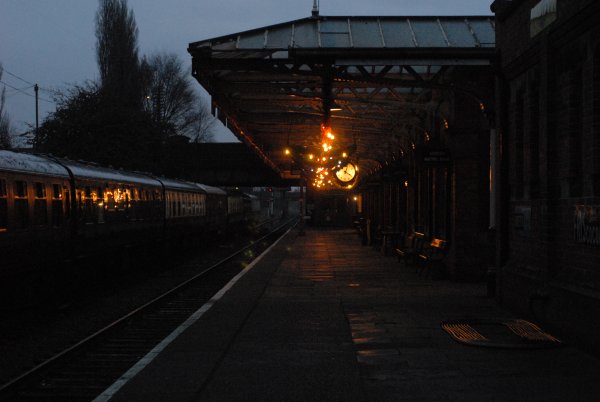
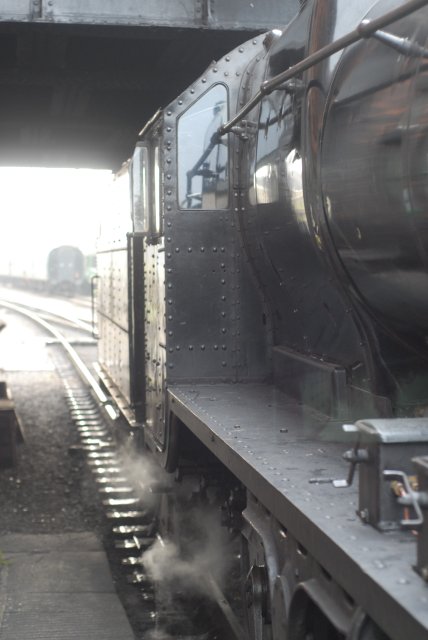
Time for a winter holiday photo special, as I’ve spent the day with The Parents, looking at steam trains. Much like I did last Christmas, in fact; except last Christmas I was still using a film-powered camera, so the pictures didn’t make it online for quite a while.* It’s high time I did more photo posts purely for the sake of posting photos. Future ones will not all be of steam trains, I promise.

Winter sunlight

Steam

Valve gear

Platform scene

Evening

Under the bridge

* and I don’t think it was ever even mentioned here.

The look in your eyes

Or, Ken Stott Wore My Trousers

Glasgow just wasn’t Glasgow last Saturday. Why? We walked down Queen Street, and there weren’t any goths or skater kids standing around outside the art gallery. None. Not one. The pavements, though, were wet. “They must have all just been hosed away,” said C. We looked around the art gallery, but the main gallery was closed off for installation, and none of the rest was particularly impressive. Being too lazy to get on the subway and go out to Kelvingrove, we ambled back up Sauchiehall Street and got ready for our night out.

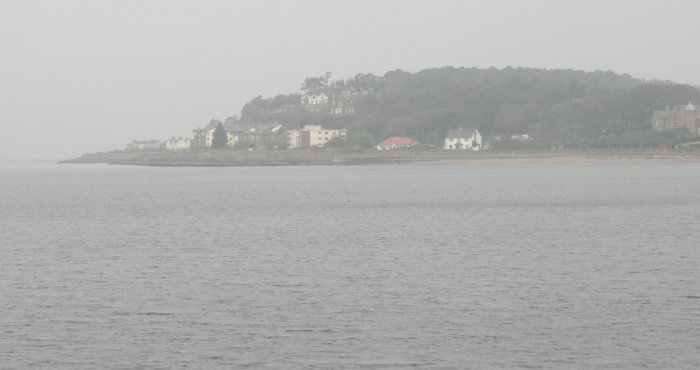
Sunday morning, I drove C to her ferry, out along the Clyde shore. I tried to admire the scenery, but it was full of mist. We stopped off at a supermarket in Greenock for breakfast, and talked about ourselves, each other, and everything. I worried I was being a bore, or a geek, and then worried I was worrying too much. “You worry too much,” said C.

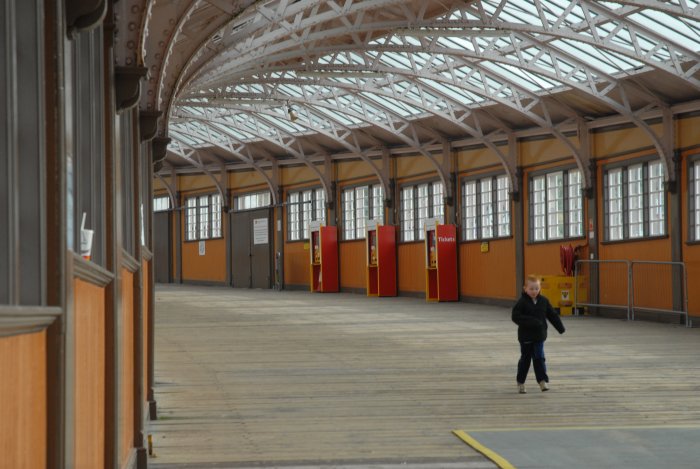
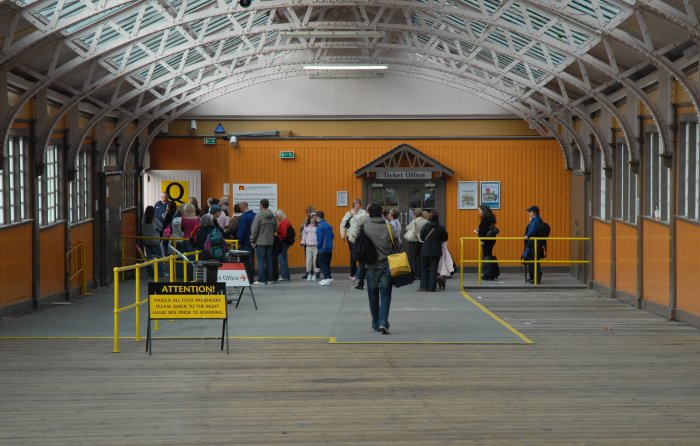
I dropped her off at the ferry terminal. Feeling suddenly at a loss, I got out the camera, before setting off for the drive home.

Wemyss Bay

Wemyss Bay

Wemyss Bay

Wemyss Bay

Old romantic

In which we feel a community spirit

I was a little doubtful when I saw, on the front page of Friday’s Guardian, the tagline “Steam trains – the great aphrodisiac”. I do like trains, but I wouldn’t say that about them.

It turned out to be subeditor’s hyperbolae. The article, by a former director of British Rail, turned out to be about the radical romanticism of the steam engine. Eroticism was only briefly mentioned. I’m rather glad, to be honest. Train-into-tunnel might be a classic visual metaphor, but I don’t think very many people would say that the train itself is what gets them going. There are people out there who haven’t just had sex on the train, but can remember the numbers of the trains they’ve had sex on – but I somehow don’t think it was the train itself that was turning them on.*

What I do like about trains is what that article calls “the rigmarole of trains”. The ritual surrounding the railway. The little bits of peculiar terminology that you don’t get anywhere else.** The natural romanticism of rail travel, and the community feeling that can spring up around the line.

* but if it was – on balance, I think I’d rather not know!

** phrases like “not to be used outside possessions”, or “not to be loose or hump shunted”.

Unrelated things

In which there is both good and bad

Two small things today, because I’m too sleepy to write more.

Firstly, some lovely photos of the dying Glasgow Subway in the 1970s.*

Secondly, reading the paper at lunchtime, I turned to the obituaries to find that one of my favourite writers, Jan Mark, died recently. Although she was known as a children’s writer, her “adult novel” Zeno Was Here is a lovely novel, and one of my favourite books. I’ll write more about it soon.

* Link via qwghlm.co.uk

Returning

Or, coming back

And, I’m back, from a weekend away to North Wales.

I’m not going to recount endless details about the trip, because most of you would probably find it very boring. I met new people, saw some new things – new to me, I mean – and had an energetic time. I enjoyed it so much that, by the end, I was telling everyone that I’d definitely be coming back.