+++*

Symbolic Forest

A homage to loading screens.

Blog : Page 61

Inspiration

In which I have nothing to say for once

I’m waiting for that little spark to strike. I’m not sure why it hasn’t. Maybe it’s the lack of energy at the moment. I feel drained.

Maybe I should just write about: how beautiful the sun is on the river, even with dark clouds grumbling overhead and promising a downpour.

Another day

In which things get back to normal

Today has been another plain, ordinary day. Nothing out of ordinary in the news. Nothing exciting has happened. Which is, you know, just as it should be.

I didn’t even manage to be awake at seven minutes past seven this morning, to note the pleasing symmetry of the timestamp. I think I was awake at ten to nine, but that passed without notice too. Which is, in a way, just as it should be.

Insert catchphrase here for easy headline

In which we get wary of the talent

As for Doctor Who: as you’ve probably heard, catchphrase-based comedian Catherine Tate is going to be back in the show for a whole series. It’s been in all the papers, after all, and lots and lots of people, who shudder in terror at the mere mention of the name Bonnie Langford, think it will all go horribly wrong. It might be interesting to see if Tate can act, rather than just mug through with a comic voice and lots of makeup until she gets to the catchphrase.

Russell T Davies has been widely quoted, in connection with this story, as saying:

We are delighted that one of Britain’s greatest talents has agreed to join us.

Strangely, though, his thoughts on Catherine Tate herself have not been mentioned.

Maybe things are changing, after all

In which politics might actually be looking up

I’m always rather cynical about politics, and tend to see it as something that is on a general downhill trend with no prospect of improvement. However, sometimes things do change slightly for the good, at least in a small way.

A while back – over a year ago, in fact – I wrote about one of the things I hate about modern politics: the fact that all speeches, all announcements, are leaked to the press, trailed in advance, revealed to the papers, so that no political announcement, when it comes, is ever a surprise if you’ve been listening to the news. If you’re going to do that, why bother to do the speech at all?

Well, the other day, the new Prime Minister gave his first speech in Parliament since getting the job. And noone, other than the government, knew what was going to be in it. It’s a small step, and I’m not suddenly going to start loving politicians because of it. It’s a start, though, and it’s in the right direction.

Smoking

In which the office suddenly becomes a much busier place

Room 3B (the IT Office) is—as is standard practice for Room 3Bs and IT Offices, I think—located deep in a remote part of the Head Office building. Not many people pass our door, other than the people in the adjacent rooms. Not many people pop by to say hello, because our office isn’t exactly in a well-trafficked area, it’s not on a busy corridor. Sometimes this is a good thing. We don’t get disturbed much, when we’re busy.*

That’s all about to change. Tonight, the Upstairs Smoking Room closes, and we suddenly will be on a busy corridor—the direct route from most of the office to the new Outdoor Smoking Area—or, the bike shed, as it’s also known. To be fair, it was built specially for the new workplace smoking law. On the other hand, it is definitely a bike shed; there’s a bike rack in it.**

Some of the management are a bit unhappy about this. Not because it might mean extra fraternisation with the IT department, but because of the distance involved, crossing from one side of the building to the other to reach the Outdoor Smoking Area. It might mean smoking breaks being extended by a whole 2 minutes or so, just to cross the office. Me, I don’t particularly care; although if people are going to pass by and say hello more, it can’t be a bad thing.

* Although, of course, you can guarantee that when we do get interrupted, it’ll be when we are busy.

** Update, August 28th 2020: A couple of years after writing this, I came across a copy of the official regulations for what counts as an enclosed area for the purposes of the English smoking-at-work laws, and discovered that in actual fact the smoking-shelter-cum-bike-shed wasn’t actually legally usable as a smoking shelter at all. It had three full-height sides, and therefore in law counted as an enclosed area with no smoking permitted. So there you go.

Floods

In which the waters rise again

Everyone has a flood story at the moment. Lots of people who couldn’t drive home, who had to abandon their cars in the street. People whose houses were cut off, who had to wade home. Phone photos of water, water, everywhere. Some rivers burst their banks last night, and have expended themselves, run out of effort. Other rivers are still rising—our Doncaster branch office was evacuated late this afternoon, and the escaping staff saw rescue officers tying motorboats up in the dry streets, ready for the flood water expected to come.

I’ve stayed dry myself, although at some points last night we were cut off and surrounded by the water, if we’d tried to go out. I slept fitfully, wondering if it would rise more, creep over the front step and into the hallway. And the clouds outside are dark again; still more rain to come.

Tasty

In which we look forward to a delicacy

Science news of the week: scientists have finally invented an odourless breed of durian, the tropical fruit which is popular in the East Indies, but entirely impossible to obtain in Britain. It smells like a potent mix of vomit and custard, and is banned from the cargo holds of every airline because of that. In Malaysia, several people are killed by durian every year, not because of the smell, but because they are large, spiky, and grow high up in trees. My former Malaysian flatmate would send me news clippings about deaths rising at the start of each durian season. Note to European publishers: start getting those durian recipe books ready now!

Underground

In which we’re puzzled over Tintagel and an archaeological definition

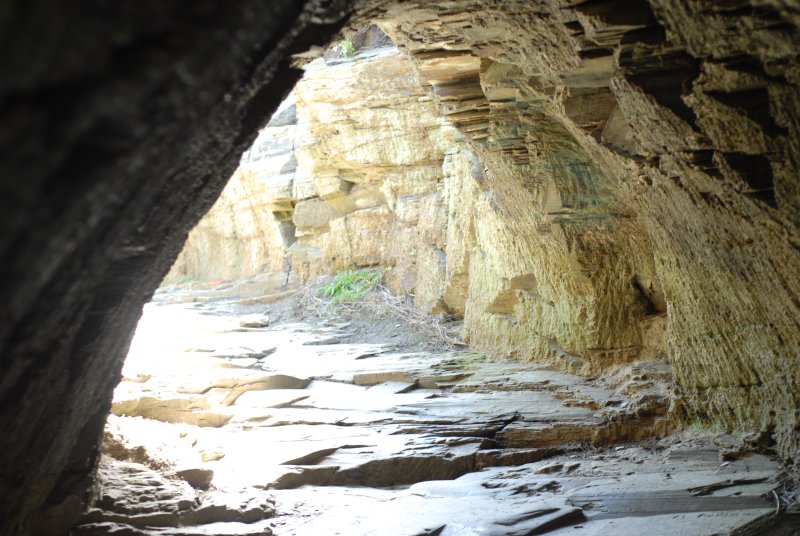
If you looked at yesterday’s photos of Tintagel, and read all the tooltip captions and the post tags, you might have noticed that I described one of them as showing a souterrain; or, at least, a souterrain-ish thing. Noone, as far as I know, calls it a souterrain; and I’m not entirely sure why.

I could be wrong here. I don’t have access to an academic library, or a big pile of archaeological literature on the place. So I’m not sure that noone, ever, has said there’s a souterrain at Tintagel. I haven’t found anything yet, though.*

A souterrain is a fairly common thing in British and French archeology. It’s an underground passage, with a bend in the middle. They’re generally found in France, Cornwall, and north-east Scotland; although in Cornwall they’re called fogous. There are scattered examples elsewhere as well. Noone really knows what they’re for. There are plenty of ideas, but all of the ideas have flaws. You could store food there, but it probably wouldn’t keep well, as souterrains don’t have great drainage. Animals: the same problem, and they’d be too awkward for anything other than poultry or sheep to go in and out of. You could hide in it – but attackers would be pretty stupid to go away without checking the big hole in the ground coming out twenty yards from your house. So, noone really knows what they’re for. We could go back to the standard archaeological “I don’t know why this is here” standby — “it had a ritual purpose” — but frankly, we may as well just admit that we don’t know what they were for.

The thing that British souterrains generally have in common, though, is that they were dug in earth. Some may have had above-ground roofs at some point. Most probably had multiple phases of building and rebuilding;** and most were stone-lined at some point in their lives. They had corbelled roofs. A corbelled vault is a bit like an arched vault, but is less sophisticated, and a lot less stable.***

The Tintagel passage, though, isn’t dug into earth. It’s tunnelled through bedrock, with metal-edged tools – which fits the presumed dates of the other souterrains and fogous out there. It has a similar profile to a corbelled vault, but it isn’t one. It’s the right sort of size, though, and it has the characteristic bend in the middle. The bedrock, though, is so far as I can see the only “not a souterrain” factor to it. It’s in the middle of a medieval castle – but a medieval castle built on a site that had been occupied for hundreds of years previously. It’s on top of a rocky headland – if you did want to build a classic earth-dug souterrain, you’d be a bit stuffed, because there isn’t enough depth of earth to tunnel into. Nevertheless, to my eye, it looks just like it should be listed as one, even though the local materials and circumstances were different. Archaeology can be a strange thing, sometimes.

* If you search the web for the phrase tintagel souterrain, yesterday’s post is the top hit already.

** but what long-use buildings don’t?

*** Which is why they’re not used any more. It looks a bit like an arch, but solely with horizontal courses of stone. Wikipedia has some explanatory diagrams.

Arthurian

In which we visit Cornwall

This June was originally going to be Photo Month on this site, given the oodles of photos I took on holiday. Unfortunately, I took so many photos on holiday,* I still haven’t managed to sort through them all yet.

Here’s a few, to be going on with. The Tintagel area. I have more to write about Tintagel.

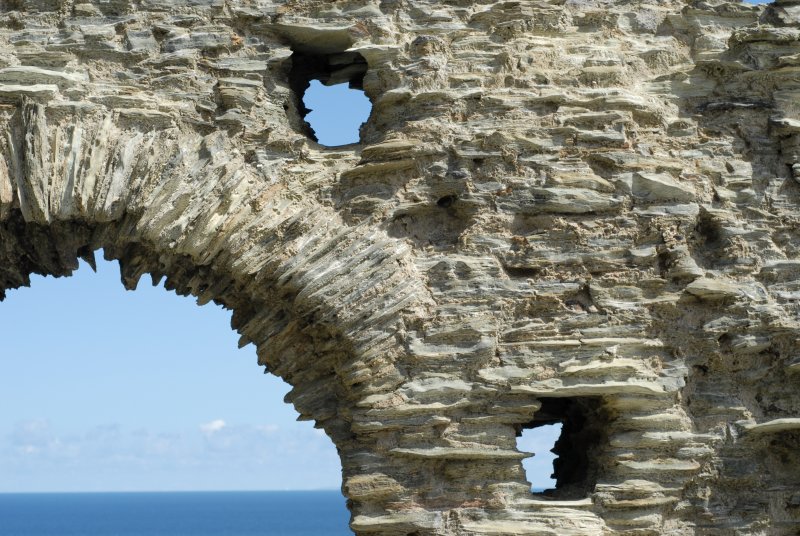
Medieval arch, Tintagel

Souterrain-like tunnel, Tintagel

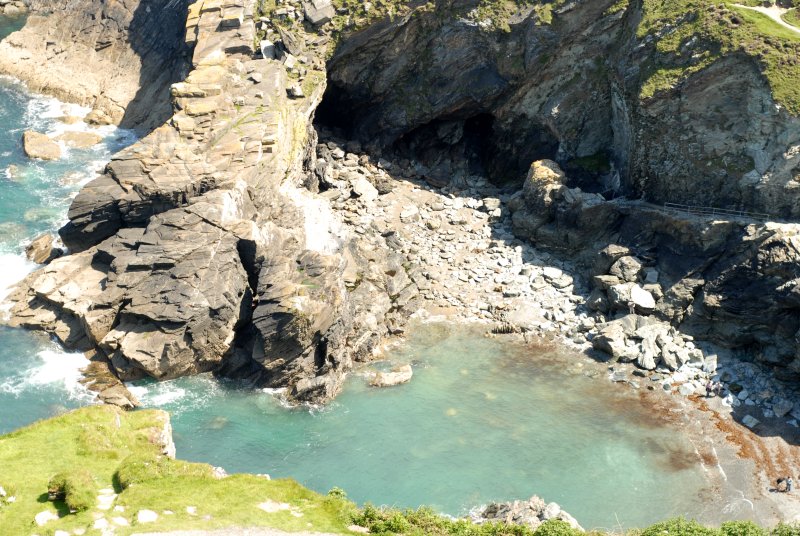
Beach, Tintagel

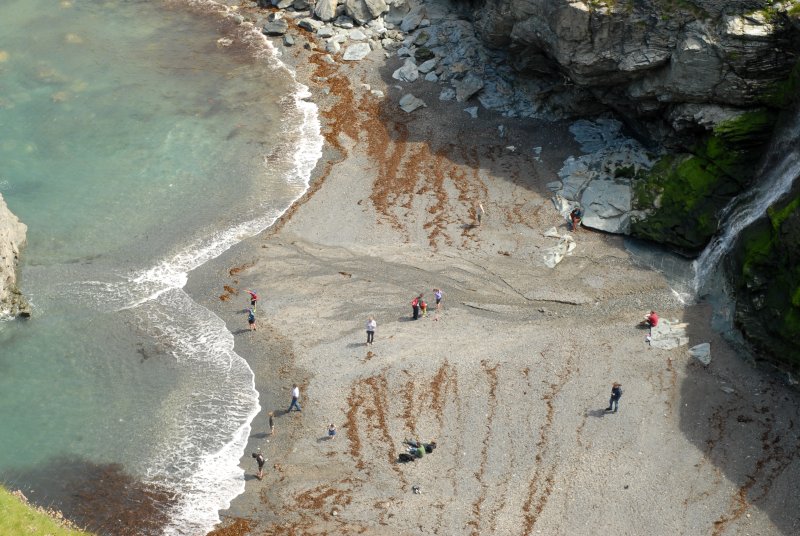
Beach, Tintagel

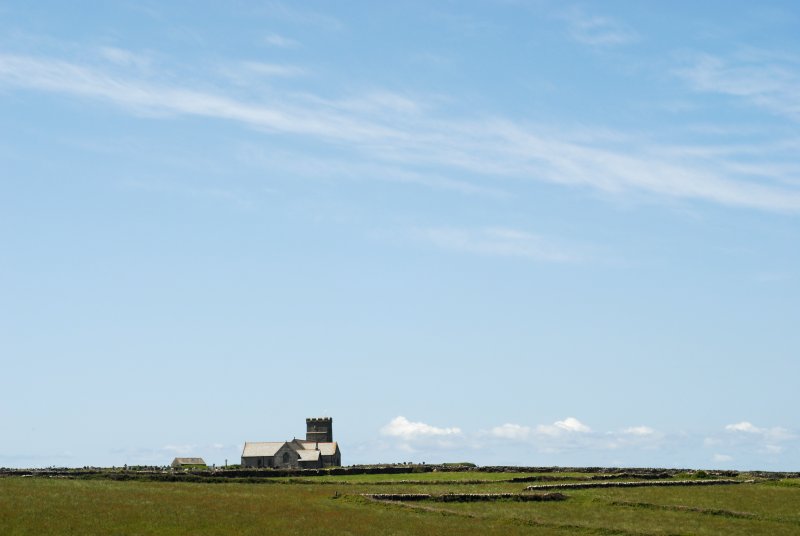
Church, Tintagel

* 803 in total

Lost terminology

In which a word is snappy but fails to catch on

Jargon changes over the years; bits of it get picked up, some bits become mainstream, and some wither away.

On a trip to Wet Yorkshire the other day, I started thinking: there’s one piece of jargon which I think it’s a shame didn’t get picked up. It’s Charles Babbage‘s term mill, which he used to name something that was, for him, a new concept: a machine which would carry out arithmetic calculations according to a sequence of instructions. Today, we’d call it a computer CPU; but there isn’t really any better term for it other than that awkward three-syllable abbreviation. I’d much rather be talking about the newest Core Duo mill, or Athlon mill; it rolls off the tongue. A twin-mill machine sounds much snappier than a dual-processor one. If you look at one under a microscope, it even looks vaguely like the giant mechanical grids of 19th-century looms,* just like the mills Babbage was originally alluding to. Is there any chance of the word making a come-back? Probably not; but it would be nice if it did.

* I was tempted to take up “loom” and segue into a Doctor Who discussion, but that reference would be too geeky even for me.