
+++*

Symbolic Forest

A homage to loading screens.

Blog : Page 27

Fourth Series

In which I rant about Being Human’s writers not being able to coherently plot from series to series

This blog still gets quite a lot of hits from people searching for the locations used in the BBC supernatural drama series Being Human, particularly the house used in the first couple of series. Now, I wrote quite a bit about those two series on here, partly because at the time we lived in South Bristol, the series was filmed largely in South Bristol, and it was quite an enjoyable thing to watch. The last time I wrote about it, though, was to (successfully) predict one of the plot-lines of Series Three; however, when that series made it onto the screen ,I hardly wrote about it at all. I hardly wrote about it because, to be honest, I didn’t think it was very good.

Now, with at least two major characters killed off* at the end of Series Three, you might have wondered whether it was coming back. Google says that Series Four was announced back in March, but I have to say I didn’t notice. I did notice, however, more of those little pink filming location signs which used to pop up all over Bristol. Not by the Black Castle this time, so no more “Box Tunnel” plotline. Instead, this year, filming is going on in (drum roll) Newport, South Wales. Newport, the town city so good they called it Newport! Newport, on the beautiful River Usk, where you can get shot while having your hair done before getting your head stuck in a disused train. It’s that good.

Newport might be pretty depressing and run down in some parts, but Cardiff has plenty of areas like that too. So, my prediction is that the next series of Being Human is going to feature: some sort of dramatic, thrilling climax based around the Newport Transporter Bridge. It’s essentially the only unique thing Newport has; and if you’re going to feature it, you may as well be dramatic about it. Well, either that, or the Manic Street Preachers are going to pop up in the background, which is less likely.

Noticing that Being Human is coming back, and writing this post, has made me think about exactly why I don’t think it is any good any more; why I think it shouldn’t come back. The biggest problem I have with it, I think, is that its writers don’t really have any sense of how to expand on their fictional world but still retain believability. Each series might make sense on its own, but the three series that have been produced so far, put back to back, make no sense at all as a single work: each new series has introduced new elements which completely break the world already established.

If you’ve watched it, you might be wondering what I’m talking about here. So, I’ll elaborate. Stop reading now if you have never seen the programme but might want to watch it in the future.

Series one: we have Emotionally-Tortured Pre-Raphaelite Vampire, trying hard to give up on the whole “killing people” thing; and Evil Villain Vampire, who is going to take over the world and doesn’t see any place for brooding emotional types who think they can live alongside humans in his worldview. Evil Villain Vampire is working in the police, so he can keep vampires under-cover and make sure their crimes don’t get exposed. E-T P-R V learns to rely on his friends, who defeat Mr. Evil Villain — in the workplace, note — and forestall the great vampire takeover. Sorted.

Series two: E-T P-R V and friends are fighting against some religious “scientists” who are trying to cure evil, and exterminate it if curing it doesn’t work. Our vampire protagonist is still being broody because he’s having trouble with the whole not-killing-people thing again. So, introduce Morally-Uplifted Mentor Vampire, who gave up blood-quaffing as a dead loss some centuries back, and who, way back before the start of Series One, taught Mr E-T P-R Vampire how to not kill people to begin with.

Now, this plotline might all make sense if M-U M Vampire (ooh, an apt acronym) lived somewhere exotic, somewhere difficult for a Totterdown resident to get to.** Or, alternatively, if he’d*** been off on holiday somewhere, out of contact, for the whole of Series One. Touring the Amazon, perhaps, or spending three years trainspotting in Iceland. The only sensible explanation, indeed, is that that was indeed the case and it just isn’t mentioned: because it turns out that M-U M Vampire lives in a very nice house, literally a stone’s throw from E-T P-R Vampire’s workplace — where, remember, the Final Denoument took place in the previous series. Literally a stone’s throw. Not only did Evil Villain Vampire not notice, in the previous series, that an active let’s-not-kill-people mentor character was living two minute’s walk away, but E-T P-R Vampire could have popped round for some advice and a cup of tea in his afternoon break, and still got back to work before anybody noticed.

Series Three: the religious chaps have been defeated, the Core Team have moved to Wales, and the Evil Villain Vampire might not have been defeated quite so thoroughly as we all thought. But, what’s this? There are some other vampires! Who may or may not exist, of course. They might be somewhere in the depths of the Amazon, or they might be deeply under-cover in a second police team devoted to making sure vampire killings don’t get exposed. However, all the vampires are well-aware that these Old Vampires may exist, or may be just a myth that vampires pass down from generation to generation. All the vampires are well aware of the myth, even though it was never previously mentioned. In Series One, Evil Villain Vampire was planning to take over the world, was planning to become Vampire King Of The World, indeed, and nobody seemed concerned that there may, just may, be some possibly-mythical Old Vampires who might still be around and might disagree. In Series Three, it turns out, they were working in the same business as Evil Villain Vampire all along! But didn’t think it worth doing a thing about him, didn’t bother stepping in — although we’re presumably meant to assume that they would have stopped things going too far.

Basically, my point is that: Being Human hasn’t been thought through. It’s been planned one series at a time, and each time a series is made, the previous one isn’t even thought of. No doubt Series Four will introduce some other new characters: maybe a Great Pack of werewolves convinced that werewolves are going to take over the world, which everyone has heard of before and cunningly forgotten to mention. Or maybe the Old Vampires are going to turn out to include the team’s landlord from Series One, who hasn’t been seen for a while. Either way, something new will no doubt come in, and if the previous series are anything to go by, it will be something which would have made a vital difference to everything that has gone before, if we had actually known about it.

I will stop ranting, now. There are ways to do this sort of thing properly, but Being Human is probably beyond recovery. The annoying thing is, it would have been much better if someone had sat down, right at the start, and said: if we do get more than one series, what way will we go? And what do we have to do now, to make sure we can?

* Given that several characters are either dead or undead, and one has been “killed off for good” once before only to return when the writers ran short of plot, this is possibly not a useful measure of whether or not it will return.

** Kingswood, maybe.

*** There’s an essay in the implicit and deep-rooted sexism that shows itself in the writing of the female vampires in Being Human, but this is probably not the place for it, and I am not the person to write it. It is, however, no doubt closely related to the vampire-as-sexual-predator archetype. Here, at least, note that only the male vampires are given any chance of redemption other than death; and that the mentor who demonstrates this the most is gay.
The trouble with religion (part 94)

In which we discuss a suitable Sunday topic

The Mother phoned up today, as she does regularly, to tell us all the latest exciting goings-on in her social circle. Her friend George, who she knew from church, has died aged 85, after a long illness. “Of course, he’d been ill for years,” she said, “and he was in great pain. By the end he was screaming. ‘Take me, Lord, take me!’ It was a blessing when he died.”

When it comes to religion, The Mother is a great fan of this sort of logic. If The Family Car Crash Of 1988 ever comes up in conversation, The Mother will no doubt say something along the lines of “You had such a narrow escape! It just proves that God was looking down on us.” Now, it’s true that I almost lost a) my life b) an eyeball;* but I’m not sure God deserves much in the way of credit. It is fair to argue, though, that the Family Car Crash Of 1988 was a Good Thing: the insurance windfall paid for a piano and a university education.

You can’t really argue, though, that taking the life of an old man after he’s had a long and painful illness, so bad he begs you to kill him, is a good way for any deity to behave. If God really wanted to bless a man who had been a devout churchgoer all his life, a churchwarden and church committee member for many years, someone who every Sunday had been up at the altar receiving the body and blood of Christ devoutly believing that the said God had personally told us all to do this every week,** if He had really wanted to grant him a boon, wouldn’t he have saved him the several years of pain and suffering?*** But, no, in The Mother’s religious logic, bringing the death after George had been calling out for it loudly for a while is the kindly Godly way to behave, not letting him die after a short illness a few years ago. It leaves me thinking: just what does count as compassion, for the religious?

* Strangely, although my life was saved by a pretty narrow margin, I never realised until many many years later just how close I’d come to being killed. Instead, I concentrated on the irony that my eyeball was probably saved by my poor sight, as the thick plastic lens in front of it absorbed the impact of the shards of glass that hit me. With extra irony, the sight in my other eye is almost perfect.

** Although of course, Jesus didn’t want me for a sunbeam do it on a Sunday morning.

*** Let’s not get into the tragic story of George’s wife, either.

Curious problem

In which we have an obscure font problem, in annoyingly specific circumstances

Only a day after the new garden blog went live, I found myself with a problem. This morning, I noticed a problem with it, on K’s PC. Moreover, it was only a problem on K’s PC. On her PC, in Firefox and in IE, the heading font was hugely oversized compared to the rest of the page. In Chrome, everything was fine.

Now, I’d tested the site in all of my browsers. On my Windows PC, running Window 7 just like K’s, there were no problems in any of the browsers I’d tried. On my Linux box, all fine; on my FreeBSD box, all fine. But on K’s PC, apart from in Chrome, the heading font was completely out. Whether I tried setting an absolute size or a relative size, the heading font was completely out.

All of the fonts on the new site are loaded through the Google Webfonts API, because it’s nice and simple and practically no different to self-hosting your fonts. Fiddling around with it, I noticed something strange: it wasn’t just a problem specific to K’s PC, it was a problem specific to this specific font. Changing the font to anything else: no problems at all. With the font I originally chose: completely the wrong size on the one PC. Bizarre.

After spending a few hours getting more and more puzzled and frustrated, I decided that, to be frank, I wasn’t that attached to the specific font. So, from day 2, the garden blog is using a different font on its masthead. The old one – for reference, “Love Ya Like A Sister” by Kimberly Geswein – was abandoned, rather than wrestle with getting it to render at the right size on every computer out there. The replacement – “Cabin Sketch” by Pablo Impallari – does that reliably, as far as I’ve noticed;* and although it’s different it fits in just as well.

* this is where someone writes in and says it looks wrong on their Acorn Archimedes, or something along those lines.

The Extension

In which an annex is announced

As you can see, as I’ve mentioned more than a few times already, this site has been fairly quiet for the past few months, since we’ve moved house. We’ve come up with a cunning solution, though. Start another blog!

It’s not really a separate blog; it’s more of an annex to this one. A separate side-project, with rather more of a focus than this rambling monstrosity,* with a specific topic, rather than whatever I can conjure up to make 500 words of. The idea being, a narrower topic will make ideas come more easily. It is: The Symbolic Forest Gardenblog.

Gardening posts on this site — all none of them — will now appear over on the gardening blog. Gardening-related photos will pop up over there too. Anything I write that isn’t about gardening, that will still be over here. Keeping it in this domain might end up a bit confusing, because forest gardening is a recognised genre that is almost entirely unlike our garden so far. Hopefully readers will pick up that it’s the Symbolic Forest Gardenblog, not the Symbolic Forest Gardenblog.

* and it’s not going to have footnotes, either.

Photo Post Of The Week

In which things are squared

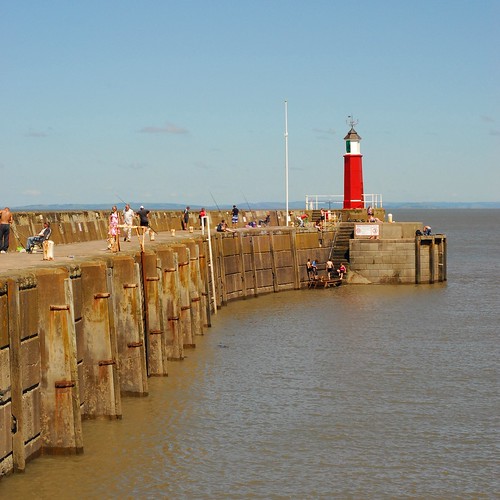
Hot weather is not very nice. How people manage with it, never mind enjoy it, I’ll never know. The brightness of the sunlight is something; but even then, winter sunshine is much better for photography. Midsummer sunshine, in the middle of a clear-skies day, is just that bit too harsh.

Recently, our burgeoning vintage camera collection has made me reassess the use of square photos. They’ve often been a bit of an unpopular photography style, seen as a bit awkward, a bit ungainly, and hard to make interesting. Generally, I suppose this is all down to even numbers: they make it rather harder to make a composition interesting, and a square frame is as even-numbered as you can get. With lots of 120-film cameras, though, you don’t get a choice: square or nothing.

Harbour and lighthouse, Watchet

This photo started out as a test shot for one of the 120 cameras. So far the film in question hasn’t left the camera, so I’ve no idea how successful it was. As a digital photo, cropped down to square, I think it works rather well, though. Despite the sunshine.

Update, October 2011: the 120-version of this shot is now out of the camera and back from the processors, complete with some interesting light leaks which make me worry there might be a hole in the camera’s bellows. I will have to try to get it scanned some time.

Update, November 2011: well, I scanned it, and it is in my queue of things to upload to the internets. Which might happen some time this year.

Suddenly, half a year

Or, time to exercise

Well, hello again. Apparently, it’s summer.

Regularly, I do get urges to come back to the Admin Interface and write a bit more prose-doodling for this website. There are so many other things to do that keep me occupied, though. Now it’s summertime, the garden at Symbolic Towers is lush and green, and instead of getting on with things indoors you can regularly find me outside, hiding behind the Bee House,* pottering around the garden, deadheading the marigolds and worrying about the effect of leafhoppers on the potato harvest. As the gardens at Symbolic Towers are barely the size of a damselfly’s bandana, though, I am usually easy to spot.

Checking back, I’ve just realised that the entries on the main page still include things I wrote over a year ago now – for example, you can still see the ice monster we defeated when we moved house, down below this one. It’s not very good performance, for a blog that was originally started with the aim of posting every weekday. There are, however, more things in my head that I do plan to write about, some time over the next few months. Maybe I’ll actually manage them at some point. If nothing else, I should start posting pictures of the verdant garden, before it stops being verdant and crumbles back into autumn mulch. The pea plants are already starting to look a bit mildewed.

Lots has been in the news in the past few months about exams: about exam boards getting the questions wrong, about teenagers staring down baffled at unanswerable questions, and then about kids and parents complaining that they don’t want to be marked down for the question-setters’ mistakes. I have to say, my first thought was: surely, this is a learning experience? One of the first tips I was taught at school was: exam questions, numerically-based ones, are usually carefully worked out so that you’ll get nice neat answers at the end. The real world, of course, doesn’t work like that. When you’ve left school, you’ll find out that real world questions don’t have nice neat answers, and that often people will ask you things that are unanswerable, or insoluble with the information you have. Discovering that fact in the middle of an exam is probably a very good place to learn it. Possibly, this is why I should never become a teacher.

For now, that will do for a blog post. I will come back and try to write more in a few days; get my writing muscles unstiffened and flexible again. Because, as anybody who’s ever tried it knows, the more you write the more you want to write.

* Not one of those big boxes you use to house domesticated, sociable bees in the hope you can steal their honey, but a boarding-house for antisocial solitary bees. None have, as yet, taken up residence, but neverless I always check.

And then again

In which there are updates on a couple of items

Well, hello there. Happy new year and all that.

I’ve broken the silence because, in the post below this one, you might notice that I said the one-off Dirk Gently adaptation broadcast on BBC4 last Christmas “very much had the smell of a pilot about it”. Funnily enough, the BBC agreed with me, so much so that it will be getting a short series in 2012. Whether the series will also be filmed in Easton, Montpelier and St Werburghs remains to be seen. Nostradamus himself would be jealous of my keen-eyed prediction skills.

In other futurology updates: a year ago, I predicted that the new government would last about fifteen months, collapsing over electoral reform. I now have three months left on that one, and the electoral reform has gone the way I always thought it would.* We will see. Nostradamus may not be quite so impressed. In slightly better news, though, we do now have the tea towel that we wanted this time last year. The downside to this: I now have to catch up on all the washing-up that’s been waiting since then.

* Despite being a Yes voter myself. No, not that Yes.

The Interconnectedness Of All Things

In which a loose adaptation can be better than a faithful one

The problem with no longer having a connected-up TV, and relying on the internet for our TV service, is that we no longer get to see trailers. We no longer get to see trailers, we no longer see adverts in the paper, and so we don’t generally have much idea what’s coming soon on the good TV channels. It’s too easy to miss stuff we’d really enjoy watching.

A case in point: we only just caught Dirk Gently, BBC4’s rather loose adaptation of Douglas Adams’ novel Dirk Gently’s Holistic Detective Agency, and saw it on the iPlayer with a few hours to spare before it disappeared. I’m glad, though, that we did catch it. I first read the book in my early teens, and enjoyed it despite not understanding half the plot; so, when I discovered that BBC4 had done an adaptation that was merely 1 hour long, I was rather wary. And, as I said, it was a rather loose adaptation, keeping a couple of the characters unchanged, the names of a few of the others, and a couple of the best scenes from the book. One of the earliest scenes saw the titular Dirk, in his office, whitewashing a wall covered in scrawled notes – notes all pertaining to events from the book which had been scythed out of the adaptation. Symbolic, indeed.*

Watching the opening scenes, I thought to myself: that garden wall looks very like our garden wall. Ooh, the decorative stonework on that house looks very like some of the decorative stonework in our street. That street gutter they’re lying in looks very Bristolian, too. And then the camera swung round to show the disused Greenbank chocolate factory, just a stone’s throw from Symbolic Towers.** “Oh, I did see some filming was going on near there the other month,” said K: presumably, this was it. If you saw the programme and are as geeky as me about this sort of thing: most of the action took place on Camelford Road and Co-Operation Road in Easton, and around Falkland Road and Fairlawn Road in Montpelier, with one scene in St Pauls, and a nice shot of a City Farm mural on Mina Road, St Werburghs.

I said above just how loose an adaptation it was. Only the characters of Dirk and his secretary were retained, essentially, from the book; along with the names of the others, some of the best lines, and a flavour of the main plot device. Strangely, though, I thought it a much better adaptation than the one that BBC Radio did a couple of years back. The reason for that? The book’s plot is horribly complicated, and it’s set in what is essentially an alternate universe, hinted at in a pretty subtle way. It’s also, very clearly, derived directly from some of Douglas Adams’ earlier projects.***

Producing a new plot with a similar tone was, in all probability, by far the best way to create a Dirk Gently TV show. It helps with making it a modern-day production: the original revolves heavily around answering-machine tapes. It means you no longer need to know any Romantic poetry to understand what’s going on; you no longer need lots of hints that we’re not in the real world; and you don’t need to try to weld the loose plot-strands of the novel into the tighter mesh you need for a dramatic production. The tone, moreover, was spot on: you could barely spot the join between scenes and lines imported from the book and those written afresh. That matters because the new Dirk Gently very much had the smell of a pilot about it: if its writer is going to try to push things and take it further, it’s good to know that he can write the title character in a faithful style.

Maybe I’m wrong and it was always intended to be a one-off. You could read the ending either way, which in itself was probably intentional. We’d be happy, though, to sit down in front of an hour of Dirk Gently every week. All I can hope is that, if it does turn into a series, that a mathematically impossible sofa turns up at some point. I didn’t miss the book’s alien robot on horseback, or its idyllic Cambridge college scenes, but I did miss the mathematically impossible sofa. And the other thing we have to hope is: we do realise it’s on, and it doesn’t just appear and disappear without us spotting it.

* there were also, incidentally, some newspaper headlines we saw on-screen which were irrelevant to the plot of the programme, but came from the plot of the book.

** We did consider buying a house that was literally a stone’s throw from the shooting locations, but it had a rather nasty damp patch in the living room which looked, even at a glance, to be an expensive fix.

*** Saying directly where it was pulled from would probably be a spoiler for anyone who hasn’t read the book, so I’ve put it down here: the plot is partly derived from two Doctor Who stories that Adams wrote or co-wrote. If you know this before you’ve read the book, it becomes rather obvious which character is effectively a Time Lord, and where he keeps his TARDIS. None of this appeared in the new adapatation, apart from the general plot device of a time machine, which was handled in a radically different way.

Quiet, please

In which the reference library is louder than you might expect, but somehow seems quieter than normal

Saturday night: to Bristol Central Library, for a gig by The Wraiths, a local band whose “thing” is setting classic poems to music. We’d seen them twice before, at various events,* but last night was the first time we’d seen them performing as a full band.

You might think that a library – the Reference Library Reading Room, in fact – is a slightly odd place to hold a gig. Unusual, I have to admit; Lancaster Library is a regular indie venue, but this was only Bristol Library’s second public concert. The tickets impressed me, for a start: the organisers were clearly trying to set the theme.

Library bookplate or concert ticket?

The library reading room is an amazing space. Part of an early building by Charles Holden, the architect of various iconic London buildings,** it has a high, vaulted ceiling wtih two gallery levels. Unfortunately, I hadn’t thought to bring a camera along; the clatter of a camera shutter can sometimes be a little unwelcome at quiet, intimate gigs. I’ll have to come back on an evening sometime, when the library is open for normal business, and see if they’ll let me take some photos of the interior. It is, allegedly, haunted; the band tried to persuade the gig’s librarian organiser to give us a talk on the various ghosts that live in the building, but sadly it never occurred.

The gig itself can’t really be disassociated, in my head, from the venue. The overall effect was magical, the music filling the vault, although if anything they should have turned the volume up slightly. Although there wasn’t any support, the band played a very full set, two halves and an interval, and the library reference desk had been turned into a cafe-bar for the night. As I said above, we’d seen them twice already, but this gig, with a fuller band, was by far the best; maybe because this time, they were the headline act. They persuaded us to buy their CD,*** and happily encore’d away, slightly tentatively, at the end.

All in all, a great gig, and the second good gig I’ve been to at the library. I’m hoping now that the library sees fit to extend this event into a whole series of concerts: they have a wonderful room, after all, and it makes the music shine.

* and I have a photo of the first time we saw them performing.

** including Senate House, 55 Broadway, and various other Underground Group/London Transport Art Deco premises. At the time Bristol Central Library was built, of course, Art Deco had not yet been thought of, so it’s in more of an Edwardian Classical style.

*** or, rather, the CD of theirs that we didn’t already have.

Overheard

In which we are nosy

Overheard: a youngish woman walking down Bedminster Parade, phone in hand:

“I think I’m in Bedminster, Mum, but I don’t know where Bedminster is…”