+++*

Symbolic Forest

A homage to loading screens.

Blog : Post Category : Geekery : Page 7

See you later, alligator

Or, a treat for myself

It’s strange, having a birthday that falls not long after Christmas. For a while now I’ve been past the age of receiving very many birthday presents, so a while ago I deliberately went out and bought myself a present, and put it away, waiting for my birthday. This year, too, my birthday was relatively close to moving house, the strange period in which everything frivolous, everything not house-move-related, has to go into stasis until the move is over. My present to myself was a Lego kit, and last night I was finally able to start to build it.

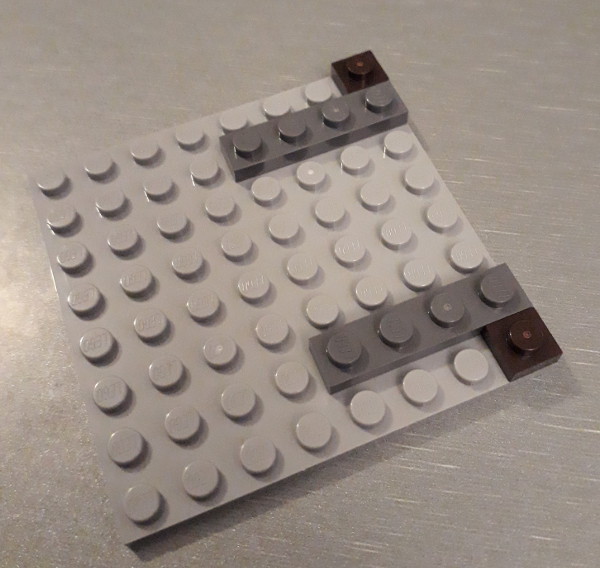
Last time I built some Lego I turned it into a GIF. This time, I was tempted to go the whole hog, set up camera and tripod and lighting, program the camera into time lapse mode, and create a video of the whole thing. It seemed like an awful lot of effort, though, for something that was supposed to be a treat for myself. Maybe after I’ve finished the model once, I’ll take it all apart, set up a time lapse, and build it again. Still, I did take a few photos. This is the end of Step 1.

Not much to show yet

It’s a bit hard to tell what it’s going to be after just one step, I suppose. I didn’t get the whole thing finished in one night, but I suspect this is going to be completed much faster than most of my craft-type projects.

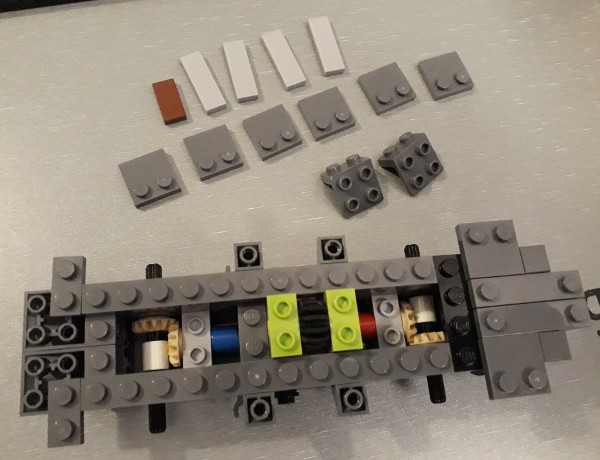
Look, cogs

A bit clearer what it is

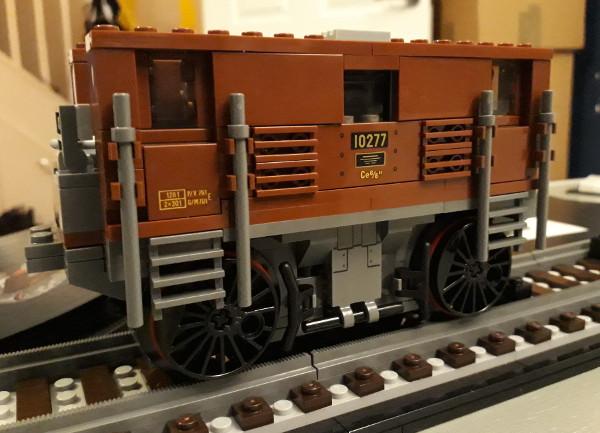
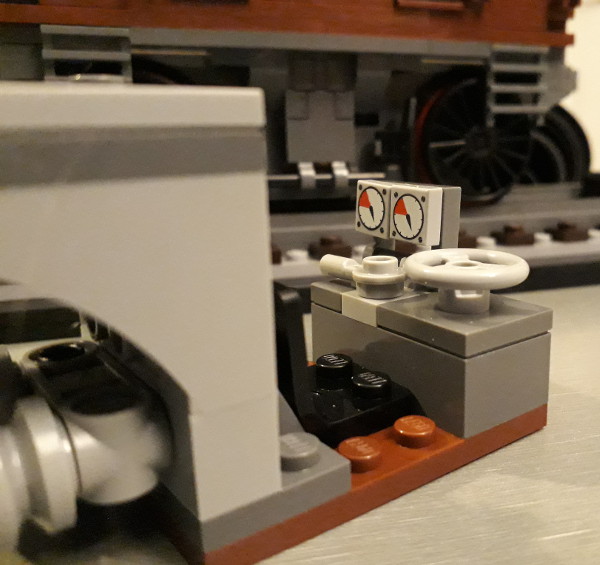
I do rather like the level of interior detail in this thing, even though a lot of it is likely to be hardly visible in the finished model. At present, it will just turn into something to sit on a shelf as an ornament in my office, but you never know, I might buy a motor to go with it at some point.

It's got controls and everything

The second part of this Lego build is here

Cofiwch Abermiwl

Like a train, this post is slightly late

A couple of days ago, it was the hundredth anniversary of a significant event in British railway history. If you’re a train nerd, you’ll know what it was from the title of this post. If you’re not, let’s start with this photo of the Severn Valley in rural mid-Wales.
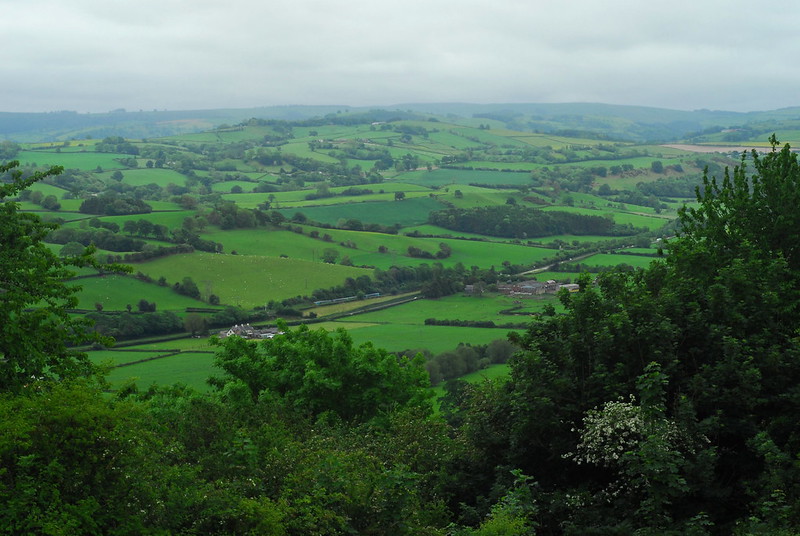
The Severn Valley just west of Abermiwl

I took that photo a few years ago from the ruined battlements of the 13th century Dolforwyn Castle, and looking at it you could be forgiven for not even noticing the train in the middle of the picture. It’s on its way from Birmingham to the Welsh coast, on the former main line of the Cambrian Railways. Before 1922 the Cambrian was the largest “Welsh railway company”* in terms of route mileage, but not in terms of profit or revenue. Its main line was (and is) more like a long, rambling branchline; single-track, through small towns and tiny villages, from the Marches through to Aberystwyth and the curving coast of Cardigan Bay. That includes the line along the Severn Valley through Welshpool and Newtown, passing under the battlements of Dolforwyn Castle near the village of Abermiwl (or Abermule in its English spelling).

if you look closely you can see the train, its single track threading through fields and past farmhouses. See the white house on the left with the three chimneys? See the railway line passing behind it? A hundred years ago this week, two trains, going in opposite directions, collided head-on at that precise spot. Seventeen people were killed, including Lord Vane-Tempest, director of the Cambrian Railways and High Sheriff of Montgomeryshire.

The significant thing about the Abermiwl crash is that, in theory, it should not have happened. In theory, the single lines of the Cambrian Railways were protected by a “token system”. Without going into too much detail: the rules of a token system state that all trains travelling from “token station” to token station must be carrying a token, an arbitrary “thing” with the names of the token stations engraved upon it. The physical form of the token varies: a baton, for example, or a large key. The Cambrian Railways used “tablets”, metal discs a few inches across. Each section of line has a set of tokens, but they normally sit locked in machines called “token instruments” at each token station. The instruments are electrically wired together in a similar way to a pair of light switches at either end of a staircase, so that if you unlock one token from one instrument, you then can’t take any more tokens out of either, until a token has been locked back into one of the instruments. Ergo, assuming the drivers follow the rule on not setting off without a token—and it is one of the gravest rules in the Rule Book—nothing can go wrong.

On 26th January 1921 a westbound slow train arrived at Abermiwl and handed over its token, for the Montgomery—Abermule section of line. It was booked to wait to pass the Aberystwyth—Manchester express heading in the other direction, but the station staff were collectively unsure whether that would be happening on this particular day, or where the express currently was. In reality, the express was steaming hard in the middle of the Abermule—Newtown section of line, but none of the station staff actually knew that, and only one knew that a token had been issued for it at Newtown. Through something best described as a gruesome stage farce, or a nightmarish pantomime, the Montgomery—Abermule token was passed hand-to-hand among the station staff and back to the loco crew, who assumed it was the Abermule—Newtown token they were expecting, and didn’t look at it to check. Without anyone who knew the location of the express noticing, the slow train set off carrying the wrong token. A mile outside the station, the two trains collided. The station staff, by that point, had already realised what they had done and that the trains were doomed, but were unable to stop them.

The accident investigation report made it very clear just how the event had happened, and “Remember Abermiwl” became a watchword across railways worldwide. In India, it was written in Urdu inside the cabs of locomotives. It became standard practice for train crew to shout out the names of the stations on each token to each other, and pass the token around the cab for everyone to read aloud, so the identity of each was double- and triple-checked at each token station. If you go and visit a steam railway, you can still see and hear that happen, if you’re in the right place at the right time. The peaceful green fields in the photo above had an impact on railway working around the world; and the lesson is worth remembering in other fields too. Avoid passing jobs hand to hand; always make sure everything is clear and agreed. Cofiwch Abermiwl.

If you want to know the full details of exactly how the accident happened, who said what to who, and precisely how the Montgomery token ended up in the wrong place, it is all spelled out in the accident report written by the Board of Trade’s Chief Inspecting Officer of Railways, John Pringle. There is a postscript to this, though. Despite the importance of Abermule in railway history, a similar event almost happened in August 2019 on the miniature Romney, Hythe and Dymchurch Railway in Kent. There, the trains saw each other with enough warning to stop before colliding. However, the causes of that event were similar enough that the official government report on the incident includes Abermiwl under the heading “Previous Similar Occurrences”. Remember Abermiwl, indeed. The safest of systems can be defeated if the proper processes are ignored and slowly slip away over time. Cofiwch Abermiwl.

* Technically speaking, the head office and engineering base of the company was not in Wales, but slightly over the border in Oswestry. However, if you were to consider all of the railway companies which had the majority of their track mileage in Wales (including Monmouthshire, let’s not get silly now) as Welsh railway companies, the Cambrian was the longest.

New star in the sky

Or, some astronomy news

When you’re learning about astronomy, you quickly get used to the idea that on a human timescale everything is static and nothing really changes. The Earth is going to be swallowed up by the sun,* but it won’t be for a few billion years yet. When you look up at the sky the light you see from other stars has been travelling for hundreds, thousands or millions of years. In general this is all part of the Copernican principle: on a universal scale there’s nothing special about where we are or when we are, other than that we could only be living at a time and place where planets are commonplace. Therefore, there’s not a very high chance of anything special happening whilst we’re looking.

However, that doesn’t mean that interesting things can’t happen. Before the end of the century, there will briefly be a new brightest star in the sky.

The star in question is V Sagittae (or V Sge to its friends). Sagitta—not to be confused with Sagittarius— is a small constellation adjoining Cygnus. Unless you’re an astronomy fan it’s the sort of constellation you might not even have noticed, as it’s small and it doesn’t have any very bright stars in it. Living where we do, I’d struggle most nights to see even its brightest star with the naked eye. V Sge is in theory just about visible in The Child Who Likes Animals’ telescope; it’s around magnitude 10, although it varies quite a bit and over quite short timescales.

Since it was first discovered it’s been realised that it was a bit unusual. It’s a binary system, with an “ordinary” sun-like star orbiting around a smaller white dwarf. More recently, astronomers realised that the pair of stars were getting noticeably brighter over time as their orbit shrinks and they get closer to each other. Last week, it was announced that at some time in the last three decades of the current century, they will finally spiral into each other and temporarily become the brightest star in the sky. If you want to know full details, this is the press release of the announcement from Louisiana State University, and here are links to the full data.

At present the time range is a bit on the vague side, but it will almost certainly happen in a 32-year span centred on 2083. No doubt, now that more astronomers know about this, we’ll get more data over the next few years to narrow down the time range. And even before then, V Sge will probably get a bit brighter over time, as it’s doubled in brightness in the past 90 years. I might even see if we can see it ourselves now if we get good conditions: its part of the sky is well-positioned for early evening viewing from here at this time of year. I’m not likely to see it go nova myself, but The Children might do.

* Assuming nothing else catastrophic happens to it first, such as being kicked out of the Solar System completely. It’s unlikely but it’s not impossible.

Just like clockwork (part one)

Time for a building project

Back in the mists of time on Boxing Day, I posted a clue as to what one of my Christmas presents was. A model tram from UGears, which I have been slowly assembling since.

It’s been a fun project, but I’m not completely sure it lives up to the promise on their website that “no glue, special expertise, tools or equipment are required”. With a fair wind and if everything goes well, then maybe. When I opened the box, the kit consisted of:

  • Various laser-cut plywood sheets.
  • Two rubber bands.
  • A small square of fine sandpaper.
  • A number of cocktail sticks, individually wrapped.
  • A glossy and comprehensive instruction book.

The instruction book is very good and very clear, with each step being shown as a 3D-rendered diagram. However, it starts off listing the extra pieces of equipment you need which aren’t supplied:

  • Candle wax, to lubricate the moving parts.
  • A knife, to cut some of the cocktail sticks to length.

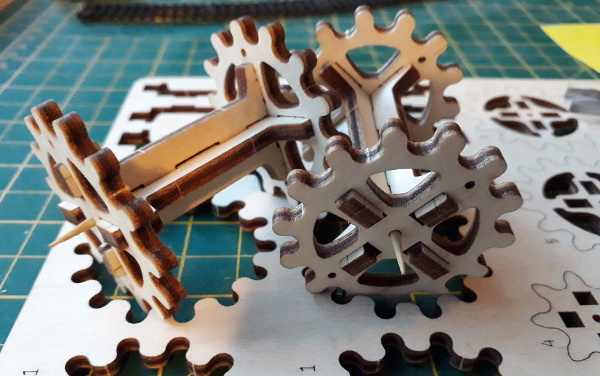
With those to hand, you start off by assembling various gear shafts. Each of these assemblies consists of the gears themselves, four wooden wedges that are inserted through the gear centres, and a cocktail stick that has to be squeezed through a small hole left right in the middle where the four wedges meet.

The first gear shafts

These are the first ones in the instructions; gears, but also the main “wheels” that the tram sits on. The instructions say the cocktail stick should be inserted symmetrically, with the same length protruding from each end, so it’s very helpful to have a small steel rule to assist with doing it by eye. If the “axle” isn’t symmetrical, a measuring tool is included in the kit to indicate how much the stick should project from one end.

Inserting the cocktail sticks was the first big hurdle. Making the kit in the advised way—assemble the wedges into the gears then slide the cocktail stick down the middle—is very hard to do without accidentally blunting the sharp points at the ends. Unless you’re dealing with one of the gear shafts which needs one or both ends trimming short, this is a problem, because it’s very easy to blunt the sticks to the extent they won’t work any more. I found for most it was easier to assemble the shafts in a slightly different order: take one gear, insert the wedge pieces and the cocktail stick into that gear alone, then squeeze the wedges together at the other end and slide the other gear over the wedges’ clip-shaped ends.

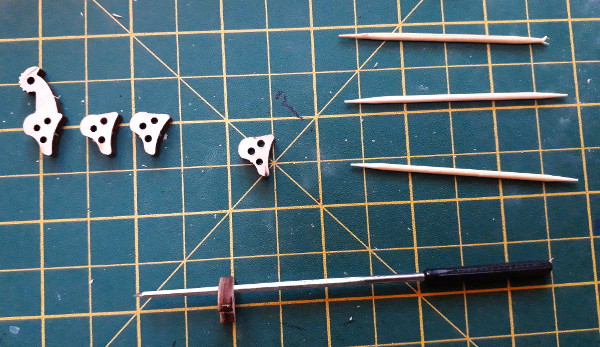
The tolerances of the cocktail sticks don’t help, either. Some parts require sticks to be inserted into holes in the plywood parts, and these are all supposedly a push fit. What quickly became clear is that the cocktail sticks are made to rather looser tolerances than the laser-cut parts: some sticks will be a reasonable push-fit in the holes, and some will have no chance of going in. With these parts, I ended up picking which stick I was going to use, then opening out the hole with a broach to fit. If I went a bit too far and made it a sliding fit, I used a little dab of Resin W to glue the stick in place.

The parts for a pawl

You can see this under way with these parts for the pawl which holds the “rubber band shaft” tight after it’s been wound. You can also see that here I’m reusing a cocktail stick whose end I have already wrecked, in a position where it will be trimmed off short. As the lowest of the three holes in each pawl piece is rather close to the edge, I found one of the narrower sticks in the kit for that position, so it wouldn’t need opening out at all. You can clearly see the different widths of the supplied cocktail sticks, and on the right-hand pawl piece you can see how much I’ve had to open out the uppermost hole, compared to the unmodified bottom hole, in order for the fat stick at the top to be a push fit into it. Using a broach for this, it’s easy to roughly remember how much of the broach’s cutting length is needed to get the hole to around the right width before you start testing for fit.

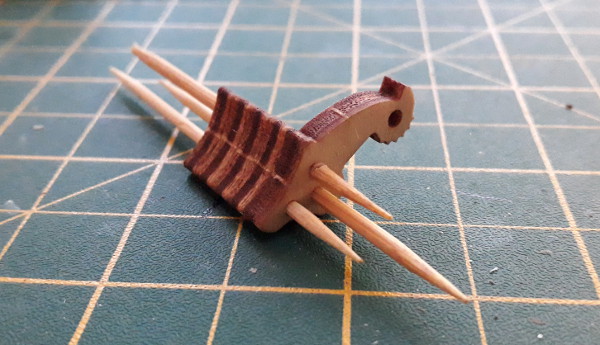
Assembled pawl awaiting trimming

Once the parts were pushed onto the sticks, the ends of two could be trimmed off, leaving a single shaft for it to pivot on.

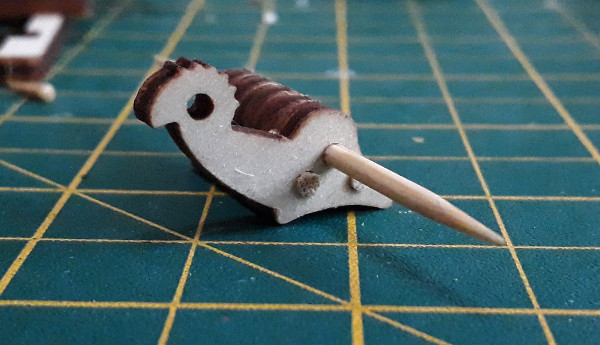
Completed pawl

Building all the various gears and related parts took quite a few hours, so it was rather pleasing how easily the main framework of the tram fitted together, and how straightforward it was to slip the ends of each shaft into their appropriate hole in the frames. It was rather pleasing, too, to find how well the initial gear chain rotated. It links the wheels together, and also includes a shaft which seems to be in there purely to make a clicking noise.

You might notice that the pawl from the previous photos hasn’t been fitted to the main assembly yet. That comes later, and was a little bit more fiddly. We’ll come on to that another time.

To be continued.

Under clear skies

Or, some unexpected astronomy

“Is it cloudy or clear?” said The Child Who Likes Animals yesterday evening after finishing his tea.

“I don’t know,” I said, knowing the weather forecast was showing a solid grey sky for the whole of the evening. “Let’s have a look,” knowing there was little risk of us being able to look at the stars.

I opened the back door, and was rather surprised to see clear skies and good visibility. “LET’S GET THE TELESCOPE OUT!” screamed The Child Who Likes Animals Space. I had been planning to head straight to the sofa and the book I’m in the middle of reading,* but agreed that, if we could come up with a sensible plan for what we were actually going to look at, I would set it all up for him.

We fired up Stellarium and I tried to find things that would be interesting to see and straightforward to find. Outside, I had already seen the cross of Cygnus was fairly high in the sky, with Cassiopeia above it, so I make a risky suggestion. “Why don’t we try to see the Elephant’s Trunk Nebula?” I said, knowing that with our inner-city skies nebulas and other deep-sky objects do not put on a very good show. It does, though, have a very child-friendly name.

I set the telescope up on the table outside, and tried to get my eye in. It was immediately obvious that viewing conditions were on average far, far better than they had been on New Years Eve. The Elephant’s Trunk Nebula has the benefit that it’s close to an easy-to-find star, Alderamin (α Cephei). I quickly navigated ten degrees south to the location of the nebula, was confident I was there from the pattern of the stars. And was there anything? Well … maybe. Charitably, I could convince myself that the sky did indeed look slightly brighter than elsewhere in the sky; that I could see hints of structure that were not just inside my own eyeballs and brain. The Children, though, would have none of it.

Luckily, I’d noticed there was something interesting just by the nebula, and confirmed with the computer that I was looking at Herschel’s Garnet (μ Cephei). It’s a red supergiant star, a thousand times broader than our sun, and a distinctive pale peach colour to the eye—the astronomer William Herschel described it as “deep garnet”, hence the name. As its colour is so clear to see, The Children were reasonably impressed.

As it was so clear, we also pointed the telescope at the Pleiades, the view of which wowed The Child Who Likes Fairies (“There’s literally trillions of stars!”) then, the cluster NGC 7686 and the Andromeda Galaxy. The latter was, to my eyes, a slightly clearer fuzzy blob than it has been in the past, but still just a fuzzy blob. The Child Who Likes Animals said he could see it clearly; The Child Who Likes Fairies could not.

Thinking about what we should be able to see in the sky, I did a bit of maths. Say the pupil of one eye when it’s dilated is about 8mm wide—I’m just guessing this part really. We’re using a 150mm telescope: that’s 350 times as large as a pupil, so it gathers 350 times as much light. That’s a difference in astronomical magnitude of just under 6.4. Now, when I was aiming the telescope last night, once my eyes were adapted I could just about make out stars of magnitude 3.8 to 4.2; such as the stars λ Andromedae, κ Andromedae and ι Andromedae, which I used to find NGC 7686 and which I’ll have to write about again some other time.** I suspect that that’s as good as things are ever going to get in our hazy and light-polluted urban sky. But taking the telescope’s light-gathering power into account, if I’ve got the theory correct, I should be able to see things of magnitude 10 to 10.5 or so through it. Next time we have good seeing, I should test this out: look up at a few things and find out what the official magnitude of the stars I can just barely see is.

When I’ve done that, of course, I should probably think about getting some way to record what I can see, rather than just trying to describe it to you. The Child Who Likes Animals’s telescope is a Dobsonian with an altitude-azimuth mount, which means long-exposure photos are probably out, but I’d like to look at our options and see exactly what we could try to do instead.

* The Northmen’s Fury: A History of the Viking World by Philip Parker.

** Because in looking up their names for this post, I’ve discovered they form part of the former constellation named after Friedrich the Great of Prussia, Honores Friderici.

More meteors

You wait for months, and then...

Another small astronomy note: the first of the year’s big meteor showers occurs over the next couple of days. I know it’s less than a month since the last big meteor shower of 2020, the Geminids, but tomorrow we have the peak of the Quadrantid shower. They’re a bit harder to see than the Geminids, partly because they’re usually fainter and partly because they’re concentrated into a narrower stream, so they’re seen over a much shorter time-range. Moreover, looking at the weather forecast, I doubt we’re going to have clear enough skies to have any chance of seeing them.

Interestingly, the Quadrantids are named after a constellation that doesn’t officially exist any more. Their name comes from Quadrans Muralis, “the wall-mounted quadrant”, a constellation named in the late 18th century by Jerome Lalande—he named it after an astronomical instrument he’d used to help him map the sky. Naming constellations after scientific machinery was quite fashionable in the 18th century; we still have Antlia, Horologium, Microscopium, Octans and Reticulum in the sky, to name just a few. Nevertheless, when the boundaries of the constellations were officially defined by the IAU back in the 1920s, Quadrans Muralis was left out of the list. Its part of the sky is now mostly split between Draco and Boötes, with a small piece in Hercules. You could argue the Quadrantids should really have been renamed the Boötids, but the old name has stuck.

End things as you mean to go on

Looking up at the sky again

Happy New Year!

Last night was the first clear night for a few weeks; and the only clear night at any point in the forthcoming weather forecast. Naturally, as soon as I mentioned the clear skies to The Children, they immediately jumped up and down and shouted “LET’S GET THE TELESCOPE OUT!”

The decking was already slippery with frost, and there was a lot of light and noise from the surrounding houses, but we started out by pointing the telescope to Enif (ε Pegasi), a red supergiant with a very distinctive orange colour. From there we navigated to the nearby globular cluster Messier 15, which I could see in the telescope as a somewhat hazy blob, but which The Children weren’t sure they could actually see.

After they were in bed, I went outside again and looked up at the sky, but it was already filling up with haze and smoke from the fireworks sporadically going off all around the neighbourhood. I tried to find Messier 36, an open cluster in Auriga apparently also called the Pinwheel Cluster, but could not actually make out any of the stars in it. I looked at the Pleiades to calibrate myself, and realised there seemed to be far fewer of its stars visible than normal. As Orion was rising higher in the sky I pointed the telescope at the Orion Nebula, just about visible as a couple of fuzzy points; and the nearby Coal Car Cluster (NGC 1981). The latter’s stars are around magnitude 6.4 to 7.4, which normally would be clearly visible in the telescope even in our inner-city skies, but with last night’s firework haze I could just about make them out.

Ah well, there will be clear nights later in the winter I’m sure. I got up again about 3am to get myself a drink, and the garden was covered in a thick fog of smoke still from all the fireworks of midnight. Fireworks and astronomy do not mix. Hopefully later in the year, too, we’ll be able to take the telescope to somewhere with properly dark skies one night.

Cloudy skies

And not much we can do about it

Sadly, I didn’t get to see the Great Conjunction of Jupiter and Saturn, at least not at the closest approach that would have been visible. We had heavy rain here this afternoon; and after sunset the sky was a uniform, undifferentiated cloudy mass with not even the moon visible.

Oh well: we had clear skies last night, at least, and I did see them both, maybe only about 10 minutes or so apart in the sky, just over the horizon after sunset. I tried to take a photo on my phone, but although Jupiter was clearly visible on it, Saturn was only really spottable if you already knew it was there. Maybe it’ll be clear skies tomorrow, when they are parting again.

The solstice has passed too, of course. Politically this country might seem be descending into some sort of nightmarish fimbulvetr right now, but at least the heavens don’t know that.

The shape of the sky

Or, confusing perceptions

This is an astronomy post, but it’s also not really an astronomy post; it’s more a post about me and the way I think.

When I was small, I was terrified by the size of the universe. I can remember, about seven or eight or so, really struggling with the concept that the universe might be infinite and might not be, and I can still remember the mental picture I tried to come up with of a universe where the stars just, at some point, stopped; and beyond there was just blackness.

It probably doesn’t work like that, but still in my head somewhere is the concept that it might do. Moreover, I have trouble with another, broader concept, which is that—assuming you can travel between both hemispheres—we can “see” all of the observable universe.

“See” is in quotes there because, well, you can’t see everything for practical reasons. Most things are too faint, firstly. At any given time half the sky is too close to the Sun, too: you can’t see Mercury right now for example. But in theory, barring things being too faint, barring you having to wait for the Earth to move a bit or having to travel from one side of the Equator to the other, the whole universe is up above some point on the planet’s surface at any given time.

This probably seems tediously self-evident if you think of the planet as a ball spinning through space. For some reason, though, the whole concept still catches me by surprise occasionally. I still think that things must be able to, I don’t know, hide around a corner or something like that. I think I must have picked up the idea from a book I had as a child about Halley’s Comet, which included diagrams of where you would be able to see the comet in the sky in 1986, and talked about how comets appeared and disappeared in the sky. That’s the general tone when talking about comets and asteroids and so on: they appear in the sky and they disappear again. So it took me a long time to realise that all of the comets and all of the asteroids are up there, in front of us, all along; we just can’t see them right now. Halley’s comet doesn’t just pop out from behind a tree every seventy-five years: it’s up there in the sky the whole time, just not visible.

Halley’s comet is maybe a bad example for this. Because it’s so famous, and because of the light-gathering power of modern telescopes, we can now track it through its entire orbit. According to Stellarium it’s currently at coordinates 8h26m/+1°46’, but as it’s only a few years from perigee it’s an incredibly-faint magnitude 25.5 so will appear as a just a fuzzy handful of pixels on any photo. Nevertheless, if you go outside tonight and look up at the constellation Hydra close to its tripoint with Monoceros and Canis Minor, up there it is. As are all the others. Everything in the sky that you’re likely to see in your lifetime is already up there in the sky, just invisible and unrecognised. And despite the fact that I know this, that I know on a rough, superficial level how the mechanics of cosmology work, it still feels a little strange to me. It still feels in my mind as if there should be some patch of the sky that we can’t see, that is hiding around some sort of galactic corner.

Whenever I see diagrams of the whole sky that say “this is the whole universe”—cosmic background radiation maps, for example—I’m slightly disturbed that in some sense the whole universe fits into one small image. “Surely it must be bigger?” my mind ends up thinking. The edges trick me: that’s not the edge of the universe, it’s just an artifact of plotting a spherical sky onto a flat piece of paper, just like any sort of atlas. The mental disconnect, though, leaves me feeling deeply uncomfortable.

Really, what I feel I should inspire me here is to take away that the night sky is far more mysterious and secretive than we know. It’s not just laid out flat in front of us as it appears to be: it’s full of unknown things and unanswered questions, even though all of them are genuinely sitting right there up above us somewhere. I don’t know if I’ll ever manage to change the way my head thinks about the night sky, but if I can, there is a whole universe of wonder concealed but fully within sight.

The stag cry and the slaughter

Or, the turning of the year

A few weeks ago, I read on Twitter—sadly I seem to have lost the reference—that the Welsh Hydref, used for either the month of October or autumn as a whole, originally had the literal meaning of “stag-cry”. From that, it turned into “stag-rutting season” and hence autumn. Geiriadur Prifysgol Cymru lists “stag-rutting”, but not “stag-cry”.

Moreover, November, mis Tachwedd, literally means “the month of slaughter”. Together, I think they make a beautifully evocative phrase. The stag-cry and the slaughter. Winter is setting in.

I spent a while sitting outside on clear nights over the past week, hoping to see the Geminid meteor shower. Nothing much, sadly, came of it. On Saturday, though, I did see a handful of meteors in the night sky. I’ve always looked for summer meteors before, flashing across the sky in a razor-thin line; but these were relatively slow-moving, fat things. I say “slow-moving”: they still crossed my field of view in little more than an instant. Their light was a much broader line, though, tapering at start and finish. If nothing else, it gave me good inspiration for the story I posted yesterday. Hopefully I’ll have better luck when the Geminids come around again next year. This year, though, is now nearly at an end. The stag-cry and the slaughter, and winter is upon us again.