+++*

Symbolic Forest

A homage to loading screens.

Blog : Page 49

Searching

In which someone admits that SEOs are entirely pointless

An intriguing claim appeared in The Guardian yesterday, buried in its corrections column. Insurance-comparing website GoCompare has stated that there is little connection between its Google positioning and its income. More specifically: dropping from the first page of Google results for a common search term did result in a big drop in traffic, but had no financial effect on the company.

GoCompare is an internet business. As far as I understand it, they rely entirely on their website for income. What they’re claiming is: when Google lowered their ranking, they lost a large amount of traffic – but that none of that traffic, apparently, was making them any money.*

There are entire companies based solely around the premise that they will push you up to the top of Google’s pages. I’ve known marketers spend huge amounts of time and effort on it, taking common search phrases and analyzing them with a fine-tooth comb, trying to find out why they’re below their competition. I’d expect GoCompare to have been doing exactly the same thing themselves, in fact. And they’ve found, apparently, that it was all for nothing – because when Google pulled the rug from under their efforts,** they say, it had no effect at all on their income. Maybe they’re a special case because (unlike smaller online companies) they do spend a lot on irritating minimal-budget TV adverts.*** Even so, it’s intriguing. If their claim is true, there’s probably hardly any point at all in any large organisations spending much effort on search-engine optimisation. Small companies who can’t afford TV adverts, or who produce specialist products – well, that probably doesn’t apply. It probably doesn’t apply to AdWords campaigns either. But general search results? “Overall sales figures were not affected”.

* They seem to be talking about general search results. If they were talking about paid-for adverts, then the drop in traffic would also mean a drop in outgoings; but as they’re not, the change in traffic shouldn’t have any effect on their running costs.

** The Guardian had previously speculated that Google did this deliberately – it was that article which prompted the correction.

*** which, at least, aren’t as annoying as those produced by their competitor Confused.com. I’m never going to go near confused.com, no less than barge-pole distance, because their adverts are that bad. “I’m so stupid I’m trying to get money from a piece of cardboard with a cartoon cash machine printed on it! I’m confused! Dot com!”
It's All In The Timing

In which we are not as wet as we might have been

Last weekend, feeling like we needed a holiday, we went away and pitched the tent. And it rained. The tent, fortunately, didn’t leak, but we ended up with great puddles round the door, a wading trip whenever we wanted to go in or out. Our last morning, we looked out to see ducks sitting and paddling in the water.

Still, it could have been worse. For no particular reason, we’d decided to visit Somerset. If we’d gone a week or even half a week, we’d still be there now, camping by a river. And we’d be rather deeper in the water.

The image of popularity

In which we see how popular food is

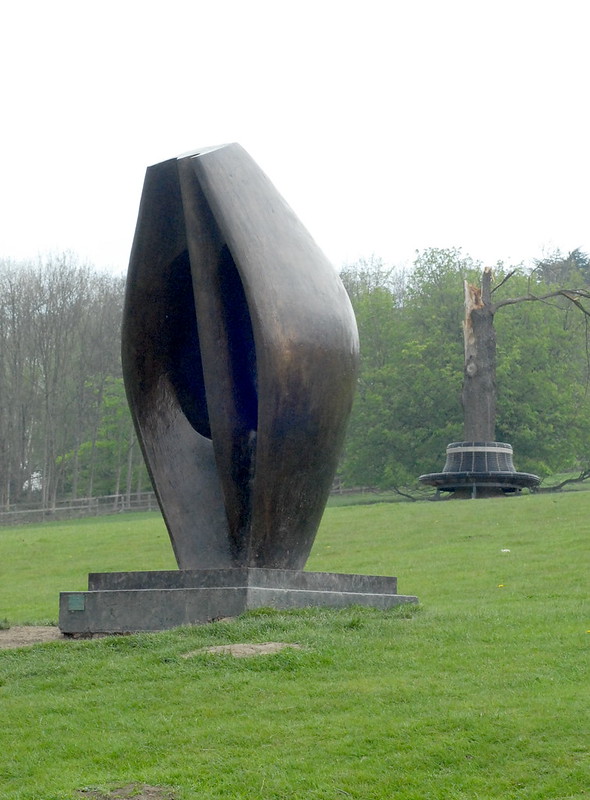
After posting pictures of the Yorkshire Sculpture Park last week, it got me looking at my Flickr account and wondering what pictures are the most popular. Flickr will, if you like, give you pages of tables and graphs to tell you how many people have been looking at each of your photos,* so I thought I’d see if there’s any general pattens in what sort of photos people like to view at full size.

The results were rather surprising. The least popular photos: pictures of random countryside, close-ups of tree bark, that sort of thing.** More popular than that: trains, with steam trains and “heritage” trains being more popular than normal ones. But, what photos get the most hits, and fastest after they’ve been posted? Food. Pictures of food being cooked or ready to be served. I don’t know what you think, but I wasn’t expecting that. Post a picture of a nice meal being made, and hits come up right away.

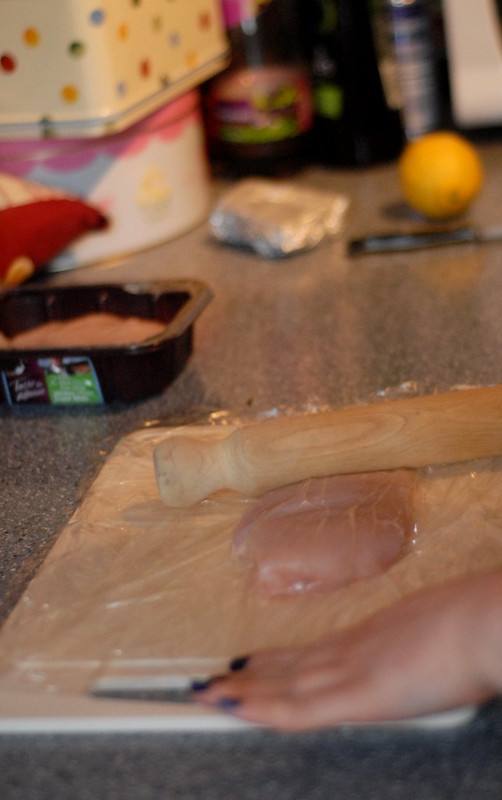
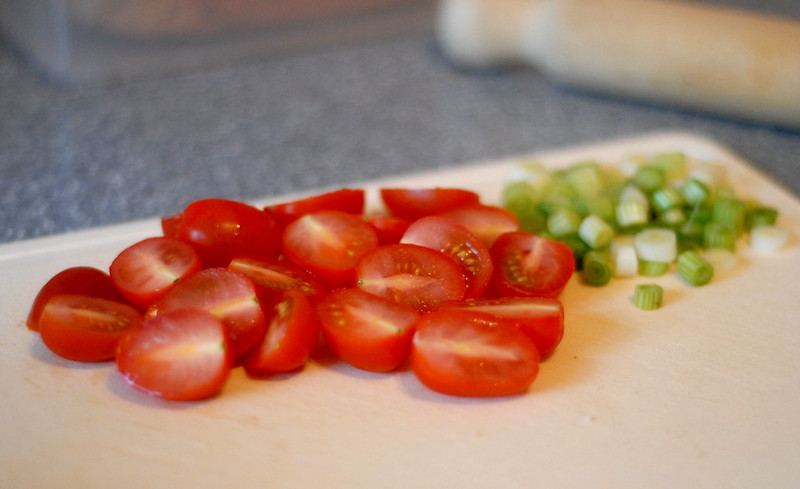
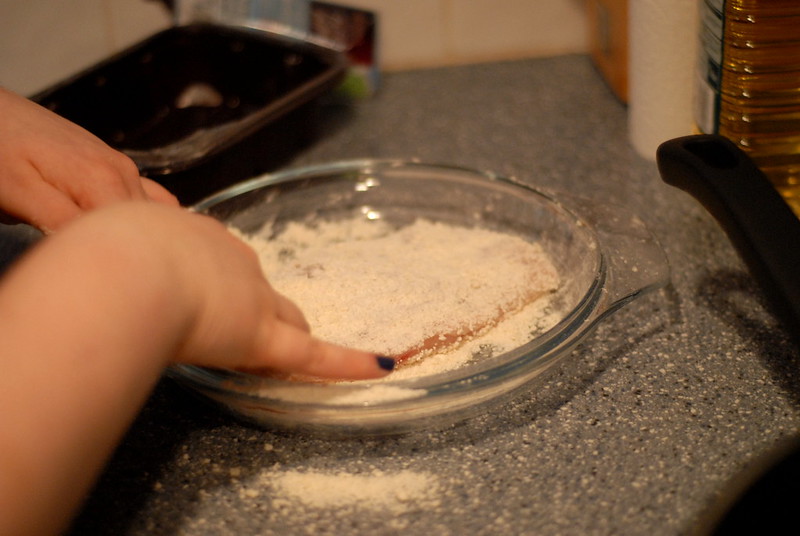
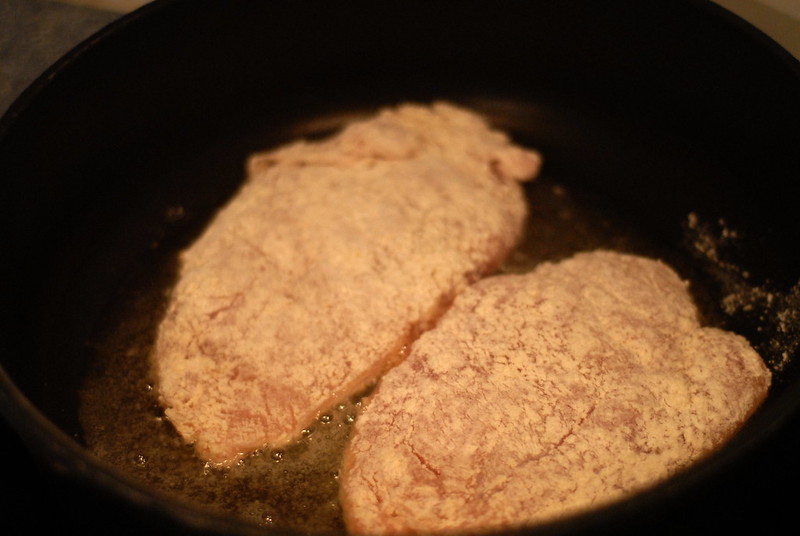
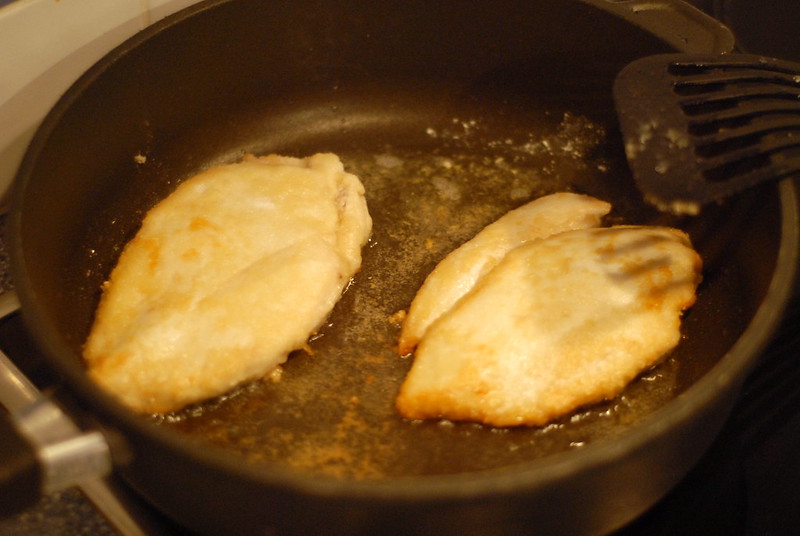
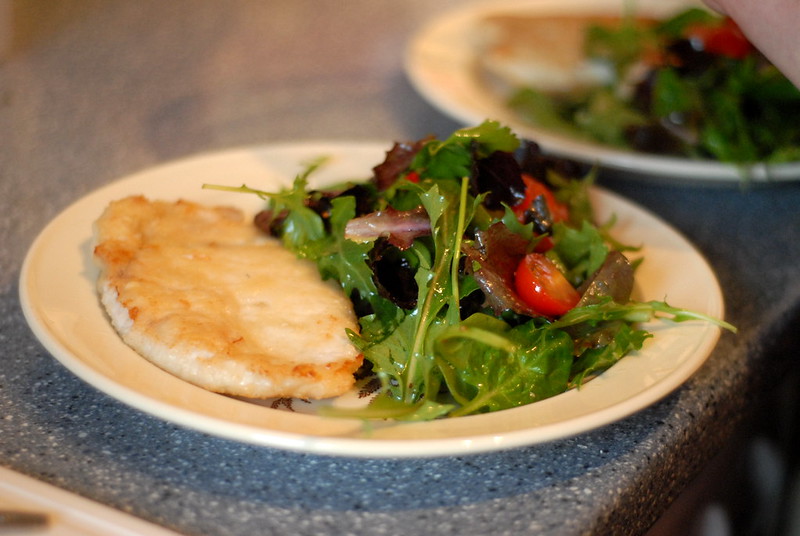
Given that: here’s some pictures of a nice meal being made. Pan-fried parmesan-crusted chicken breast, with salad. Very very easy, and delicious.

Bashing the chicken

Cherry tomatoes

Coating the chicken

Frying the chicken

Salad dressing

Frying the chicken some more

The finished dish

* in my case, the graphs (for individual photos) are generally rather flat with the occasional spike

** That’s not quite true: the very least popular are photos of people at parties. That’s unsurprising, really; photos of people at parties, unless they’re exceptional photos, are usually only likely to attract other people at the same party.

Milk (redux)

In which we get a reluctant refund

A couple of people have, for reasons best known to themselves, asked how I’m getting on with the office milk lady since we fell out. Well, I don’t think I’m any more popular with her than I was. Fed up of there being no milk, and fed up of the woman in question – Administrator Of The Tea Fund – refusing to accept that tea supplies were anything to do with her, I told her that in that case she could give me back the balance of what I’d put into the fund, and I’d make my own arrangements from now on. Which might have been a bit petty, the balance being only 20p, but there you go.

She said “I’ll give you it later.” A few hours later, she phoned me up.

“Have you stopped chucking your little tantrum yet?” she said. “We’ve got some milk in – are you back in the fund or do you still want your money back?”

“I’ll have my money back, please.”

“You’ll be very thirsty this afternoon then.”

“Er, no I won’t be.”

“Well it’s very silly of you, you’re cutting your nose off to spite your face.”

There was a pause. I wasn’t entirely sure what she expected me to say, other than possibly start begging for her forgiveness.

“So are you back in the tea fund now?” she continued, persistently.

“No, I’d still like my 20p back please.”

“Well, I gave you one last chance. I’ll get some change and bring it down for you in a few minutes. You said you don’t want your 20p back?” A nasty little switch at the end there.

“No, I’d still like my 20p back please.”

“Fine. I’ll see you later.”

So, a few minutes later she came downstairs, slammed 20p on my desk, and went away again. And since then, all has been peace and quiet. I can see why some colleagues, those who have to work with her more, don’t like her very much, though, after that conversation. This is someone whose job is to talk to customers over the phone, take orders, and so on – it makes me wonder if she tries doubling back on herself and making quickly misleading switches when she’s on the phone to customers as well as to colleagues.

Birth

In which we praise Parliament, a very rare thing

As you’ll have no doubt read in the news, Parliament has voted against reducing the abortion time-limit. I’m pleased and amazed – for once, a political decision has gone by which has been apparently been decided on the basis of fact, not emotion.* That’s been a rare thing for the past few years. Maybe we need to have free votes more often.

In case you missed it, the media debate leading up to this vote went something like this:

Religious fundamentalists:** We need to ban abortion reduce the abortion time limit.

Scientists, doctors, medical charities, and so on: [some facts showing that we shouldn’t]

Religious fundamentalists: [emotional handwaving]

Scientists, doctors, medical charities, and so on: [more facts]

Religious fundamentalists: [more emotional claptrap]

Lots of Conservative MPs: [the religious fundamentalists’ surveys and anecdotes repeated wholesale]

Parliament: 190 in favour, 332 against.

Maybe I’m being slightly unfair, in that it wasn’t just the Conservatives voting for the amendment. Ruth Kelly did, of course, although I was surprised that Jim Dobbin, Labour, and leader of the parliamentary all-party pro-life group was nowhere to be seen. He’s a Catholic, and has previously said that he’s against both abortion *and* contraception. Well, I suppose he’s a better Catholic than Cherie Blair, at any rate. The Tories were the only party whose leadership was pushing hard on the issue, though – K’s MP, a Tory frontbencher for many years, voted with the party line. My own (Labour) MP, I’m pleased to say, voted against.

* This may not be quite true – I’m giving people the benefit of the doubt here. What is true is that Parliament voted for the fact-supported side of the argument; it may be a step too far to say that it was the facts which made them vote that way.

** Nadine Dorries, the apparent leader of the campaign, has claimed that she is not at all a religious fundamentalist. However, she worked very closely with religious campaigners, and admitted that they supplied a lot of the information she used in the campaign. The website run by and for her campaign was set up by and in the name of a group of very fervent religious campaigners, Christian Concern For Our Nation. Ironically, Dorries likes to go on about “the abortion industry” and how it needs to be stopped, when she was formerly a director of BUPA, one of the largest non-NHS abortion producers in the country. One wonders how much anti-abortion campaigning she did in their board meetings.

Lawyers

In which we wonder about fancraft

The BBC has a history of having heavy-handed lawyers on the payroll, so it wasn’t surprising when they threatened to sue a website featuring Doctor Who knitting patterns. I’m old enough to remember the Teletubbies,* and the way the BBC responded to websites that poked fun at them: send in the lawyers. What’s the most important thing about Doctor Who, after all? Inspiring kids to be amazed at things, and look at the world in a different way? Hiding behind the sofa? No, silly, the important thing is to generate lots and lots of merchandising money for BBC Commercial. Where would we be if everyone started knitting things for their children instead of going down the shops? If you start spending time and care on things like that, when are you going to find the time to watch more TV? What’s going to happen to all those traditional Chinese peasant plastic-mould farms? And never mind that, what on earth do you think you’re doing to the economy, going out and making things instead of buying them? Where do you think you are, Cuba?

Seriously: I’m sometimes in two minds about fan-created stuff, largely because of the effect fan fiction has on me. It makes me want to run away and scream, partly because of the smug little disclaimers that fanfic writers always seem to put at the top of their stories. “These characters aren’t mine, I’m only borrowing them.” Did you ask, first?

Fan art, though – which includes fan crafting, in this case – is a different matter. It does, to my mind, at least, imply a lot more creativity than most fanfic. But I can’t draw a rational line between the two, or explain why one seems acceptable to me when the other doesn’t. Maybe that in most cases fan art seems to add something to a world, where fan fiction seems to take it away. That, though, isn’t something you can exactly quantify. And it’s not an excuse that would go down well with a lawyer, either.

* I was just the right age to appreciate them when they appeared – about 19 or so.

Running The Place

In which we consider the blind spots in people’s xenophobia

People I come across, for once, seem to be getting themselves interested in politics. The local elections, and the soaring cost of petrol,* are for once getting people interested in who runs the country, or things like that.

Sadly, most of the people I come across at work and day-to-day aren’t the sort of people you’d trust to run the country. Trains of thought go along two lines. “Wouldn’t it be nice if things were a bit cheaper,” and “there’s too many foreign people about, you know.” They then say to our Token Polish Office Temp: “I don’t mean you, of course, but you know what I mean. There’s too many foreign people about.”

They don’t really mean that he’s white; it’s just that people everywhere seem to have an enormous blind spot when it comes to “these dirty foreigners.” The sort of people, at least, who say there are too many foreign people about, always have one big exception: foreigners they know personally. They don’t count. They are decent people, unlike the rest of them, the great mass of indistinguishable and interchangeable Foreign People who are here to steal their women and marry their jobs (or something like that). “Oh no, I don’t mean you, I mean all the ones who you read about in the papers.” Why is it that they still believe what they’ve read in the papers, have heard from a mate in the pub, will pass on in a “joke” text message, when all their personal experience goes in the opposite direction?

* it is a Rule Of Clichés, apparently, that any time the cost of petrol is mentioned, the word “soaring” has to be attached.

Milk

In which we upset colleagues

At the office, I’ve been doing more to make myself unpopular. Specifically: I’ve fallen out with the woman who runs the tea fund.

My complaint is this: if you run the tea fund, then you’re responsible for buying tea, milk, coffee, sugar, and so on. If I give you money, to buy tea, then your job is to make sure tea gets bought. Tea Fund Lady – who has only taken the task on recently – did not see things this way. She was there to collect the money. The money sat in her drawer, and anyone who wanted to go and buy supplies could go and get some. Buying supplies herself, though, was entirely out of the question. It was entirely impossible, she said, because she doesn’t have a car. I was tempted to set up a “Stop The Tea Fund Lady Starving!” campaign, because if buying groceries is that difficult I’m not sure how she manages to stay alive.

So, the way I see it, I may as well manage things myself from now on. Have my own tea bags and my own milk, and see how much it ends up costing me. We will see.