+++*

Symbolic Forest

A homage to loading screens.

Blog : Page 42

Regionalism

In which we discuss employment in Grimsby, as it’s in the news

Nice to see the Grimsby area in the news for once, even if it isn’t very good news. I bet the Grimsby Telegraph‘s news staff have been so excited over the last week, to get some national-quality news to report on, they’ve probably been wetting themselves.*

I was rather wistful myself, what with formerly being local – so much so that in my teens I did work experience in the very refinery that’s been on the news. It’s bad luck, really, for the contractors who sparked the protests off: they would have to bring foreign workers in to one of the most reactionary and xenophobic parts of England. Grimsby’s the only place where I’ve heard someone (a retired nurse) say the immortal line: “I’m not a racist, but I do think all those coloureds should go back to their own country”. Without irony. And mean it.

I’m also well aware that the area’s an employment blackspot; on the other hand, though, I also know that it’s not as bad as you might think. There are great estates full of people who have been on benefits ever since they were old enough.** There aren’t many jobs other than in a few limited sectors. But, when I lived there, I had contacts at a local employment agency. Within a few sectors – mostly factory line work – there were once plenty of jobs. They go to immigrants; Poles and Lithuanians. That’s because Poles and Lithuanians were the ones who turned up to apply for these jobs, and were the most employable when they turned up. It’s easier, I guess, to sit in the pub and rant about how all these foreigners are taking the jobs of honest British workers, than it is to go out and get one yourself.

I said “there were once jobs” because I’ve not been around there for a while, and all I’ve heard since I left has been about factories closing. I don’t know what things are like there at the moment, but from what I’ve heard things aren’t going well. I’m not saying, either, that the work in question at the refinery shouldn’t have gone to a local company. The refinery and its suppliers, though, already in total make up a big chunk of the local workforce, and the small number of foreign contractors that have caused the protests make up a tiny proportion of the number of workers on the site, which after all it itself the size of a small town. They haven’t put that big crowd outside the refinery gates out of work, either. Grimsby has bigger problems than foreign workers, much bigger problems. The issue shouldn’t be whether the Prime Minster should live up to some sound-bite his speech writers came up with a while back; it should be one of getting more investment into the area. More foreigners, in fact – both Lindsey refinery and the neighbouring Humber refinery are foreign-owned plants. It’s also a problem of education; and a problem of ending the area’s isolationism. You can’t exactly pick Grimsby up and move it closer to civilisation, but maybe things would be better if that could be done with some of the locals’ minds.

* Although their managers won’t like it – it might be a bit of a budget-stretcher for the Grimsby Telegraph, sending reporters all the way from Grimsby to Immingham. God knows what might happen – one of them might even try to put a burger-van lunch on expenses! There aren’t many other refreshment options in the area, unless you can get into the refinery canteen.

** I would have said “ever since they left school”, but a lot of them didn’t go to school.
Condiment Frenzy

In which we are delighted by music and storytelling

Since we moved here, we’ve been promising ourselves that we’ll get Out And About, go to lots of local events, be actively artistic, and so on. And, well, we haven’t quite managed it. We’re doing better than we used to; we go to more things than we ever did before we moved; but the calendar still isn’t quite as full as we’d like.

As I’ve said before, though, one of the things I love about this city is that it doesn’t take long before you hear about a good-looking event.* For example: we quickly popped into Boston Tea Party at the weekend for tea and cake,** only to spot a poster on the wall that we quite liked the sound of. A regular event called Folk Tales, at the Scout Hut on Phoenix Wharf, on the last Wednesday of the month. So, we went along.

It turned out, as it happened, that one of the organisers of Folk Tales was one of the performers we saw on New Year’s Eve at the Cube; so we knew that things would probably turn out for the good. And any gig where the door-person, after taking your money, points you to the kitchen where you’re free to use the kettle, make yourself tea and help yourself to a biscuit,*** is going to be a good gig.

And, indeed, it was a good gig. Folk Tales is a mixture of folkish music and storytelling, as you might guess from the name; and the whole thing together made a rather good combination. I’m not really a fan of some “professional” storytelling, because I find it rather over-dramatic and stilted; I prefer a more naturalistic style of recounting. For that reason, I didn’t enjoy the storytelling as much as the music; but because of the mixture of performers, that wasn’t a problem. The storyteller closest to my taste – for that reason – was the aforementioned Jethro McDonald, who told us about a man who, after a kitchen accident, and ambulance delirium, became obsessed with falling. As I can just about remember a similar chunk of ambulance delirium myself, I could sympathise.

In-between the storytellers, came a selection of local musicians with a similar ambiance: quiet, thoughtful, and with stories to tell. My favourite was probably Shaun McCrindle, partly because of a coincidence: one of the stories in his songs was an anecdote in the David Crystal book I recently read and keep writing about; the others, though, both women playing ukeleles,**** sparkled just as much. Thoughtful songs, which raised wry smiles.

We’ll be going back to Folk Tales, and we’ll remember to get there early again next time, because the audience really had to pack themselves in tightly. We’re making sure we keep turning up in time to get a seat and a cup of tea; not to mention, making sure we can get in the door. If Folk Tales gets much more popular, people will be spilling out onto the quay outside. Understandably so, I’d say, because it’s a very good way to spend a weekday evening.

* and one of the other good things about this city is the converse: if you’re running an event, if you advertise, people will turn up. Putting random posters around the city does work.

** Why we say “let’s go for tea and cake” when we both rarely drink tea itself outside of the house is one of those eternal mysteries. I had coffee that day, for example, and K had hot chocolate; but we still referred to it as “tea and cake”.

*** Dark chocolate digestives, for the record. And we did indeed have tea, despite the previous footnote.

**** It wasn’t clear whether that was themed or coincidental, really.

Great Spectacle Wearers From History

In which we consider Robespierre’s eyesight

Since briefly writing about Maximilien Robespierre the other week – particularly, writing about the biography Fatal Purity by Ruth Scurr – I’ve had a couple of search hits from people looking for Robespierre information. And one, in particular, tickled me.

maximilien robespierre glasses

Drinking glasses with Robespierre etched on the side? Possibly. But, I assumed, about spectacles. Because Robespierre was famous for wearing spectacles. His whole life, he had terrible eyesight. He habitually wore glasses with green-tinted lenses, and often when speaking, a second pair over the top.

He was both short- and long-sighted, so everything he saw was slightly blurred. His glasses helped him focus, they filtered the harsh sunlight, and they were also props used to dramatic effect as he spoke at the tribune. (Scurr, p10).

Strangely, though, there are barely any portraits of Robespierre that show him wearing glasses. There were probably thousands of images of him made during his lifetime – his own study was practically papered with pictures of himself – but in just about all of them his forehead and eyes are bare. There is one portrait showing them resting high on his forehead; and one rough sketch, made the day before his death, in which he’s wearing them.

Maybe it’s something about his depiction, often in an idealised fashion; but that doesn’t apply to all the portraits made of him by a long chalk. Maybe, though, it’s about his own personality. Robespierre had something in common with the modern far-left politicans George Galloway and Tommy Sheridan: a noticeable pride in his own appearance and clothing, bordering on vanity.* Unlike many of his contemporary revolutionary colleagues he always dressed well, as well as he could afford, and fashionably.** Maybe he didn’t want to be seen in glasses, even though he had to wear them all the time. It’s certainly a possibility. If he was around today, I’m fairly sure that he’d go for contacts.

* Apart from that, and their place on the far left, he had very little else in common with them, of course. On the one hand: Robespierre did achieve a position of high political importance in his lifetime. On the other, he’s unlikely to ever appear on Celebrity Big Brother, what with being dead, and all. Robespierre was often libelled in the press; his response was to start his own political newspaper. Court cases weren’t really an option at the time.

** The BBC’s rather unhistorical Saturday-teatime version of The Scarlet Pimpernel was particularly inaccurate here, showing him always in dour black outfits, when he was famous for his brightly-coloured jackets and embroidered waistcoats.

Classification

In which we discuss tagging and filksonomies

Another design point that’s come up as part of the Grand Redesign I keep promising you: tagging. The little bundle of links at the bottom of each post that I didn’t really think did very much.

I was a latecomer to tagging. When this site first started, it didn’t have any for the first month or so. After a while I started adding them, pointing them to Technorati. Back then, the site was running on WordPress version 1.5.something, and it didn’t have any built-in tagging support. I was trying to avoid using too many WordPress plugins, and I didn’t think that tag management (as distinct from tagging per se) mattered all that much; so I wrote all the tags manually. Like this, at the end of each post, with the <a> element repeated for each tag:

<small>Keyword noise: <a class="tag" rel="tag" href="…">tag1</a>, …</small>

Which worked, quite well; there was a visually distinct “tag” class, because I wanted tag links – which all led to Technorati back then – to be visually distinct from regular links which would go to whatever they were about.

Things move on, though, and WordPress has since gained built-in tagging functionality. Given that I’m redesigning the whole site, and putting in new built-from-scratch layout templates, I thought I may as well switch to using a more organising tagging system. For one thing, it means less typing each time I write a post. All that code up above is replaced by one little chunk in the template:

<p id="thetags"><small><?php the_tags('Keyword noise: ', ', ' ,");?></small></p>

This one covers all the tags, calling a Wordpress API function to pull them out of the database and convert them into HTML. I know all those commas and quotes look a bit confusing; but really they’re not that bad. And the point is: this is in the template, not in each post. That bit of code there only has to be written once; the previous chunk had to be typed out every time. The most awkward part is that WordPress isn’t flexible enough to let you set the class of each link individually, hence the <p class="…"> at the start.

The big change this leads to, though, is that the tag links no longer point to Technorati. Now, they point back to the site itself: tag page requests generate a page containing every post marked with that tag. And, already, that’s shown that people do indeed click on the tags. People, particularly people coming from searches, do seem to use them. Whether they find them useful or not is another matter, of course, now that they point back within the site and not to a broader variety of opinions on the matter; but they do get used.

Doing it this way means that I put more tags on each post, simply because there’s much less typing to do. Conversion, though, is going to be a bit of a job. Right now there are 760-odd posts on this site, all of which I’m having to reread and re-tag. It’s going to take a while, but hopefully the majority of it will be done by the time the new design is finished.* The only problem with this transitional phase is that: the current template is, because of its age, completely unaware of tags. So it doesn’t really know what a tag-based archive page is; so when you click on a tag, there’s no explanation as to what you’re looking at. I’m not sure if this is going to be a problem for you readers or not; and, hopefully, it’s only going to be a short-lived situation.

The word “folksonomy” has often been used to describe this sort of tagging system. I’m not sure it’s an ideal term for what I’m doing, though. “Filksonomy” might be more relevant: a bit like a folksonomy, but rather more whimsical and silly.

*** In any case, there are plenty of other parts of the new design that also need each post checking and potentially editing.

Being Humane

In which we watched Being Human

After the post last week, I felt we really should watch Being Human, the new BBC3 series set largely in Totterdown. We were, I have to say, pleasantly surprised.

I’m not going to summarise the plot here, other than to say: it’s a fantasy version of the classic sitcom plot. Three oddball characters who are stuck with each other – a vampire and a werewolf who are trying to appear human, and have managed to rent a haunted house.* If it is a sitcom, though, it’s the sort I’d like to write myself: the sort without very many jokes in.**

Some things were a little overused – the heavy heartbeat when Mitchell The Vampire’s blood-lust attacks came on; and the post-production effect used to make skies look darker and more interesting. Some of the mechanics of the worldbuilding don’t quite make sense, either.*** But, overall, the series was remarkably subtle and realistic, at least as far as something involving almost-immortal beasts can be, of course. Moreover, unlike the trailer, the characters, not the backdrop, were its main focus. It might have obviously-recognisable locations – the Totterdown house, the General Hospital, St Nick’s Market**** – and it might have bit-part actors with local accents; but so far, it could have been set anywhere. It didn’t rely on the location for anything.

I can guess how the series is going to go from here. The real test, I suppose, comes with: just how well the minor characters are treated. Will Herrick, or Lauren, become just as full a character as Mitchell? What about Annie’s fiance?***** We’ll watch it, because we’ll be intrigued to find out. And, of course, just in case, we spot anyone we know lurking in the background of a shot.

* go back to the post linked in the first paragraph to find out more about it.

** This is a good thing; we noted that Being Human was made by the BBC’s Cardiff drama section, and not by the people responsible for the awful laugh-tracked sitcoms that pass for entertainment on BBC3.

*** Actually, Vampire Civil Wars are an interesting argument to overcome the usual objection to vampires: if they’re immortal, and all their victims became vampires, then why didn’t we get to an I Am Legend-type situation about three weeks after they first evolved? Not being up on vampire-based literature, I don’t know if anyone else has ever covered it. They must have, at some point.

**** We did both shout out “Pie shop!” when George The Werewolf ran through the market and past the Pieminister stall

***** It confirms something I’ve thought for a long time, incidentally: ghost stories really can be the saddest stories in the world.

Road Trips

In which we discuss similarities between books and blogging

Last week, in the last Book I Haven’t Read post, I mentioned By Hook Or By Crook by David Crystal, and predicted that – in contrast to the book I was actually writing about – I’d have By Hook Or By Crook rattled through and quickly finished off.

Well, indeed, I have: it’s read, finished, and back on the bookshelf now. Prediction correct. And, as I said before, I think it was easy to read precisely because it mirrors the way I think. To recap: it’s written as a road trip, during which the writer muses on anything, really, that he finds of interest as he passes. A nearby manor house reminds him of a railway engine named after it, which prompts him to muse on railway engine names in general. The journey from Anglesey to the mainland prompts him to recount the history of the Menai bridges,* and a trip to Hay-on-Wye leads to the history of inn signs, coats-of-arms, and many other things besides.

It’s a book of associations, and a celebration of associative thought. I’m sure that it didn’t actually take place as a single trip, and that when Crystal sat down to write the book he didn’t just muse on whatever came to mind; it’s too carefully structured and crafted for that. But it does read as if that’s what he’s doing. It made me think, moreover, of the way I write this blog, which isn’t at all carefully structured and crafted. But, as I move through the world, I see things which spark my brain alight and give me something to think about; and this blog is the result. It’s full of rambling and digression, but, rambling and digression with a common thread behind it, the thread being the things I encounter.**

I was thinking about this as I got towards the end of By Hook Or By Crook. So, I was quite amused when I reached Crystal’s thoughts on blogging.

[Blogging] is writing which is totally spontaneous, put up on a screen without the intervention of an editor or proof-reader, so it is much more like ‘speaking in print’ than anything before. And it shows many of the properties of spoken language, such as loosely constructed sentences and unexpected changes of direction. Bit like this book, really…

David Crystal has a blog. He started writing it at the end of 2006; he said, as a sort of FAQ page. Given that By Hook Or By Crook was published in ’07, though, I’d assume that he started blogging either a few months after the book had been written or when it was in the final stages of completion. I’m wondering if writing that book was one of the other things, though, that prompted him to start writing a blog. Because, really, they’re often exercises in a similar sort of vein. Spotting something that interests you, and telling other people about it.

* from building up to burning down, you could say

** Which is all a bit of a longwinded and pretentious way of saying: I write about whatever’s on my mind.

Photo post of the week

In which we wander around Bristol

Thursday’s post was verging on being Photo Post Of The Week itself, what with, well, the amount of photography in it. It didn’t feel like a real Photo Post, though, so I didn’t try to turn it into one.

Having said that: this week, the photos aren’t too dissimilar in feel to what I showed you on Thursday. Bristol being a character in itself.

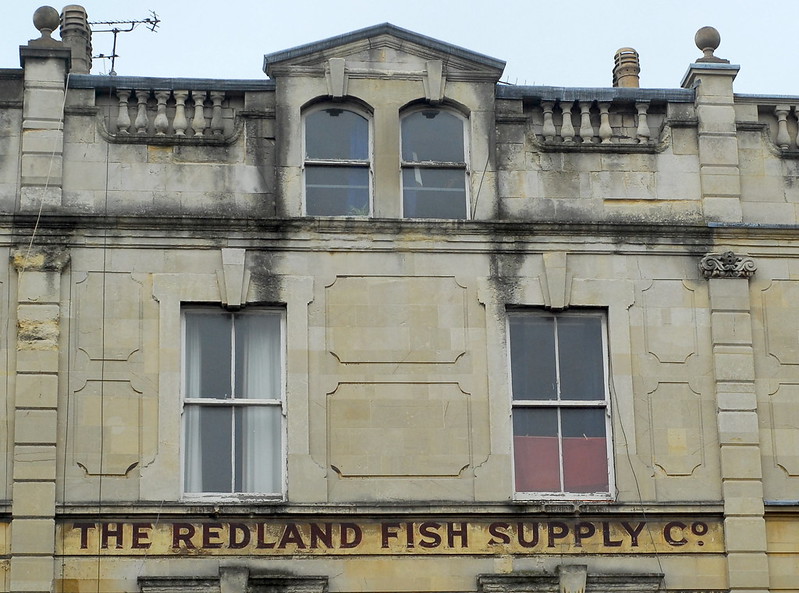
The Redland Fish Supply Co

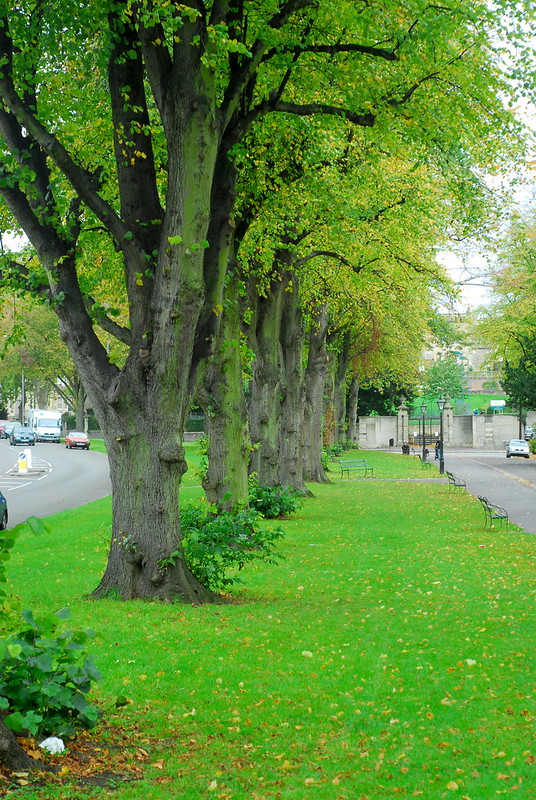
Redland Grove

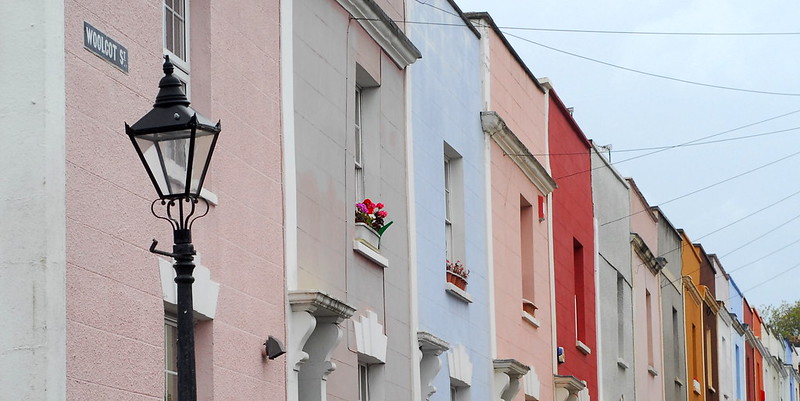
Woolcot St, Redland

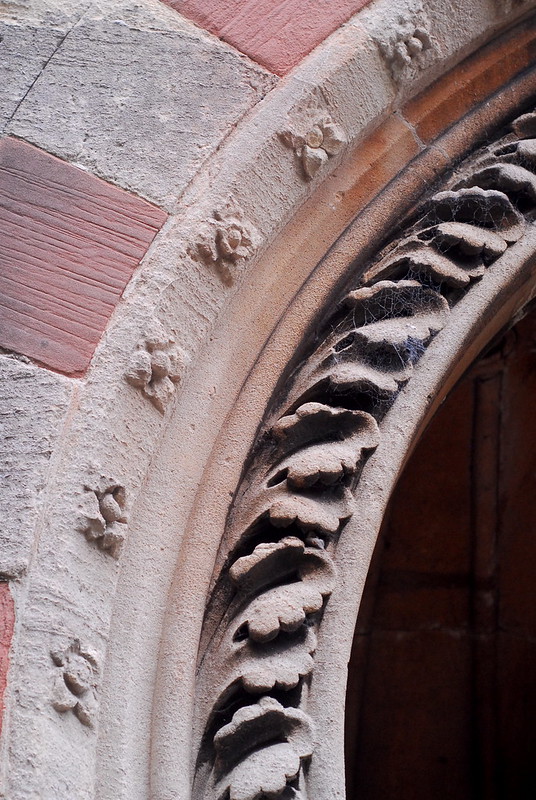
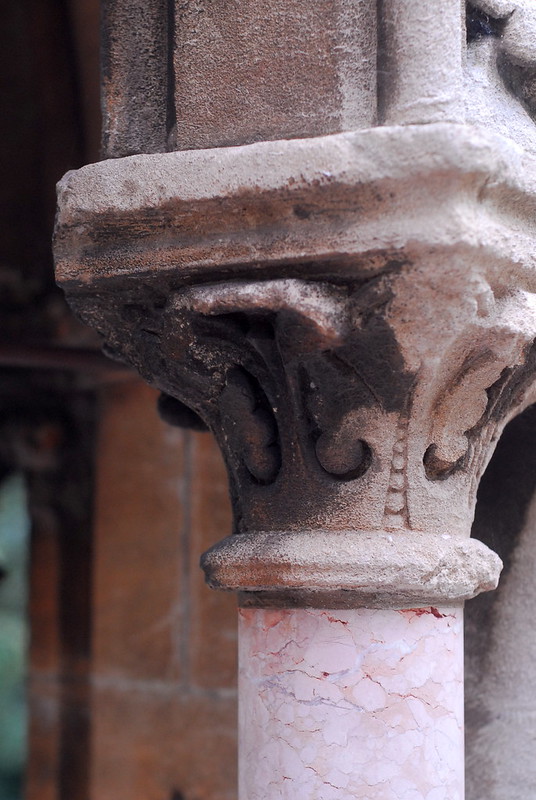
Alderman Proctor's Drinking Fountain

Pieminister, Stokes Croft

Alderman Proctor's Drinking Fountain

Being A Human City

In which we track down a TV location

Bristol often pops up on the telly. Famously in Casualty, Teachers and The Young Ones; slightly less famously in Only Fools And Horses.* Just lately, though, I’ve noticed a lot of trailers for a new BBC3 series, Being Human. Not only is it obviously filmed in Bristol – and south Bristol at that – but the city is practically the most distinctive character in it. Lots of shots of typical Totterdown terraces; with steeply-sloping streets, and brightly painted houses with rooftop parapets. I suppose that, as you arrive in the city, Totterdown is a rather prominent and visible area, what with the way it looms over Temple Meads like a pastel-coloured precipice.

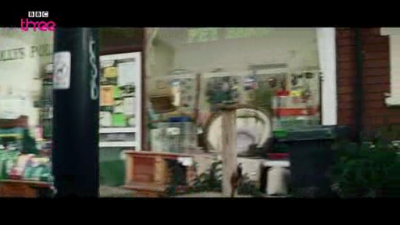
After I’d seen it a few times, in fact, I wondered if I could recognise locations on the trailer. The pet shop window near the start, for example:

Pet shop window from Being Human trailer

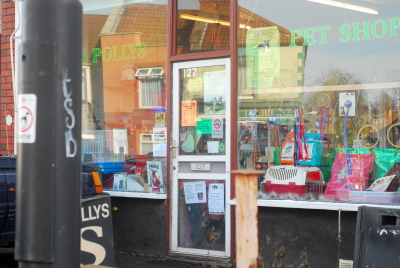
That’s an easy one, to be honest, because you can just about make out the shop name in the window. It’s “Ollys Pollys Pet Shop”, on St John’s Lane. Here’s a photo I took the other day, also with the lamp post in the way:

Pet shop on St Johns Lane

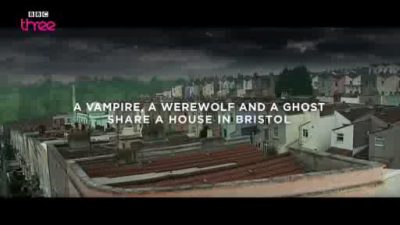
Spotting the location of the house that the characters are sharing is a bit trickier, but not much. At the end of the trailer the camera pans upwards to show the skyline behind their house.

Being Human trailer

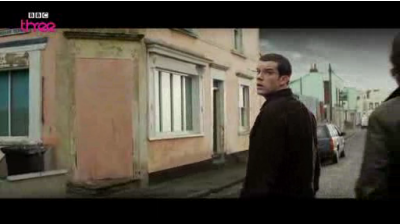
Over there in the background, underneath the darkening sky, you can see some greenery, and a building that looks rather like a mosque. If we assume that we’re right that this is Totterdown, then that must be the Green St mosque, and the greenery behind it definitely is the right shape to be Victoria Park.** So that means we must be somewhere between St Lukes Road and Wells Road. We’re looking for a very typical Bristolian corner terrace, as you can see from this shot:

Being Human trailer

And a little bit of map-research and field-walking will take us right to it:

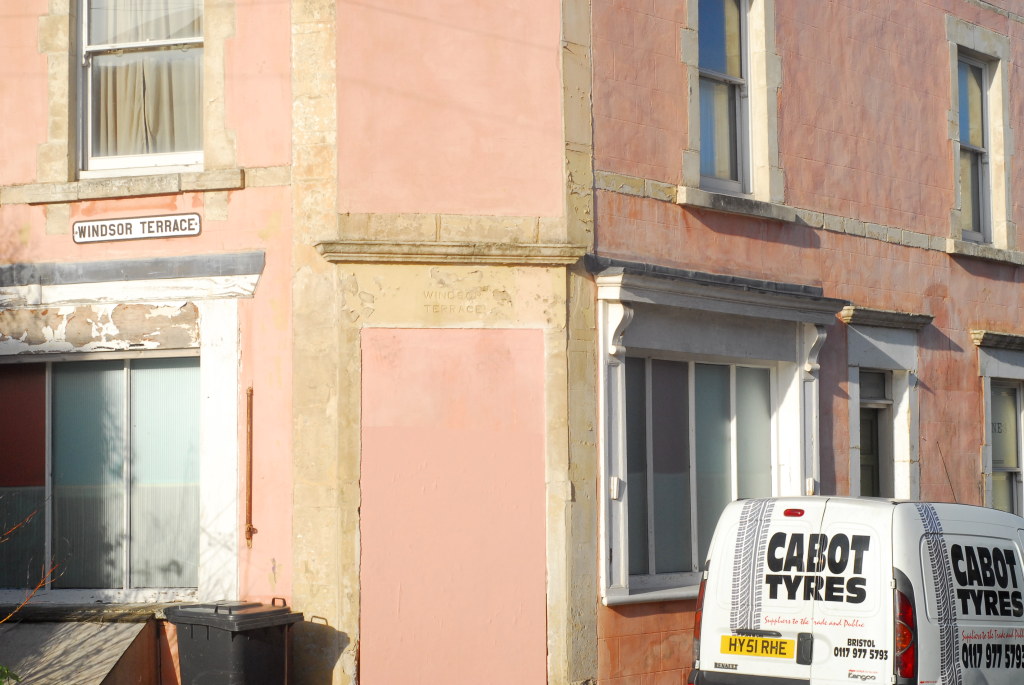
Corner of Windsor Terrace and Henry St, Totterdown

It’s on the corner of Windsor Terrace and Henry St, and looks rather dilapidated on the outside – peeling paint on the lintels, as you can see, both in my picture and on the trailer if you look carefully. Intriguingly, some of the downstairs windows are former pub window glass, etched, with words like “Wines & Spirits” on them. Being new to the area, I have no idea if the building was a pub at one time or not. Don’t worry: I’m not going to do this with every single scene in the show. But it was fun to discover the location: somewhere that looks very, very typically Bristolian, without being what you’d say was a real landmark.

* The outside shots of Nelson Mandela House were actually of a tower block in Bedminster, about ten minutes walk from where I am right now.

** Which I thought was called Windmill Hill park, because, well, that’s where it is. It’s rather interesting in its own right, because it contains a Troy Town maze built out of brick, built to commemorate the city’s clean water supplies. I keep meaning to write something about Troy Towns.

The Guided Busway Still Haunts Us

In which, yes, the guided busway is apparently still on the agenda

Yes, it’s back in the news again. The Ashton Vale guided busway route, which I devoted several posts to at the end of last year, has reared its ugly head again. A quick update: the local councils want to convert a chunk of South Bristol railway line – most of which operates as a council-run heritage railway – into a private buses-only road, to replace the current park-and-ride bus route through Hotwells. They had a consultation about it. Now, 7 weeks later, the consultation results are about to be revealed.*

What do they say? From what’s been released so far, not very much at all. Only that the previous rather low price estimate is already on the way up – no surprise there then. It’s confirmed that a new bridge is going to be built alongside Prince St Bridge – that will take a big chunk out of the budget, for starters. But one of the big empty questions from before the consultation – the route the buses will take from there – still isn’t addressed. The planners are also positive that these will be fast, rapid, high-speed buses, because there will be Special Measures to make sure that they don’t get delayed in the city centre – but they have no idea what said Special Measures actually will be. The buses are still due to run along Cumberland Road – a decision which, as I discussed previously, means taking both the Bristol Harbour Railway and most of the width of Cumberland Road and giving it over to the bus route.

Furthermore, there’s still a great silence over where the money’s going to come from, exactly. Because that’s where the problem is, as it happens. Secretly, this isn’t going to be a bus scheme at all, because of how the council want to raise the money. Regular readers can skip ahead, because I’ve talked about this before, too. The money is coming from the Transport Innovation Fund, a body which provides grants for “demand management” schemes – in other words, congestion charging or similar. This new bus route might be being promoted, so far, as a new fast bus route: but at some point, unless the funding radically changes, the truth will pop out from underneath it. This is a congestion charging scheme with buses on top; the congestion charging part has, so far, been kept quiet.

None of this has been mentioned widely as yet. The Evening Post’s reporting has mostly been limited to repeating the relevant press releases, which of course have been rather quiet about this. It’s not surprising that councillor Mark Bradshaw says, according to the paper, that he wants to get the scheme finished as soon as possible. He’s presumably hoping that the funding bid will be written and in the post before anyone asks him what the demand management part of the bid is going to consist of.

* I like the way the Evening Post went with the headline “New Bristol bus route revealed” when barely anything has changed since before the consultation.